-
We detected your language preference as English. Would you like to switch to the English version for a better experience?
Switch to English
Stay here


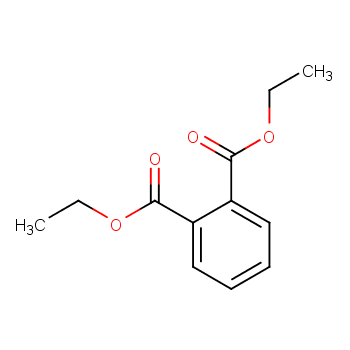
Diethyl phthalate (DEP, CAS 84-66-2, C12H14O4, molecular weight 222.24) occupies an atypical position inside the ortho-phthalate family. Produced by the esterification of phthalic anhydride with ethanol, it is a low-molecular-weight diester whose commercial gravity lies not in flexible PVC but in three narrower, higher-value channels: fragrance solvents and fixatives, pharmaceutical film-coating plasticizers, and cellulose ester and specialty-coatings modification. Because those applications are consumer-visible and tightly regulated, DEP pricing and contracting in 2026 are driven far more by compliance optics than by feedstock economics. The molecule is not named in most phthalate restriction instruments, yet it is continuously repriced and re-audited because procurement and compliance teams increasingly treat "ortho-phthalate" itself as a class-level red flag. Understanding exactly where the regulatory boundary sits is therefore the central commercial skill in this market.
This white paper separates fact from inherited assumption. On the European side, REACH restriction Entry 51 of Annex XVII and authorisation Entries 4 to 7 of Annex XIV currently cover DEHP, DBP, BBP and DIBP at 0.1 percent by weight in plasticised material; Entry 52 covers DINP, DIDP and DNOP in toys and childcare articles that can be placed in the mouth. DEP is outside both groups. It is also outside the eight phthalates prohibited by the United States Consumer Product Safety Commission at 16 CFR 1307, and outside the phthalate priority set for which the Environmental Protection Agency completed TSCA risk evaluations. However, this clean status is conditional, not permanent: it rests on the absence of a harmonised CMR or endocrine-disruptor identification, and both ECHA-level hazard assessment and read-across pressure from the C6 and C8 congeners continue to move.
For buyers, the practical implication is that DEP should be managed as a regulated-by-association material. The realistic risks are cross-contamination from listed congeners in shared esterification assets, phthalate-class restrictions written into retailer RSL standards and brand restricted-substance lists, and the reputational cost of defending a phthalate in a leave-on formulation. This paper maps the chemistry, the two-tier supply structure, the actual regulatory perimeter in the EU and North America, the transfer economics of candidate substitutes such as DEHT (DOTP), DINCH, ATBC and triethyl citrate, and the documentation package a supplier must deliver for cosmetic, food-contact-adjacent and pharmaceutical grades.
DEP is a colourless, nearly odourless oily liquid with a boiling point near 298 to 299 degrees Celsius, a density of roughly 1.12 grams per cubic centimetre at 20 degrees Celsius, a pour point well below minus 40 degrees Celsius and a closed-cup flash point close to 117 degrees Celsius. Its vapour pressure at ambient temperature is low but roughly two orders of magnitude higher than that of DEHP, which explains why it never displaced the C8 phthalates in durable PVC. Water solubility is around one gram per litre and the octanol-water partition coefficient sits near 2.4, giving it moderate hydrophilicity for an aromatic diester.
Industrial DEP is made almost exclusively by Fischer esterification of phthalic anhydride with excess ethanol. The sequence is thermodynamically and kinetically asymmetric: ring opening to the monoethyl hydrogen phthalate is fast and effectively irreversible, while conversion of the monoester to the diester is slower, equilibrium-limited and requires continuous removal of the water of reaction. Modern plants optimise precisely around that second step, balancing catalyst selection, ethanol recycle load, colour formation and the production of acidic residues that later degrade odour quality in fragrance applications.
Demand is structurally bifurcated. Volume growth is concentrated in pharmaceutical film-coating applications, tied to expanding global solid-dose capacity in India, China and the Middle East, while the mature fragrance channel grows slowly and is exposed to substitution by dipropylene glycol, isopropyl myristate, triethyl citrate and bio-based solvents. The industrial channel is flat or declining where customers have chosen to eliminate phthalate declarations entirely from their product documentation, regardless of whether DEP itself is restricted.
DEP capacity is overwhelmingly located where phthalic anhydride and ethanol are co-available: coastal China, western India, the Gulf Cooperation Council states, Western Europe and the United States Gulf Coast. Most plants are multipurpose ester units rather than dedicated DEP assets, so supply elasticity is high and campaigns switch between DEP, DBP, DIBP and non-phthalate esters according to margin. Switchable multipurpose capacity is a double-edged feature for buyers: it provides rapid availability but also makes congener cross-contamination the dominant quality risk.
Three price tiers now coexist. Technical grade trades broadly on phthalic anhydride and ethanol economics with only thin margins. Cosmetic and fragrance grade carries a premium driven by odour specification, documentation and audit readiness rather than by purity alone. Pharmaceutical grade commands the largest premium because every batch must arrive with change-control history, validated methods and impurity reporting. Volatility comes mainly from upstream ortho-xylene and phthalic anhydride swings and from bio-ethanol policy rather than from any phthalate-specific supply shock.
DEP sits inside the most heavily litigated chemical family in consumer-product regulation, which means its compliance burden is higher than a reading of the legal text alone would suggest. Being absent from a restriction list is not the same as being off the restricted-substance lists of brand owners, retailers and e-commerce platforms, many of which apply phthalate-class thresholds. Exporters must therefore maintain two parallel positions simultaneously: a narrow legal argument about this specific CAS number, and a broader commercial answer about class-level management and cross-contamination control.
Environmental, social and governance scrutiny of phthalates operates through procurement rather than through law. Because DEP is purchased by consumer-facing fragrance, personal-care and pharmaceutical customers, supplier questionnaires now reach deep into energy sourcing, wastewater treatment and product stewardship. Producers that cannot answer Scopes 1, 2 and 3 questions or cannot document a substitution pathway lose tenders even when their material is fully lawful.
DEP is fossil-derived at both ends of the molecule: ortho-xylene-based phthalic anhydride and predominantly petrochemical or fermentation ethanol. Producers are therefore pursuing three levers: waste-heat integration and vapour recompression around the esterification and stripping columns, recovery and reuse of excess ethanol to cut both consumption and Scope 1 process emissions, and a shift to bio-attributed ethanol where mass-balance certification is accepted by the customer's own accounting rules.
Traceability requirements now extend backwards to the phthalic anhydride source and forwards to the finished article. Buyers should expect questions about EU Deforestation Regulation relevance through bio-ethanol sourcing, conflict-minerals-style diligence on catalysts, and Responsible Care or ISO 14001 certification. Practical mitigation involves campaign-level batch genealogy, retained samples, and documented cleaning-validation protocols that evidence freedom from prior-product carry-over.
DEP logistics are comparatively forgiving at the transport-classification level and demanding at the quality-assurance level. The material is a high-boiling liquid that is generally not assigned a dangerous-goods UN number for road, rail or sea movement, so no hazmat surcharge normally applies. It nonetheless requires heated handling in cold climates, dedicated containment to preserve odour and congener purity, and careful temperature history because prolonged heating accelerates hydrolysis back toward monoethyl phthalate and acidity growth.
Export documentation should not assume a non-regulated classification. Some registrations and notifications carry aquatic hazard classifications that impose labelling or marine pollutant marking, so the shipping description must be reconciled with Section 14 of the batch-specific safety data sheet before booking. Bulk movements are commonly made at controlled temperatures to keep viscosity manageable for pumping, and tank-container returns are vetted for previous cargo as rigorously as the loading itself.
DEP exporters should stop defending the molecule and start selling management of phthalate-class risk. Purchasing decisions in this sector are made by compliance teams whose objective function is audit defensibility, unit-solvent performance and continuity of supply. Suppliers who structure their offering around those three outcomes convert regulatory ambiguity from a liability into a switching cost, and build the documentation moat that keeps competitors out of fragrance and pharmaceutical accounts.
Diethyl phthalate in 2026 is a lawful, technically effective and commercially viable ingredient whose principal exposure is associative rather than statutory. It is absent from REACH Annexes XIV and XVII phthalate clusters, absent from the eight substances at 16 CFR 1307, absent from the six phthalates listed under Proposition 65 and absent from the EPA high-priority set, yet it still faces de facto restrictions written into private restricted-substance lists and internal brand phase-out policies. Producers who can document congener purity, campaign segregation and low carbon intensity will keep access to the premium fragrance and pharmaceutical tiers.
The strategic response is therefore dual-track. Defend DEP where it is genuinely superior, particularly fine fragrance fixative performance and established pharmaceutical coating formulations with long stability histories. Simultaneously, build the substitution capability, data packages and compliance infrastructure required when a customer decides that phthalate-class elimination is the simpler commercial answer. The winners will be those exporters who treat this molecule not as a commodity ester but as a documented, audited, specification-bound specialty input.
Powered by Guidechem
This white paper is exclusively compiled by the Guidechem Intelligence Team based on global customs data, regulatory databases, and industry research. Guidechem is a leading global B2B chemical platform, dedicated to connecting global buyers with verified, high-quality manufacturers.
Relying on Guidechem's extensive global database, we have mapped the core participants in the current global Diethyl phthalate (DEP) supply chain:
Disclaimer: The content of this white paper is compiled based on public market data and regulatory information available as of 2026. Global chemical regulations are subject to dynamic adjustments. In actual export operations, enterprises must consult professional regulatory advisors or relevant competent authorities to obtain the latest compliance guidance.
|
 |
 |
 |
 EN
 Agricultural News
 Food News
 Industrial News
 Cosmetic News
 Pharmaceutical News
 Science News


 1YR

