
I. Executive Summary
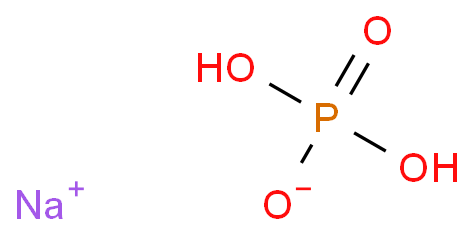
Monosodium phosphate, sodium dihydrogen phosphate, is the most acidic member of the sodium orthophosphate family and one of the highest-tonnage inorganic salts in trade. Supplied to food, feed, water treatment, metal finishing and detergent-value chains under effectively the same chemical identity, it illustrates how value is created by grade discipline rather than synthesis difficulty: the difference between a food-grade lot meeting European Union purity criteria and an industrial lot for boiler-water treatment lies in arsenic, fluoride and heavy-metal control.
Three variables dominate 2026 procurement: raw-material cost transmission from wet-process acid, rock and sulphur inputs; divergent end-market regulation, with food additive purity rules tightening while detergent phosphate limits compress European demand; and environmental compliance, since phosphorus discharge is now regulated as seriously as carbon in several jurisdictions, making effluent control a licence-to-operate question for producers.
This white paper addresses procurement managers, compliance officers and technical buyers sourcing monosodium phosphate internationally. It sets out the real process chemistry, the specific regulatory instruments controlling food and industrial use in Europe and North America, the practical specification differences between grades, and the logistics and due-diligence steps that determine whether a shipment clears and performs.
II. Product Deep Dive: Molecular Mechanisms and Production Evolution
2.1 Physicochemical Properties and Mechanisms
Monosodium phosphate is a white, odourless crystalline solid or free-flowing powder with a molecular weight close to 120 grams per mole for the anhydrous form, rising with each water of hydration. It is freely soluble in water and gives a mildly acidic solution, the origin of nearly all its functional behaviour. The monohydrate and dihydrate forms lose water of crystallisation on heating, so specifications must state whether assay is expressed on the anhydrous or hydrated basis.
- Buffering and pH control: Together with its conjugate partners, the dihydrogen phosphate anion forms one of the most widely used buffer systems in food processing and water conditioning. Dissolved product resists pH drift when acids or alkalis are introduced, which is why it is specified in fermented dairy, processed cheese and beverage systems where pH stability drives texture and shelf life.
- Sequestration and surface chemistry: Phosphate anions complex alkaline-earth hardness ions and form adherent conversion layers on steel and aluminium. That dual behaviour explains the product's simultaneous role as a hardness sequestrant in detergents and water circuits and as a phosphating agent in metal pretreatment, where the crystal morphology of the deposited layer, rather than the bulk salt, determines coating performance.
2.2 Synthesis and Manufacturing Technologies
Production begins with phosphoric acid, then neutralises it with a sodium source under controlled stoichiometry. The engineering distinction between industrial and high-purity output lies almost entirely in how thoroughly impurities inherited from the rock are removed, which determines whether the stream can be called food grade.
- Wet-process route with purification: Phosphate rock is digested with sulphuric acid to give wet-process phosphoric acid carrying fluoride, iron, aluminium, magnesium and heavy metals including cadmium. Partial neutralisation with sodium carbonate or sodium hydroxide precipitates much of this load for removal, and additional solvent extraction or defluorination stages are inserted to reach additive purity. Plants targeting food grades typically route purified acid to dedicated crystallisation trains.
- Thermal route and high-purity finishing: Elemental phosphorus from an electric arc furnace is burned and hydrated to produce thermal phosphoric acid of very high purity, later neutralised to give low-trace-metal salt. The route carries substantially higher energy cost and is reserved for electronic, pharmaceutical and speciality food applications, with final specification set by hydration state, particle-size distribution and flow.
2.3 Core Application Matrix
- Food and processed dairy: Used as an acidity regulator, buffer, emulsifying salt and texturiser in beverages, processed cheese, bakery systems and meat products, subject to the purity criteria of the relevant additive specification.
- Water treatment: In industrial cooling and boiler circuits the salt buffers pH and supports corrosion inhibition programmes, and in municipal networks it sometimes serves as a lead and copper control agent, with dosing governed by local drinking water rules.
- Metal surface treatment: Phosphating baths depend on controlled free acidity and total acidity, both of which are set by the mono-to-disodium ratio, so consistent stoichiometry matters more to this segment than trace purity.
III. Global Market Supply-Demand Landscape and Export Trends
3.1 Demand Drivers and Market Shifts
Demand pull is geographically uneven. Food-grade growth tracks processed food and beverage output in Asia and Latin America and the continued reformulation away from other phosphate sources in Europe. Water treatment demand tracks industrialisation and stricter discharge permitting, particularly in the Middle East where desalination and cooling circuits consume large volumes. Detergent demand in Europe, by contrast, has been structurally reduced by phosphate content limits, shifting Western producers toward volume growth in markets without comparable restrictions.
3.2 Capacity Distribution and Export Flows
Capacity follows rock and acid. China operates the largest integrated phosphate chemical base, exporting acid and finished salts at scale. Morocco and other North African producers leverage high-quality rock through integrated acid and downstream conversion. North American output is anchored by Florida's rock and Gulf acid infrastructure, while Russian deposits supply regional markets. Flows consist of bulk bagged and containerised salt moving into food processors and water treatment formulators worldwide.
3.3 Market Bifurcation and Pricing Dynamics
Industrial pricing tracks wet-process acid cost and freight, and moves with fertiliser-cycle sentiment because the same acid streams serve both markets. Food-grade pricing holds a durable premium reflecting purification capital, dedicated crystallisation trains, trace-metal testing and documentation. Export licensing or certification requirements in major producing countries can reprice global supply within a quarter, making indexed contracts preferable to spot.
IV. In-depth Analysis of Global Compliance and Regulatory Barriers
Compliance risk for monosodium phosphate is form-dependent and destination-dependent. The same shipment may be a lawful food additive, a lawful feed material, or an unauthorised addition depending on the grade it is presented as and the purity criteria it meets, which is why import clearance disputes almost always begin with documentation rather than with chemistry.
4.1 European Market: REACH, CLP, and Sector-Specific Directives
- Food additive authorisation and purity criteria: Sodium phosphates are authorised as a food additive group under Regulation (EC) No 1333/2008, and the specifications each grade must satisfy are set in Regulation (EU) No 231/2012, including assay range, loss on drying, insoluble matter, fluoride, and numeric limits for arsenic, lead, cadmium and mercury. A consignment presented as food grade must be tested against those criteria lot by lot and labelled with the correct additive designation.
- REACH registration, CLP classification and detergent and fertilizer rules: Commercial tonnage requires a valid REACH registration with a compliant safety data sheet; the substance is generally communicated without hazardous classification, though every revision must be rechecked. Separate sector rules condition where a lot can be sold: Regulation (EC) No 648/2004 restricts phosphate content in consumer detergents, and EU fertilising product rules impose cadmium limits on phosphate materials.
4.2 North American Market: TSCA, EPA, and FDA Regulations
- TSCA status and EPA nutrient regulation: Sodium phosphates appear on the Toxic Substances Control Act inventory, so ordinary import does not require premanufacture notification, but importers must maintain positive certification. The decisive instrument is nutrient regulation: total phosphorus limits under pollutant discharge elimination permits and state nutrient criteria mean producers and large industrial consumers manage phosphorus in effluent as a compliance parameter.
- FDA food use and Food Chemicals Codex identity: Sodium phosphates are recognised for use in food in the United States, and Food Chemicals Codex monographs set the identity, assay and impurity criteria that food processors and their auditors apply. Buyers should also consider NSF certification requirements for drinking water treatment use, since municipal and potable applications impose certification and dosage documentation obligations that standard industrial offerings do not satisfy.
4.3 The Critical Hurdle: Quality Control and Safety Limits
Compliance Warning: The failure mode costing most money in phosphate trade is grade misapplication. Buyers must tie five items to the purchase order: declared grade and intended use, with food-grade lots supported by a certificate showing each numeric limit including arsenic, lead, cadmium, mercury and fluoride; the hydration state and assay basis; lot-by-lot trace-metal results, since rock-source changes alter impurity profiles; evidence of ISO 9001 and appropriate food safety certification; and total phosphorus discharge permit documentation plus cadmium declarations where fertilising product channels apply. Any material described only as technical grade should be excluded from food and feed tenders.
V. Green Trade Barriers and ESG in Manufacturing
Few commodity chemicals sit as squarely inside the environmental debate as phosphates. Production draws on a finite mineral resource whose supply is geographically concentrated, and use disperses a nutrient whose release into water bodies is a documented driver of eutrophication.
5.1 Carbon Footprint and Circular Economy
Scope 1 and 2 emissions concentrate in acid digestion, neutralisation exotherm management, crystallisation and drying, with the thermal route adding electricity demand from arc reduction. Scope 3 is dominated by rock extraction, acid production and freight. Buyers increasingly request footprints per tonne consistent with ISO 14064 or ISO 14067 against ISO 50001 energy management. Circular levers include recovery of phosphorus from sewage sludge ash, accepted by some European buyers as partial substitution.
5.2 Sustainable Sourcing and Traceability
Responsible sourcing programmes focus on two risks. The first is resource governance: phosphate rock is recognised in European Union materials policy as a critical raw material, so processors should document rock provenance, mine rehabilitation and community performance. The second is radio-natural and heavy-metal content, since certain rock formations carry elevated cadmium and naturally occurring radionuclides that follow the acid into finished salt. Credible traceability combines batch-level rock-to-salt genealogy, third-party mining and processing audits, and ISO 14001 certification at conversion sites.
VI. Supply Chain Resilience and Export Logistics
Monosodium phosphate is low-value per tonne and moves in large maritime lots, so freight economics and moisture control determine landed success far more than any technical attribute. The dominant physical failure is caking: the salt is hygroscopic and will set into hard lumps in a humid hold.
6.1 Packaging Standards and Moisture/Contamination Control
- Packaging formats and liners: Export presentations range from 25 kg multiwall paper or polyethylene bags on heat-treated pallets, to 1000 kg flexible intermediate bulk containers with polyethylene liners and discharge spouts, to full bulk vessel loads for high-volume contracts. Because hygroscopic pickup drives caking, an inner moisture barrier liner and containerised rather than break-bulk routing are strongly preferred, complemented by desiccant or container liners on long humid voyages and by enforced pallet stretch-wrapping to prevent bag abrasion.
- Segregation and cleanliness: Food-grade lots must be produced, conveyed and packed in lines demonstrated free of industrial-grade cross-contact, with documented flushing, cleaning validation and positive lot identification at each transfer point. Buyers should require that pallets and containers be inspected for cleanliness and prior cargo before loading, since contamination claims in this sector are almost always attributable to shared handling rather than to the manufacturing step.
6.2 Dangerous Goods Identification and Transit Protocols
Monosodium phosphate is generally not classified as hazardous for transport, travelling under ADR, IMDG and IATA without dangerous-goods documentation provided the current safety data sheet supports that status. Bulk sea shipments require cargo declarations under the International Maritime Solid Bulk Cargoes Code, where the material is treated as a non-hazardous solid not liable to liquefy. Transit discipline centres on dry stowage, ventilation to avoid condensation, and separation from strong alkalis and reactive metals.
VII. Enterprise Global Expansion Strategy Guide
Competitive advantage comes from aligning grade, documentation and destination rather than from discounting.
- Define and certify grade first: Establish which applications each line serves, validate food-grade lots against the applicable additive specification and Food Chemicals Codex monograph, and keep industrial and food streams physically and procedurally separate so that premium pricing is defensible in audit.
- Manage raw-material and nutrient risk together: Secure rock or acid supply through multi-year arrangements, index contract pricing to transparent acid benchmarks, and invest in effluent treatment with total phosphorus polishing so that environmental permitting never constrains utilisation.
- Build regional finishing and warehousing: Position bulk shipments into regional hubs for local bagging, blending and just-in-time delivery, shortening lead times and allowing customers to buy smaller lots with the same documentation confidence.
VIII. Conclusion
Monosodium phosphate rewards operational discipline rather than innovation. The winners in 2026 will be producers who treat grade integrity as a managed system, who understand that food, feed, water treatment and metal treatment customers are buying four different products from one plant, and who have internalised phosphorus discharge control as a strategic asset rather than a compliance cost.
For buyers, the message is equally clear: specify hydration state, impurity limits and destination use explicitly, test each lot against the applicable standard rather than the supplier's generic certificate, and maintain qualified sources in more than one producing region to absorb acid-cycle and export policy shocks.
IX. Industry Resource Connection and Supplier Ecosystem
Powered by Guidechem
This white paper is exclusively compiled by the Guidechem Intelligence Team based on global customs data, regulatory databases, and industry research. Guidechem is a leading global B2B chemical platform, dedicated to connecting global buyers with verified, high-quality manufacturers.
Relying on Guidechem's extensive global database, we have mapped the core participants in the current global Monosodium phosphate supply chain:
- China Integrated Phosphate Chemicals Base: Provinces holding rock and captive acid assets operate the deepest downstream conversion network, exporting everything from wet-process acid to finished food-grade and industrial sodium phosphates. The cluster's advantage is scale and cost; its qualification challenge for buyers is verifying input-grade separation, batch-level impurity testing, and whether export certification requirements will affect shipment timing in any given quarter.
- North African and Middle Eastern Rock-to-Salt Corridor: High-grade Moroccan, Jordanian and Egyptian rock supports integrated acid and downstream salt capacity serving Europe, Sub-Saharan Africa and South Asia. Participants increasingly market logistics proximity to European converters and invest in granulated and coated forms, making the cluster the most credible alternative supply pillar for European buyers.
- North American and European Converter Network: Florida-linked North American acid and acid-park operations, plus European repackers and specialty blenders, dominate regional just-in-time supply for food processors, water treatment formulators and metal finishing plants. Though rarely cheapest per tonne, this network supplies accredited food safety documentation, technical service, local warehousing and regulatory support that long-distance bulk imports cannot match.
Disclaimer: The content of this white paper is compiled based on public market data and regulatory information available as of 2026. Global chemical regulations are subject to dynamic adjustments. In actual export operations, enterprises must consult professional regulatory advisors or relevant competent authorities to obtain the latest compliance guidance.


 EN
 Agricultural News
 Food News
 Industrial News
 Cosmetic News
 Pharmaceutical News
 Science News


 3YRS

