
I. Executive Summary
N-C12-18-alkyl bis(2-hydroxyethyl)aminopropylamine ethoxylate (CAS 90367-21-8) is an amine-functional ethoxylated fatty diamine supplied as a UVCB substance whose alkyl distribution is dominated by oleyl (C18:1) and C16-C18 homologues, bearing an average of three ethylene oxide units. It acts as a cationic surfactant under acidic conditions and as a cloud-point-limited nonionic emulsifier at neutral to alkaline pH. Technical grades are amber viscous liquids with amine values of 130-170 mg KOH/g.
The molecule serves cationic bitumen emulsifiers for road construction, corrosion-inhibitor bases for oilfield and metalworking-fluid packages, agrochemical emulsifier and adjuvant systems, pigment and carbon-black dispersants, anti-static agents and textile auxiliaries. Two forces shape 2026 demand in opposite directions: the retreat from alkylphenol ethoxylates pushes formulators toward amine ethoxylates, while tightening scrutiny of ethylene oxide and 1,4-dioxane, the two impurities intrinsic to ethoxylation, raises the qualification bar for EU detergent, personal-care and agrochemical customers.
This white paper treats compliance as a specification problem, not a documentation exercise. Buyers who define the molecule only by amine value and appearance under-specify what actually determines acceptance: EO distribution and cloud point, residual EO and dioxane, secondary-amine content and the nitrosamine assessment, colour stability under heated storage, and feedstock-origin evidence under the EU Deforestation Regulation.
II. Product Deep Dive: Molecular Mechanisms and Production Evolution
2.1 Physicochemical Properties and Mechanisms
Performance is governed by three coupled variables: alkyl chain distribution, average degree of ethoxylation, and the pH-dependent protonation state of the two nitrogens. Because the substance is a UVCB, no single molecular weight applies; the nominal 3-EO adduct sits in the 400-520 g/mol band depending on homologue mix, so the certificate of analysis must be framed around distribution-dependent parameters rather than a sharp melting point.
- pH-Dependent Charge and Substantivity: At acidic pH both nitrogens protonate and the molecule carries high cationic charge density, driving electrostatic adsorption onto silicate, pigment, carbon-black and metal-oxide surfaces. That mechanism underpins bitumen-emulsion adhesion, dispersant anchoring and inhibitor film formation on steel. As pH rises the charge decays, hydroxyl hydrogen bonding dominates, and the material behaves as a nonionic emulsifier with a measurable cloud point.
- HLB, Cloud Point and EO Distribution: Three EO units place the material in the water-dispersible, oil-affinity region, typically HLB 8-11 by the Griffin convention, with a cloud point highly sensitive to distribution width. A conventional alkaline-catalysed adduct carries a broad homologue spread and a substantial lightly ethoxylated fraction; a narrow-range adduct concentrates around three EO, giving a sharper cloud point and lower free amine.
2.2 Synthesis and Manufacturing Technologies
Industrial production follows a two-stage route class: cyanoethylation of a fatty primary amine with acrylonitrile and catalytic hydrogenation to the N-alkyl-1,3-propanediamine, then reaction of that diamine with ethylene oxide under alkaline catalysis in a stirred autoclave or loop reactor. What separates a commodity supplier from a qualified one is the impurity-control train downstream of the reactor.
- Ethoxylation Control and Narrow-Range Catalysis: Potassium hydroxide catalysis is cheap but gives a broad homologue distribution and significant polyethylene glycol by-product. Narrow-range alkaline-earth or layered-double-hydroxide catalysts narrow the distribution, cutting unreacted diamine and PEG and improving colour. Because EO addition is strongly exothermic and ethylene oxide is flammable and toxic, plants run under nitrogen inerting with dosing interlocks and EO scrubbing; that envelope is a standard supplier-audit item.
- Stripping, Dioxane Abatement and Colour Management: 1,4-Dioxane forms by catalysed dimerisation of ethylene oxide and is intrinsic to ethoxylation: it cannot be designed out, only removed. Vacuum stripping, inert sparging and thin-film evaporation bring dioxane from hundreds of ppm to single digits and remove residual free EO in the same step. Colour is managed by limiting oxygen ingress and storage temperature, since amine streams darken once held hot.
2.3 Core Application Matrix
- Bitumen Emulsification and Road Construction: As an emulsifier base for cationic slow- and medium-setting bitumen emulsions, the protonated amine adsorbs at the aggregate-bitumen interface, giving controlled break and good adhesion on siliceous aggregates. Demand tracks public road maintenance budgets and is seasonally concentrated, so buyers value suppliers able to hold heated bulk inventory through the paving season.
- Corrosion Inhibition and Metalworking Fluids: The diamine structure delivers film-forming cationicity plus chelating capacity, making it a standard component of oilfield corrosion-inhibitor packages for brine systems and of metalworking-fluid emulsifier packages where hard-water tolerance and shear-stable emulsions are required.
- Agrochemical Adjuvants and Industrial Dispersion: In emulsifiable-concentrate and emulsion-in-water crop-protection formulations it acts as emulsifier and wetting adjuvant; in coatings, inks and plastics it serves as pigment dispersant and internal anti-static agent. Across all three the constraints are identical: particle-size stability, compatibility with anionic co-surfactants, and the residual-dioxane ceiling set by the downstream regulatory regime.
III. Global Market Supply-Demand Landscape and Export Trends
3.1 Demand Drivers and Market Shifts
The dominant structural driver remains substitution away from alkylphenol ethoxylates in industrial cleaning, textile and agrochemical formulations, reinforced by REACH restrictions and brand-owner restricted-substance lists. A second driver is infrastructure maintenance, which keeps base-load cationic bitumen emulsion demand high in Asia-Pacific and North America. Corrosion-inhibitor volumes, by contrast, are exposed to upstream capital discipline.
3.2 Capacity Distribution and Export Flows
Fatty-amine ethoxylation capacity is anchored in three corridors. China concentrates capacity in the Shandong, Jiangsu and Zhejiang chemical parks, integrated from fatty nitrile hydrogenation and exporting drummed and ISO-tank volumes. Malaysia and Indonesia supply the oleochemical base and increasingly finished ethoxylates from integrated palm and tallow complexes. Europe and North America retain high-specification, narrow-distribution capacity close to detergent, personal-care and agrochemical customers, often on a toll or campaign basis.
3.3 Market Bifurcation and Pricing Dynamics
The market is bifurcated less by chemistry than by specification tier. Technical grade, sold on amine value, appearance and viscosity, tracks ethylene and fatty-chain feedstock cost plus a thin conversion margin. High-specification grade, sold additionally on dioxane, residual EO, distribution, colour and traceability, commands a premium and behaves like a qualified specialty. Freight, heated-tank availability and drum-versus-bulk choice add a spread buyers routinely underestimate.
IV. In-depth Analysis of Global Compliance and Regulatory Barriers
Compliance for this substance is unusually layered. Because it is a UVCB amine ethoxylate, registration, classification and customer qualification do not collapse into one dossier: the substance itself, two process-derived impurities, the feedstock origin and each downstream use sector carry separate obligations. Importers into the EU must be able to produce evidence for all four layers on request.
4.1 European Market: REACH, CLP, and Sector-Specific Directives
- REACH Registration and CLP Classification: The substance requires REACH registration with a UVCB-compliant identity and ecotoxicology adequate to its tonnage band. CLP classification typically lands in the irritant-to-corrosive band for skin and eye effects. Aquatic classification is contested: amine surfactants show high aquatic toxicity relative to degradation rate, and the resulting M-factor drives label text and mixture classification.
- Annex XVII Entry 71, Detergent Regulation 648/2004 and Biodegradability: Residual 1,4-dioxane is restricted under REACH Annex XVII, with a 10 mg/kg ceiling applied to cosmetic products placed on the EU market, and the same impurity governs eligibility for detergent and personal-care chains. Detergent Regulation 648/2004 imposes biodegradability requirements evidenced through OECD 301-series studies; amine ethoxylates often mineralise slowly in standard 301 tests, so a credible supplier supplies a full dossier rather than a pass-fail claim.
4.2 North American Market: TSCA, EPA, and FDA Regulations
- TSCA Inventory Status and Impurity Listings: Ethoxylated fatty-amine UVCB substances are listed on the TSCA inventory and subject to Chemical Data Reporting above threshold. In North America the pressure comes less from the substance than from its impurities: ethylene oxide and 1,4-dioxane both appear on California Proposition 65, and 1,4-dioxane has been subject to EPA risk evaluation under TSCA, pushing customer specifications well below federal requirements.
- State-Level Dioxane Limits and FIFRA Adjuvant Clearance: New York State has imposed 1,4-dioxane ceilings in the low-ppm range for household cleansing and personal-care products, which in practice sets the specification for any grade entering consumer-adjacent chains. Separately, agrochemical adjuvant use requires clearance under EPA inert-ingredient rules; a supplier unable to confirm inert status and tolerance-exemption support is excluded from US crop-protection formulations regardless of quality.
4.3 The Critical Hurdle: Quality Control and Safety Limits
Compliance Warning: Every ethoxylated amine carries residual ethylene oxide and 1,4-dioxane, and neither can be removed downstream by formulation or dilution. Specify both explicitly with validated headspace GC methods, and require batch-level results rather than a generic statement of conformity. Ethylene oxide is classified as carcinogenic and mutagenic and 1,4-dioxane as carcinogenic; both appear on California Proposition 65, both are constrained by REACH Annex XVII entry 71 in cosmetic applications, and dioxane is restricted to low-ppm levels in New York State cleansing and personal-care products. A supplier offering technical grade without a stripping train will not meet these ceilings. Amine streams also need a documented nitrosamine risk assessment.
V. Green Trade Barriers and ESG in Manufacturing
ESG scrutiny of amine ethoxylates has shifted from the finished molecule to its provenance and impurity profile. Buyers supplying EU and multinational brand owners now request, at quotation stage, a feedstock-origin declaration, a renewable-carbon statement, a biodegradation dossier and a residual-impurity certificate.
5.1 Carbon Footprint and Circular Economy
Ethoxylation is energy-intensive at two points: nitrile hydrogenation and the stripping train that removes dioxane and free EO, both consuming steam and vacuum. A credible footprint turns on the plant's steam source and its Scope 1 and Scope 2 emissions, with Scope 3 dominated by feedstocks. For EU customers, energy-cost exposure under the EU Emissions Trading System makes plant energy data a commercial differentiator, and ISO 14001 certification is now a baseline expectation.
5.2 Sustainable Sourcing and Traceability
Because the alkyl chain is oleochemical, origin is a compliance issue in its own right. Palm-derived chains require RSPO chain-of-custody documentation and, from the applicable date, due-diligence statements under EU Deforestation Regulation 2023/1115 including geolocation. Tallow-derived chains fall within the EU Animal By-Products framework, Regulation 1069/2009 and Implementing Regulation 142/2011, which governs which rendered categories may enter technical uses. Buyers should request the chain-origin split explicitly, since a UVCB alkyl distribution can vary between campaigns.
VI. Supply Chain Resilience and Export Logistics
Logistics for this product is a heated-bulk problem. The material is viscous at ambient temperature, hygroscopic, prone to oxidative darkening and mildly corrosive to certain metals, so packaging and transit specification materially affect the condition in which it arrives. Buyers should confirm whether a quoted price includes heated discharge, tank coils and nitrogen blanketing, none of which are optional in practice.
6.1 Packaging Standards and Moisture/Contamination Control
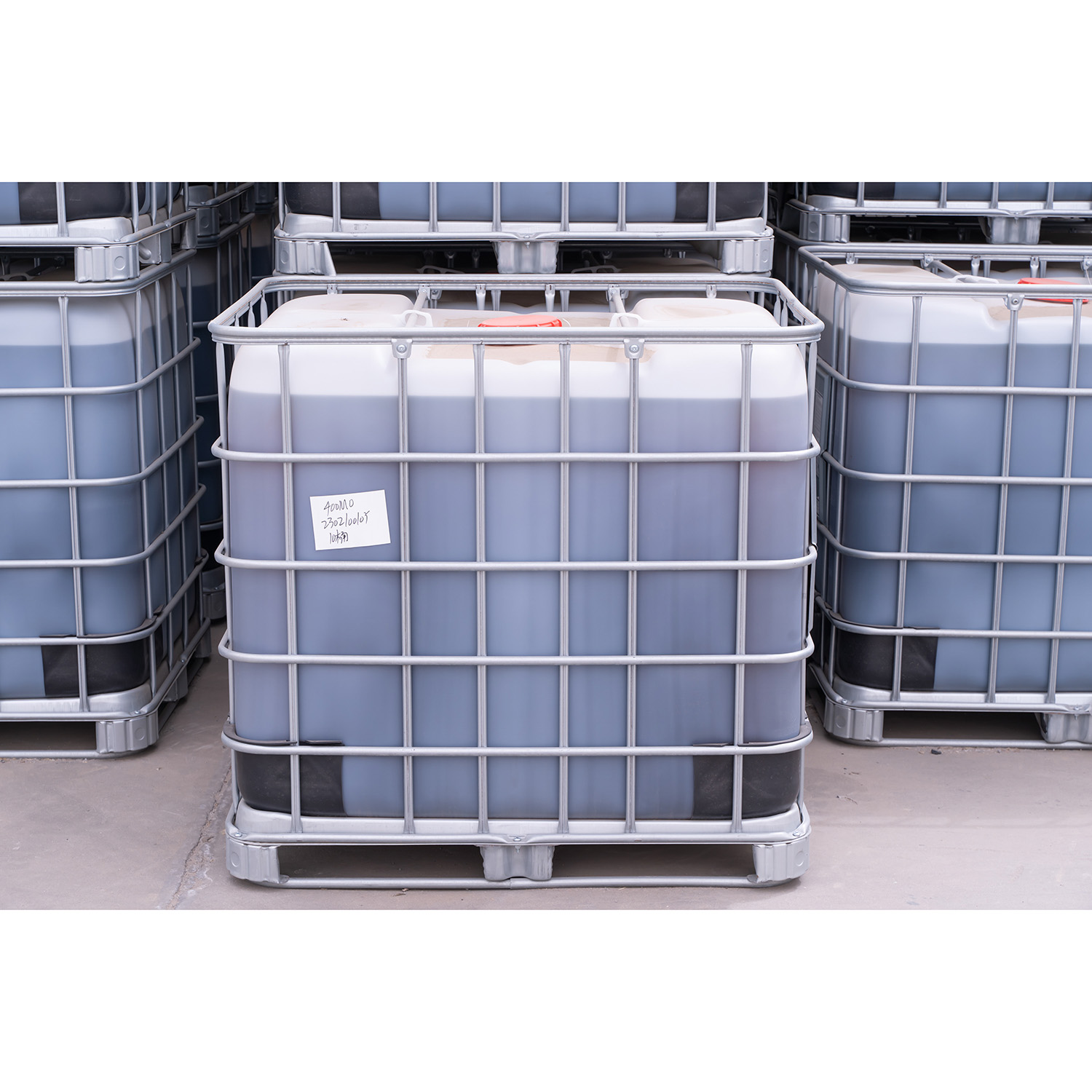
- Heated Bulk, Material Compatibility and Inerting: Bulk shipments move in stainless-steel or lined ISO tanks with heating coils, discharged at 50-70 °C depending on viscosity. Copper, brass and some aluminium alloys should be avoided in contact parts because amine streams attack them and pick up colour. A nitrogen blanket should be applied at loading and maintained in storage, with headspace humidity controlled because water pickup shifts amine value.
- Drummed Supply, Shelf Life and Goods-In Testing: Drummed material in epoxy-lined steel or HDPE drums suits smaller agrochemical and specialty customers, with a declared shelf life of 12-24 months stored below 40 °C, dry and under nitrogen. Re-testing at goods-in should cover amine value, Karl Fischer water, colour and residual EO and dioxane by headspace GC, since repeated heating is the commonest cause of off-spec colour on arrival.
6.2 Dangerous Goods Identification and Transit Protocols
Transport classification depends on the grade's measured irritancy and aquatic profile and must never be assumed from another supplier's safety data sheet. Amine-functional ethoxylates of this type are commonly assigned to corrosive or irritant dangerous-goods entries, with environmentally-hazardous-substance assignment where the aquatic classification triggers it, moving under ADR, IMDG and IATA provisions with UN-specification packaging.
VII. Enterprise Global Expansion Strategy Guide
The commercial logic for suppliers and buyers alike is to compete on specification depth rather than price per tonne, which is where qualification decisions are won or lost across the main corridors.
- Build the Impurity Dossier Before the Price List: Invest in validated headspace GC methods for residual ethylene oxide and 1,4-dioxane, publish realistic batch-level limits, and back them with a stripping train sized for single-digit-ppm performance. Pair this with a written nitrosamine risk assessment covering process, storage and formulation conditions, plus measured secondary- and tertiary-amine content. This package resolves most EU and North American qualification objections.
- Differentiate by Distribution Control, Not Nominal EO Number: Offer a narrow-range grade alongside the conventional alkaline-catalysed grade and document homologue distribution, cloud point and PEG content for each. Formulators struggling with emulsion-break or dispersion-stability variability will pay for that reproducibility, and the specification erects a barrier against commodity competition.
- Secure Provenance and Pre-Book Heated Capacity: Lock in RSPO chain-of-custody and EUDR 2023/1115 due-diligence documentation for palm-derived chains and animal-by-products documentation under Regulations 1069/2009 and 142/2011 for tallow-derived chains, qualifying at least two alkyl sources. Maintain ISO 9001 and ISO 14001 certification with auditable energy data, and pre-negotiate heated ISO-tank capacity before the paving season.
VIII. Conclusion
This is a mature surfactant chemistry whose commercial future is being reshaped less by new applications than by the impurity and provenance standards applied to old ones. Cationic substantivity, nonionic emulsification at higher pH and a two-nitrogen anchor keep it competitive against alkylphenol ethoxylates. What determines market access in 2026 is whether a supplier can demonstrate batch by batch that residual ethylene oxide and 1,4-dioxane are under analytical control and that the C12-18 chain traces to a documented origin.
For buyers, the practical conclusion is to write specifications reaching beyond amine value and appearance: EO distribution and cloud point, residual EO and dioxane with named methods, secondary- and tertiary-amine split, colour and colour-stability limits, and origin documentation covering RSPO, EUDR and, where relevant, animal by-products. For suppliers, defensible margin runs through narrow-range catalysis, a genuine stripping train and heated-bulk logistics competence.
IX. Industry Resource Connection and Supplier Ecosystem
Powered by Guidechem
This white paper is exclusively compiled by the Guidechem Intelligence Team based on global customs data, regulatory databases, and industry research. Guidechem is a leading global B2B chemical platform, dedicated to connecting global buyers with verified, high-quality manufacturers.
Relying on Guidechem's extensive global database, we have mapped the core participants in the current global N-C12-18-alkyl bis(2-hydroxyethyl)aminopropylamine ethoxylate (oleyl diamine ethoxylate, 3 EO) supply chain:
- China: Integrated Fatty-Amine and Ethoxylation Base: Chinese producers in the Shandong, Jiangsu and Zhejiang oleochemical parks anchor global volume, typically integrated from fatty acid and fatty nitrile through hydrogenation to the diamine and on to the ethoxylate. This corridor supplies most technical-grade bulk and drummed export volume and increasingly offers low-dioxane grades.
- Southeast Asia: Palm- and Tallow-Derived Oleochemical Hub: Malaysia and Indonesia combine palm and palm-kernel fractionation with fatty-amine and ethoxylation capacity, giving a structural feedstock advantage on C16-C18 and C12-18 chains. Participants here are the natural source for RSPO-certified and EUDR-documented grades, serving regional formulators and export markets through heated bulk and drummed shipments.
- Europe and North America: High-Specification and Toll Ethoxylation: EU and US producers and toll ethoxylators concentrate on narrow-distribution, low-dioxane and fully documented grades serving customers subject to REACH Annex XVII entry 71, Proposition 65, New York State dioxane limits and FIFRA inert clearance. They compete on specification depth, technical service and proximity rather than feedstock cost.
Disclaimer: The content of this white paper is compiled based on public market data and regulatory information available as of 2026. Global chemical regulations are subject to dynamic adjustments. In actual export operations, enterprises must consult professional regulatory advisors or relevant competent authorities to obtain the latest compliance guidance.


 EN
 Agricultural News
 Food News
 Industrial News
 Cosmetic News
 Pharmaceutical News
 Science News


 4YRS


