Guideview >  Articles >  Trends  > Gadoterate meglumine:Exports & Compliance White Paper 2026

Gadoterate meglumine:Exports & Compliance White Paper 2026

Gadoterate meglumine (CAS 92943-93-6) is a contrast-agent intermediate for 2026; sourcing emphasizes GMP discipline, full regulatory documentation and reliable, well-documented export supply. Waller5 MIN READOctober 8, 2026
Gadoterate meglumine White Paper

I. Executive Summary

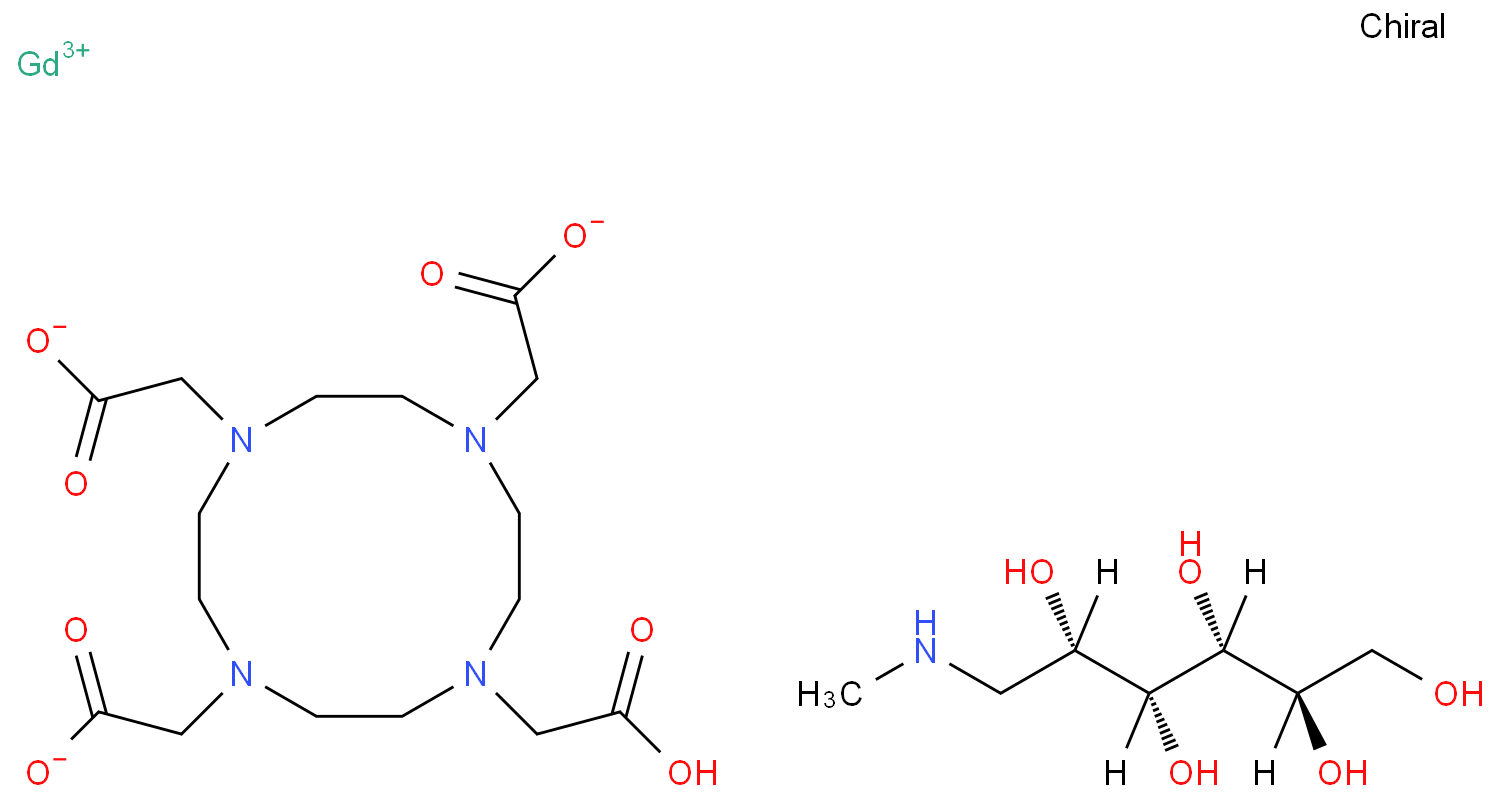
Gadoterate meglumine (CAS 92943-93-6) is the meglumine salt of gadoteric acid, the gadolinium(III) complex of the macrocyclic chelator DOTA, supplied as an ionic, extracellular gadolinium-based contrast agent for magnetic resonance imaging. It is a prescription diagnostic medicine used in radiology departments, not a research chemical and not a consumer product. Its commercial position in 2026 reflects a mature, substantially genericised molecule whose differentiating attributes are chelate stability, manufacturing quality and regulatory standing rather than novelty.

Manufacturing is a two-stage proposition that begins with DOTA ligand construction and gadolinium complexation and ends with sterile injectable presentation. The active substance is typically supplied against a DMF or a CEP referencing the Ph.Eur. monograph, with specifications aligned to both USP and Ph.Eur. expectations where finished product is registered in multiple regions. Finished formulation is prepared at the standard 0.5 mmol/mL concentration, sterile-filtered and terminally sterilised, and released against a specification that treats free gadolinium as a critical quality attribute.

Regulatory scrutiny defines the market. European review concluded that macrocyclic agents such as gadoterate could remain on the market while several linear agents were suspended or restricted, and United States labelling carries a class warning on gadolinium retention with a patient medication guide. Against that background, buyers differentiate suppliers by demonstrated control of free gadolinium, transmetallation resistance, container-closure integrity and the resilience of an upstream chain that begins with rare-earth refining.

II. Product Deep Dive: Molecular Mechanisms and Production Evolution

2.1 Physicochemical Properties and Mechanisms

Gadoteric acid chelates Gd(III) within the DOTA cage through four ring nitrogens and four acetate oxygens, leaving a single inner-sphere water molecule in fast exchange with bulk solvent. That exchange, combined with the seven unpaired electrons of the Gd(III) ion, shortens the longitudinal relaxation time of nearby water protons and produces the bright signal on T1-weighted images. The complex is hydrophilic, essentially unbound to plasma protein and distributed through the extracellular space, and in subjects with normal renal function it is eliminated unchanged by glomerular filtration.

  • Macrocyclic Thermodynamic and Kinetic Stability: Gd-DOTA combines a very high thermodynamic stability constant with, more importantly, marked kinetic inertness: the pre-organised macrocyclic cavity and rigid coordination geometry make acid-assisted and transmetallation-driven dissociation far slower than for linear chelates, with reported dissociation behaviour orders of magnitude slower under acidic challenge. This stability is the scientific basis on which professional radiology bodies group macrocyclic agents in the lowest nephrogenic-systemic-fibrosis risk category.
  • Relaxivity, Distribution and Elimination: Relaxivity is governed by rotational correlation time and inner-sphere water-exchange rate, and for this agent sits in the range typical of small extracellular chelates at clinical field strengths, sufficient for standard contrast-enhanced protocols. Because elimination is renal and essentially unmetabolised, residence time rises sharply when glomerular filtration is impaired, which is why renal-function assessment and conservative dosing practice are embedded in clinical risk management.

2.2 Synthesis and Manufacturing Technologies

Process design is governed by a single objective: complete, stoichiometric incorporation of gadolinium into a rigorously pure ligand, followed by removal of every trace of uncomplexed metal and free ligand. Ligand purity determines how cleanly complexation proceeds, and complexation conditions determine whether the finished substance can meet pharmacopoeial limits without excessive rework.

  • DOTA Ligand Construction: Cyclen is tetra-alkylated with haloacetic acid derivatives under tightly controlled pH and stoichiometry, with attention to partially alkylated species, residual halide and metal contamination, followed by crystallisation or ion-exchange purification. Ligand assay, binding-capacity testing and control of elemental impurities consistent with ICH Q3D are established before the ligand is released to complexation.
  • Complexation, Salt Formation and Finishing: Gadolinium is introduced from gadolinium oxide or a soluble gadolinium salt at controlled pH and temperature to drive quantitative complex formation, after which meglumine salt formation, polishing steps and isolation by crystallisation or spray drying deliver the active substance. Finished product is formulated at the standard concentration with pH and tonicity adjustment, sterile-filtered and terminally sterilised, then released against gadolinium content, free gadolinium, pH, osmolality, endotoxin, sterility and particulate-matter criteria.

2.3 Core Application Matrix

  • Central Nervous System Imaging: The agent is used to detect and characterise lesions where blood–brain barrier disruption or abnormal vascularity alters enhancement, supporting tumour, inflammatory and demyelinating workups in routine neuroradiology under specialist supervision.
  • Body Imaging, Angiography and Perfusion: Extracellular distribution and well-characterised bolus behaviour suit abdominal, pelvic, musculoskeletal and breast protocols as well as first-pass magnetic resonance angiography and dynamic perfusion studies, where consistent relaxivity supports quantitative comparison across visits.
  • Institutional Supply and Tender Programmes: Hospital groups, imaging networks and national procurement systems purchase single-dose vials and prefilled syringes under tender, evaluating suppliers on pharmacopoeial conformity, documented free-gadolinium control, container-closure integrity and continuity of supply rather than on price alone.

III. Global Market Supply-Demand Landscape and Export Trends

3.1 Demand Drivers and Market Shifts

Underlying demand tracks magnetic resonance procedure volumes, which continue to rise with ageing populations, oncology pathways and wider access to imaging. Compositionally, the market has shifted decisively toward macrocyclic agents following regulatory action on linear agents, and gadoterate benefits from that substitution. Set against this is dose discipline: radiology departments increasingly apply protocol-level contrast minimisation, which moderates volume growth even as patient numbers increase.

3.2 Capacity Distribution and Export Flows

Capacity splits between upstream and downstream. Gadolinium oxide supply is concentrated in rare-earth refining capacity located largely in Asia-Pacific and China, and its availability is sensitive to export policy and to environmental controls on rare-earth processing. Active-substance synthesis and, above all, sterile injectable finishing are distributed across Europe, North America and increasingly Asia-Pacific, with contract manufacturing organisations providing both API and finished-dose capability. Trade therefore runs as gadolinium compounds and active substance into finishing sites, and as finished presentations into hospital supply chains.

3.3 Market Bifurcation and Pricing Dynamics

The market is bifurcated between originator-branded presentations and generic or biosimilar-style multi-source competition, with hospital tenders and group purchasing organisations exerting strong price pressure. Active-substance pricing follows gadolinium oxide cost, energy, compliance burden and sterile-capacity utilisation, while finished-dose pricing is set largely through tender cycles. Supply interruptions create pronounced price and allocation effects, so buyers value qualified second sources and transparent capacity commitments.

IV. In-depth Analysis of Global Compliance and Regulatory Barriers

As a prescription medicine, gadoterate meglumine is governed by pharmaceutical law in every market, and the relevant barrier is the quality and completeness of the registration and GMP package rather than chemical notification alone. Manufacturers must hold marketing authorisations or supply into them, maintain active-substance documentation, and operate sterile manufacturing to the standard expected by FDA and European inspectorates.

4.1 European Market: REACH, CLP, and Sector-Specific Directives

  • Authorisation, Monograph Conformity and Class Actions: Finished product requires a marketing authorisation, and the active substance is normally supported by a CEP demonstrating conformity to the Ph.Eur. monograph or by the corresponding active-substance documentation in the dossier. European review of gadolinium agents resulted in the suspension or restriction of several linear agents while macrocyclic agents including gadoterate remained authorised, subject to updated product information.
  • REACH, CLP and Supply-Chain Duties: The active substance placed on the EU market in its own right remains within REACH obligations, including registration and CLP and GHS classification and labelling, while gadolinium compounds attract scrutiny for aquatic and environmental endpoints. Finished-dose supply additionally requires good distribution practice, serialisation under the falsified-medicines framework and pharmacovigilance reporting of retention-related signals.

4.2 North American Market: TSCA, EPA, and FDA Regulations

  • FDA Approval, Monographs and GMP: Finished presentations require an approved application, and the active substance is supported by a DMF with conformity to USP expectations alongside Ph.Eur. requirements for multi-region supply. Manufacture of the active substance follows ICH Q7, process development is documented on ICH Q11 principles, sterile manufacture and release testing follow cGMP, and impurity control addresses ICH Q3D elemental limits with particular attention to free gadolinium.
  • Class Labelling, EPA and Industrial Controls: United States labelling carries a class warning on gadolinium retention in brain, bone and other tissues together with a patient medication guide, and NSF risk is addressed through renal-function screening. On the industrial side, EPA expectations apply to rare-earth processing emissions and waste rather than to the finished agent, and finished medicine must never be diverted into research-only, compounding or consumer channels.

4.3 The Critical Hurdle: Quality Control and Safety Limits

Compliance Warning: Free gadolinium is the critical quality attribute around which the entire control strategy is built. Manufacturers must demonstrate quantitative complexation and the absence of uncomplexed Gd(III) by orthogonal methods including complexometric titration or ICP-based total gadolinium assay and sensitive free-metal or excess-ligand determination, and must show that terminal sterilisation, pH excursions, container-closure contact and shelf-life storage do not liberate metal through acid-catalysed dissociation or zinc, copper and calcium transmetallation. Container-closure systems must be qualified for extractables, leachables and closure integrity, sterility and endotoxin tested to pharmacopoeial standards, and particulate matter controlled to injection limits. Because gadolinium retention is a labelled class effect and nephrogenic systemic fibrosis remains a historical safety anchor, the product is restricted to prescription diagnostic use under radiology supervision, may not be compounded or repacked outside authorised facilities, and must never be represented as a supplement, cosmetic or consumer health article.

V. Green Trade Barriers and ESG in Manufacturing

ESG exposure for a gadolinium contrast agent is concentrated upstream and downstream rather than inside the synthesis plant. Rare-earth extraction carries land, water, radioactivity and energy impacts that dominate the footprint, while the excreted chelate is detectable in municipal wastewater, giving the product an unusual end-of-life dimension.

5.1 Carbon Footprint and Circular Economy

Scope 1 emissions arise from steam generation and sterilisation, Scope 2 from cleanroom heating, ventilation and air conditioning and water-for-injection systems, and Scope 3 from gadolinium refining, excipients, primary packaging and distribution, with refining normally the largest single contributor. Credible programmes improve cleanroom energy efficiency, recover heat from water-for-injection generation, reduce solvent and water use per kilogram of active substance, and recover gadolinium from mother liquors. Circular attention extends to hospital effluent, where membrane and adsorption approaches to gadolinium capture are under evaluation.

5.2 Sustainable Sourcing and Traceability

Traceability must reach the rare-earth refiner, because buyers need evidence on radioactive residues, water treatment and labour practice in upstream processing alongside ISO 9001 quality management and ISO 14001 environmental management certification at manufacturing sites. ESG reporting should quantify Scope 1, Scope 2 and Scope 3 emissions at product level, describe gadolinium stewardship and effluent management, and be auditable enough to satisfy hospital-group procurement questionnaires and investor disclosure expectations.

VI. Supply Chain Resilience and Export Logistics

Finished contrast media are sterile parenteral products distributed to radiology departments, so logistics quality directly affects patient safety and licence compliance. Temperature control is milder than for biologics, but light protection, packaging integrity, serialisation and excursion management are all mandatory elements of a qualified distribution chain.

6.1 Packaging Standards and Moisture/Contamination Control

  • Primary Container and Closure Integrity: Presentations use type I glass vials or prefilled syringes with halobutyl closures free of natural rubber latex, qualified for extractables and leachables and validated for container-closure integrity. Because the chelate is sensitive to metal contact and to pH shift, material selection and sterilisation validation are treated as quality-critical rather than as packaging detail.
  • Serialisation, Light Protection and Inspection: Secondary packaging carries serialisation data for the European falsified-medicines framework and United States supply-chain security requirements, with tamper evidence and light-protective cartons. Automated visual inspection and particulate testing before release, plus batch reconciliation at distribution, protect against counterfeiting and physical defects entering hospital stock.

6.2 Dangerous Goods Identification and Transit Protocols

Finished contrast media are not classified as dangerous goods for transport, so the operative framework is good distribution practice rather than dangerous-goods regulation, although the active substance may carry GHS classification relevant to bulk API shipments. Distribution requires controlled room-temperature lanes with monitored and documented excursion handling, qualified packaging validated against lane profiles, and customs and import documentation appropriate to licensed medicines. Because contrast-media shortages propagate quickly into clinical scheduling, resilient programmes maintain regional buffer stock, dual-qualified lanes and allocation procedures agreed with hospital customers in advance.

VII. Enterprise Global Expansion Strategy Guide

Competitive advantage in this mature category is built on reliability, documentation and upstream security. Participants that treat gadolinium supply, dossier maintenance and sterile capacity as strategic assets are better placed than those competing purely on tender price.

  1. Secure Gadolinium Upstream: Qualify at least two gadolinium oxide sources, assess refiner environmental and radioactivity controls, hedge rare-earth price exposure through long-term agreements, and maintain strategic inventory, since upstream disruption translates rapidly into finished-dose shortage.
  2. Maintain Dossier and Inspection Excellence: Keep DMF and CEP content current, align specifications to USP and Ph.Eur. monographs, sustain ICH Q7 and Q11 documentation, and prepare for FDA and European inspections with robust annual product quality review, change control and pharmacovigilance responsiveness.
  3. Differentiate on Stability Evidence: Publish and defend specification limits for free gadolinium, demonstrate transmetallation resistance under stress, validate container-closure integrity and sterilisation, and pair that evidence with continuity commitments and ESG reporting that hospital procurement teams can verify.

VIII. Conclusion

Gadoterate meglumine illustrates how a mature diagnostic agent retains strategic value: the macrocyclic chelate offers kinetic stability that regulatory authorities and radiology bodies have effectively endorsed by restricting or withdrawing linear alternatives, and that stability has become the commercial core of the product. Manufacturing success is correspondingly defined by stoichiometric complexation, free-metal control and sterile-finishing discipline.

Through 2026, the organisations that prosper will combine upstream gadolinium security, pharmacopoeial and GMP excellence, and verifiable Scope 1, Scope 2 and Scope 3 emissions stewardship, while keeping the product firmly within prescription diagnostic use. That combination converts a genericised molecule into a dependable, defensible supply position in hospital formularies.

IX. Industry Resource Connection and Supplier Ecosystem

Powered by Guidechem

This white paper is exclusively compiled by the Guidechem Intelligence Team based on global customs data, regulatory databases, and industry research. Guidechem is a leading global B2B chemical platform, dedicated to connecting global buyers with verified, high-quality manufacturers.

Guidechem Global Gadoterate meglumine Supplier Ecosystem List

Relying on Guidechem's extensive global database, we have mapped the core participants in the current global Gadoterate meglumine supply chain:

  • North America Supplier Ecosystem: Finished-dose sterile injectable manufacturers and hospital distribution networks supplying radiology departments under FDA-approved applications, USP conformity, DSCSA serialisation and class-labelling obligations for gadolinium retention.
  • Europe Supplier Ecosystem: Active-substance manufacturers holding CEP documentation to Ph.Eur. monographs and REACH registrations, plus marketing-authorisation holders and finished-dose sites operating under EU GMP, GDP and falsified-medicines serialisation.
  • Asia-Pacific and China Supplier Ecosystem: Rare-earth refining capacity supplying gadolinium oxide upstream, alongside a growing tier of active-substance and sterile-finishing capacity pursuing ISO 9001, ISO 14001 and international GMP inspection readiness.

Disclaimer: The content of this white paper is compiled based on public market data and regulatory information available as of 2026. Global chemical regulations are subject to dynamic adjustments. In actual export operations, enterprises must consult professional regulatory advisors or relevant competent authorities to obtain the latest compliance guidance.

Make Guideview Preferred Source on Google
Related News