
I. Executive Summary
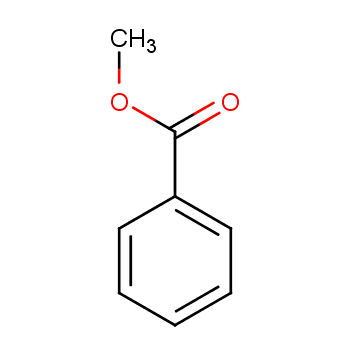
Methyl benzoate (CAS 93-58-3) is the methyl ester of benzoic acid, C8H8O2, with a relative molecular mass of 136.15. It is a colourless, high-boiling liquid with a fruity-floral odour and a dual commercial identity: a long-established fragrance and flavour ingredient and a slow-evaporating ester solvent. That duality drives every decision, because impurity limits demanded by flavour houses differ sharply from those acceptable in coatings, so grade definition is the buyer's first decision.
Demand is anchored in personal care, home care and processed food, where volumes track disposable income and premiumisation, particularly in Asia-Pacific. Solvent demand is more cyclical, tied to coatings, printing inks, adhesives and specialty resin output. Substitution pressure favours the ester where formulators seek higher-boiling replacements for aromatic and glycol ether solvents.
Compliance is correspondingly multi-headed: REACH and CLP in Europe, TSCA and FDA flavour rules in the United States, plus IFRA and RIFM fragrance standards and Food Chemicals Codex purity criteria. Buyers must qualify a supplier by end use as much as by molecule. This white paper examines the material across nine dimensions for procurement, formulation and regulatory teams planning 2026 sourcing.
II. Product Deep Dive: Molecular Mechanisms and Production Evolution
2.1 Physicochemical Properties and Mechanisms
Methyl benzoate is a planar aromatic ester whose reactivity is governed by an electrophilic carbonyl attached to an electron-withdrawing phenyl ring. It boils near 199–200 °C, melts near −12 °C and has a density of about 1.09 g/cm³ at 20 °C. Its flash point is near 82 °C, and it is sparingly soluble in water but miscible with alcohols, ethers and hydrocarbons. The ester hydrolyses under acid or base catalysis, transesterifies with higher alcohols and acts as an acylating partner.
- Solvation Behaviour and Performance as a Slow Ester: The molecule dissolves nitrocellulose, cellulose acetate butyrate, acrylics, alkyds and many epoxy and polyester resins, while its high boiling point extends open time and improves levelling. Its Hansen solubility parameters place it between aromatic hydrocarbons and oxygenated solvents, making it a useful tail solvent. VOC exemptions must still be assessed jurisdiction by jurisdiction.
- Odour Chemistry, Flavour Profile and Stability: The compound carries a feijoa and ylang-ylang-like fruity-floral note and occurs naturally in many flowers and fruits, allowing natural-origin qualification under EU flavouring rules. It is a FEMA GRAS flavouring substance used at trace levels in fruit and beverage compositions. Stability is good in neutral systems, but alkaline formulations saponify the ester, and rising free benzoic acid is the standard degradation marker.
2.2 Synthesis and Manufacturing Technologies
Two industrial routes dominate: Fischer–Speier esterification of benzoic acid with methanol, and methanolysis of benzoyl chloride. Benzoic acid is produced by catalytic oxidation of toluene, so economics track toluene and methanol. Equilibrium conversion is driven by excess methanol, azeotropic water removal or reactive separation. Crude ester is neutralised, washed, dried and fractionated under vacuum to technical, fragrance or food grade.
- Fischer–Speier Esterification and Reactive Distillation: Homogeneous sulfuric or p-toluenesulfonic acid catalysis is fast but brings corrosion, salt waste and colour formation, so heterogeneous sulfonated resins, zeolites and supported heteropoly acids are increasingly preferred. Water removal by entrainer or methanol recycle shifts equilibrium without large acid inventories. Reactive distillation combines reaction and fractionation in one column, cutting energy demand and raising conversion.
- Methanolysis Route, Purification and Grade Management: Benzoyl chloride with methanol gives very low-colour, high-purity ester, but it generates hydrogen chloride and requires corrosion-resistant equipment, scrubbing and chloride control. Purification combines neutralisation, washing, drying and vacuum fractionation, with activated carbon polishing for premium grades. Grade management separates technical, odour-specified fragrance and FCC-compliant food material, verified by GC-FID assay, Karl Fischer water, acid value and APHA colour.
2.3 Core Application Matrix
- Fragrance and Flavour Formulation: Fine fragrance, personal care and air care use the ester for fruity-floral lift, while flavour houses deploy trace levels in fruit compositions. This segment demands odour-specified, low-colour material with tight GC impurity profiles and compliance with IFRA use limits and FEMA GRAS or EU FLAVIS listings. Batch-to-batch odour consistency, not assay, is usually the qualification criterion.
- High-Boiling Solvent for Coatings, Inks and Agrochemicals: Industrial grades serve as tail solvents and coalescents in nitrocellulose lacquers, printing inks, adhesives and resin manufacture, and as carriers in agrochemical formulations. The value proposition is controlled evaporation, strong solvency and a lower hazard profile than aromatic solvents. Formulators must reconcile usage with VOC limits and site solvent emission permits.
- Chemical Intermediate and Toll Manufacturing Services: The ester is an acylating intermediate for benzamides, benzoyl derivatives, UV absorbers, agrochemical and pharmaceutical intermediates and specialty polymers. Buyers here purchase on reactivity, water content and chloride limits rather than odour. Contract manufacturers support the segment with custom synthesis, toll distillation, blended solvents and analytical development.
III. Global Market Supply-Demand Landscape and Export Trends
3.1 Demand Drivers and Market Shifts
Fragrance and flavour demand is the most stable growth engine, driven by premiumisation in personal and home care across Asia-Pacific and by processed food and beverage expansion. Clean-label trends add a second layer, raising demand for documented naturally sourced or bio-based grades. Solvent demand is cyclical and correlated with construction, packaging and industrial output, but reformulation away from more hazardous solvents provides a structural tailwind.
3.2 Capacity Distribution and Export Flows
Capacity follows the benzoic acid chain, which follows toluene availability from refineries and aromatics complexes. Asia-Pacific, and China in particular, hosts integrated toluene oxidation, benzoic acid and benzoate ester capacity and is the dominant exporter of technical material. Europe and North America retain strengths in fragrance, food and specialty grades. Bulk flows run from Asia-Pacific to Europe and North America, while specialty grades move into regional formulation hubs.
3.3 Market Bifurcation and Pricing Dynamics
The market splits into technical, fragrance, food and high-purity tiers, and the price spread reflects purification cost, documentation and audit exposure rather than raw material. Technical grade tracks toluene, methanol and energy, so it is cyclical and index-linked. Fragrance and food grades carry qualification lock-in and sensory testing, which stabilises pricing. Supply security and odour consistency now outweigh spot price in most decisions.
IV. In-depth Analysis of Global Compliance and Regulatory Barriers
One molecule must here satisfy several parallel regimes: industrial chemical control, food flavouring law, cosmetic fragrance standards and solvent emission rules. No single dossier serves all end uses, so a supplier's regulatory file must be segmented by application. Buyers should confirm that registration, specification and labelling match the intended use. Verification of status is cheap; remediation is not.
4.1 European Market: REACH, CLP, and Sector-Specific Directives
- REACH Registration, CLP Notification and SDS: The substance is registered under REACH at the applicable tonnage band, normally through joint submission via an only representative. Classification is not harmonised, so suppliers self-classify, notify to the C&L Inventory and issue a GHS-aligned sixteen-section safety data sheet.
- Flavouring, Cosmetic and Solvent Emission Rules: Flavour use falls under Regulation (EC) No 1334/2008 with purity criteria and EFSA evaluation, while cosmetic use is governed by Regulation (EC) No 1223/2009 and its labelling obligations. Industrial solvent use is constrained by Paints Directive VOC limits and Industrial Emissions Directive solvent management plans. Food chains generally expect FSSC 22000 or ISO 22000 certification.
4.2 North American Market: TSCA, EPA, and FDA Regulations
- TSCA Inventory Status, CDR and VOC Rules: Methyl benzoate is listed on the TSCA Inventory, so ordinary commercial import does not require a premanufacture notice, and importers should confirm the substance is designated active. Chemical Data Reporting applies at the applicable threshold, and significant new use rules must be checked. As an organic solvent it counts toward VOC content in many coating categories, so federal, state and air-district limits must be verified.
- FDA Flavour, Food-Contact and Cosmetic Expectations: Flavour use relies on listing as a synthetic flavouring substance under 21 CFR 172.515 together with FEMA GRAS status, and food-grade material is supplied against Food Chemicals Codex specifications. Cosmetic fragrance use is not pre-approved by FDA, so industry practice follows RIFM assessment and IFRA standards.
4.3 The Critical Hurdle: Quality Control and Safety Limits
Compliance Warning: Qualify methyl benzoate strictly by end use. Food and flavour grades must meet FCC or JECFA purity criteria with heavy metal, chloride and methanol limits, and any natural-origin claim requires documented traceability supported by isotopic verification. Fragrance grades need odour panels and GC impurity profiles, while technical solvent grades still require acid value, water and colour control because hydrolysis raises free benzoic acid. Never assume technical material satisfies food or cosmetic requirements; verify REACH, TSCA and VOC status before contracting.
V. Green Trade Barriers and ESG in Manufacturing
Fragrance, flavour and consumer-goods customers operate strict sustainability scorecards, while solvent customers are judged on emissions and recovery. Methyl benzoate sits between the two audiences. Bio-based content, solvent recovery and verified emissions data have moved from marketing material to prequalification requirements.
5.1 Carbon Footprint and Circular Economy
Most emissions arise in Scope 3, because toluene is a fossil aromatics feedstock and methanol production is energy intensive. Scope 1 and 2 are dominated by distillation duty for high-purity grades. Bio-methanol and, where available, bio-based benzoic acid reduce cradle-to-gate footprint and support certified bio-based claims. Closed-loop solvent recovery and thermal oxidation reduce life-cycle emissions, and reporting follows the GHG Protocol across Scope 1, 2 and material Scope 3 under ISO 14001.
5.2 Sustainable Sourcing and Traceability
Traceability must cover toluene and methanol origin, catalyst provenance and, for natural or bio-based claims, the biomass pathway. Bio-based content is substantiated by radiocarbon measurement, while personal-care customers increasingly require chain-of-custody documentation. Suppliers are expected to hold ISO 9001 certification and to support customer audits through recognised ESG platforms. Chain-of-custody records should travel with each lot, alongside statements on REACH SVHC absence and solvent waste handling.
VI. Supply Chain Resilience and Export Logistics
Methyl benzoate is a stable, high-boiling liquid that is easier to store and ship than most oxygenated solvents, and its flash point above 60 °C removes it from the most restrictive transport class. The controlling risks are water ingress and tank contamination. Because shelf life is long under dry, sealed conditions, the material supports regional buffer stock. Documentation, particularly grade certification, is the most common clearance delay.
6.1 Packaging Standards and Moisture/Contamination Control
- Primary Packaging and Material Compatibility: Bulk movements use ISO tank containers, with 200-litre lined steel drums and composite IBCs for smaller volumes, sealed to exclude atmospheric moisture. Contact materials must be compatible with an aromatic ester, since unsuitable gaskets can compromise odour in fragrance grades. Food and flavour grades require dedicated, cleaned and documented food-contact containers.
- Hydrolysis Control, Segregation and Lot Integrity: Water ingress hydrolyses the ester to benzoic acid and methanol, so acid value and Karl Fischer water are release and retest parameters, with dry nitrogen padding for premium grades. Storage should be segregated from acids, bases and oxidisers, in stainless steel or lined tanks. Dedicated or validated-clean equipment prevents cross-contamination, and retained samples preserve traceability.
6.2 Dangerous Goods Identification and Transit Protocols
With a flash point above the threshold that brings a liquid within UN class 3, methyl benzoate normally moves as general cargo by road, sea and air, although carriers routinely require a declared flash point and a GHS-compliant safety data sheet. Where a self-classification includes hazard statements, CLP labelling and ADR, IMDG or IATA documentation must accompany the consignment.
VII. Enterprise Global Expansion Strategy Guide
For producers and toll manufacturers, the profitable route is to escape technical-grade price competition by qualifying into regulated, documentation-heavy segments. That requires separate quality systems, not merely separate specifications. The following priorities convert compliance and service into margin.
- Build Segmented Quality Systems by Grade: Operate food and fragrance grades under a documented food-safety system with FSSC 22000 or ISO 22000 certification, sensory panels and validated GC methods, while technical grades run under ISO 9001. Separate storage, cleaning validation and documentation streams so that a technical lot can never be released as food grade. Price documentation and audit readiness explicitly.
- Hedge Feedstocks and Differentiate on Origin: Secure toluene and methanol through integrated or long-term arrangements, and add bio-methanol routes to serve customers with renewable-content targets. Offer index-linked contracts for technical volumes and fixed-period contracts for fragrance and food grades, where stability is valued. Maintain dual-qualified sites so a single outage cannot interrupt supply.
- Sell Reformulation Support and Custom Services: Provide solvent-blend design, VOC calculations and technical support to customers replacing restricted solvents, converting a sale into a partnership. Extend into toll distillation, custom ester synthesis, blended specialty solvents, analytical method development and reference-standard supply. Support research customers with material documented plainly as not for food or consumer use.
VIII. Conclusion
Methyl benzoate shows how a mature commodity chemical sustains value through segmentation rather than novelty. Its chemistry is simple and its routes well understood, so margin accrues to suppliers who guarantee odour and impurity consistency, prove food and fragrance compliance, and document origin and emissions. Buyers who qualify by end use and treat water and acid value as release parameters avoid the most common quality failures in this chain.
Growth should concentrate in Asia-Pacific consumption, in naturally sourced and bio-based grades, and in solvent applications displacing more hazardous materials. Consolidation among technical-grade producers is likely as compliance costs rise, while specialty supply remains relationship-driven. Producers pairing integrated feedstock economics with segmented quality systems will hold the most profitable positions.
IX. Industry Resource Connection and Supplier Ecosystem
Powered by Guidechem
This white paper is exclusively compiled by the Guidechem Intelligence Team based on global customs data, regulatory databases, and industry research. Guidechem is a leading global B2B chemical platform, dedicated to connecting global buyers with verified, high-quality manufacturers.
Relying on Guidechem's extensive global database, we have mapped the core participants in the current global Methyl benzoate supply chain:
- North America — Specialty Solvent and Flavour Compliance Tier: This tier combines specialty solvent distributors, fragrance houses and food-grade ingredient suppliers operating under TSCA, FDA flavour listings and FCC specifications. Its capability is regulatory and formulation-led: VOC compliance support, sensory evaluation and documented food-safety systems. Buyers pay for qualification and reliable logistics.
- Europe — REACH-Registered, IFRA-Aligned Quality Tier: The European tier is built around REACH registrants and their only representatives, supplying fragrance, flavour and industrial customers under CLP documentation and exposure scenarios. Its assets are sensory consistency, EFSA and FLAVIS familiarity, and auditable emission-permit compliance. Buyers weigh registration coverage, VOC permits and verified emissions data.
- Asia-Pacific and China — Integrated Aromatics to Ester Tier: Centred on China, this tier integrates toluene oxidation, benzoic acid and esterification at scale and supplies much of the globally traded technical volume. Its proposition is feedstock integration, cost leadership and flexible batch sizes, with leading producers investing in vacuum distillation.
Disclaimer: The content of this white paper is compiled based on public market data and regulatory information available as of 2026. Global chemical regulations are subject to dynamic adjustments. In actual export operations, enterprises must consult professional regulatory advisors or relevant competent authorities to obtain the latest compliance guidance.


 EN
EN
 Agricultural News
 Food News
 Industrial News
 Cosmetic News
 Pharmaceutical News
 Science News

 1YR
1YR

