-
We detected your language preference as English. Would you like to switch to the English version for a better experience?
Switch to English
Stay here


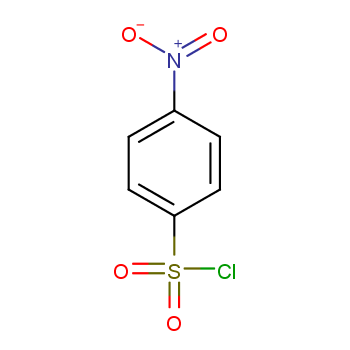
4-Nitrobenzenesulfonyl chloride (CAS 98-74-8), also written p-nitrobenzenesulfonyl chloride and abbreviated NsCl or p-NsCl, is a pale-yellow to light-brown crystalline solid of molecular weight 221.62 g/mol with a typical melting range near 73–77 °C. It fills a structurally narrow but commercially decisive niche: a nitro-activated arylsulfonyl chloride used to install the nosyl (Ns) protecting group on amines, to build sulfonamides, and to convert alcohols into highly reactive sulfonate esters. Demand is anchored in pharmaceutical process chemistry and in multi-step peptide and heterocycle programmes rather than in commodity outlets, which means supply continuity, assay definition and moisture discipline decide most sourcing outcomes in 2026.
Commercially the molecule is bought on specification, not on price alone. Serious purchase contracts define four things: assay of the sulfonyl chloride function, free acid expressed as 4-nitrobenzenesulfonic acid, water content by Karl Fischer titration, and appearance plus melt behaviour as a rapid identity screen. Assay is commonly determined by derivatisation of the sulfonyl chloride followed by chromatographic quantitation, or by controlled hydrolysis with subsequent acid–base titration of the liberated acid chloride equivalents; both methods must be stated on the certificate of analysis because they do not give numerically identical results on aged material.
The 2026 differentiator is handling integrity. NsCl hydrolyses on contact with moisture and liberates hydrogen chloride, so drum pressurisation, caking, free-acid drift and packaging corrosion are the recurring failure modes in export channels. Buyers who specify nitrogen-blanketed, desiccated, moisture-barrier packaging, who require retained samples, and who audit the shipper's hazardous-goods documentation will see materially fewer disputes than buyers who simply compare unit prices.
The reactivity of NsCl follows from the electronic structure of the aromatic ring. The para nitro group is a strong electron-withdrawing substituent; it lowers electron density at the ipso carbon and, through the ring, increases the electrophilicity of the sulfur(VI) centre while stabilising the sulfonate anion that departs during nucleophilic substitution. In practice this makes NsCl a more aggressive sulfonylating agent than unsubstituted benzenesulfonyl chloride and allows nosylation of hindered or weakly nucleophilic amines under conditions that leave other sulfonyl chlorides sluggish.
Industrial supply is dominated by two route classes. Both are mature electrophilic aromatic substitution and chlorination chemistries, but they differ markedly in the impurity profile they generate, in the acid load they produce, and in the corrosion demands they place on plant materials of construction. Producers typically choose between them on the basis of existing chlorosulfonic acid infrastructure, waste-acid treatment capacity and the target specification tier.
Demand tracks pharmaceutical development intensity rather than macro chemical output. Growth in peptide therapeutics, in targeted covalent inhibitor programmes that rely on sulfonamide and sulfonate chemistry, and in contract synthesis campaigns has kept offtake firm even as other aromatic intermediates softened. Buyers increasingly request documentation packages rather than drum quantities alone, reflecting tighter audit expectations at the receiving pharmaceutical site.
Capacity is concentrated among chlorosulfonation-capable fine chemical works with access to corrosion-resistant reactors, acid scrubbing and waste-acid treatment. Export flows move from producing clusters in Asia to European and North American pharmaceutical and reagent distributors, with a secondary intra-Asian flow serving regional API manufacture. Lead times are sensitive to upstream chlorosulfonic acid availability and to maintenance outages at scrubbing systems.
The market is visibly bifurcated. Industrial-grade material for agrochemical and dye use competes largely on price and is tolerant of wider assay bands. Reagent and GMP-adjacent grades command a premium and are sold on documented moisture control, defined free-acid limits, trace-metal screening and packaging integrity. Spot quotations swing with aromatic feedstock costs, chlor-alkali economics and freight surcharges for Class 8 dangerous goods.
NsCl sits at the intersection of corrosive-substance regulation and pharmaceutical-supplier qualification. The molecule itself is a relatively low-volume industrial chemical, but because it is consumed inside regulated API supply chains it inherits the documentation discipline of the pharmaceutical sector. Exporters should treat classification, labelling and downstream exposure control as a single package rather than three unrelated obligations.
Chlorosulfonation chemistry carries an environmental profile that customers now scrutinise directly. Hydrogen chloride evolution, spent sulfuric and sulfonic acid streams, and neutralisation salts all sit within the reported environmental footprint of the producer, and increasingly within the Scope 3 reporting of the pharmaceutical buyer that consumes the reagent.
Energy demand is concentrated in the exothermic reaction and quench step, in crystallisation and drying, and in scrubbing. Producers that recover hydrogen chloride as saleable hydrochloric acid, that recycle mother liquor, and that recover crystallisation solvent reduce both direct emissions and neutralisation salt burden. Buyers should ask for a documented mass balance rather than a generic sustainability statement.
Traceability expectations now extend upstream to aromatic feedstock origin and to the environmental permits of the chlorosulfonation site. ISO 9001 and ISO 14001 certification, Responsible Care or equivalent programme participation, and documented waste-acid disposal routes are the minimum evidence set. Audited producers that publish a batch genealogy linking feedstock lot, reaction batch and packaging lot are preferred partners for regulated customers. Because the product is consumed inside pharmaceutical supply chains, buyers also expect a clear statement of residual solvent identity, an elemental impurity statement framed against ICH Q3D expectations, and a written commitment to notify customers of any change in synthesis route, site or specification before the change takes effect.
Logistics for NsCl are deceptively demanding. The product is a solid with a moderate melting point, so it can be shipped without refrigeration, yet its moisture sensitivity and corrosive nature require packaging discipline closer to that of an acyl chloride than to that of a commodity aromatic solid.
Export consignments are normally declared as a corrosive solid, acidic, organic, not otherwise specified under the applicable UN entry, in Class 8 with Packing Group II, and moved under IMDG, ADR/RID or IATA Dangerous Goods Regulations depending on mode. Shippers must provide correct technical name, packing instruction compliance, segregation from alkaline and water-reactive cargoes, dry ventilated stowage away from heat sources, and emergency response information referencing hydrogen chloride evolution on contact with water. Consignees should verify that drums have travelled under cover rather than on open deck, because solar heating combined with residual moisture accelerates decomposition, and should inspect outer packaging for staining or corrosion before accepting delivery. Documentation should travel with the goods and include the classification, packing group, and a clear statement that the material reacts with water to liberate hydrogen chloride.
For exporters, the route to durable margins is specification leadership rather than tonnage leadership. The following three moves consistently separate preferred suppliers from interchangeable ones in competitive tenders.
4-Nitrobenzenesulfonyl chloride remains a small-volume, high-leverage reagent. Its commercial value rests on three properties that cannot be substituted cheaply: nitro-activated sulfonyl transfer reactivity, the mild deprotection behaviour of the nosyl group in peptide and complex-molecule synthesis, and its utility in sulfonamide and sulfonate construction. Suppliers who understand that the product is sold as a performance guarantee will continue to outperform those who treat it as a commodity aromatic.
The practical agenda for 2026 is unambiguous. Tighten water and free-acid specifications, nitrogen-blanket every pack, document the hydrogen chloride abatement route, and align regulatory files across REACH, CLP and TSCA. Buyers who pair that discipline with audited, traceable sourcing will find that total delivered cost falls even when unit price does not.
Powered by Guidechem
This white paper is exclusively compiled by the Guidechem Intelligence Team based on global customs data, regulatory databases, and industry research. Guidechem is a leading global B2B chemical platform, dedicated to connecting global buyers with verified, high-quality manufacturers.
Relying on Guidechem's extensive global database, we have mapped the core participants in the current global 4-Nitrobenzenesulfonyl chloride (p-Nosyl chloride, NsCl) supply chain:
Disclaimer: The content of this white paper is compiled based on public market data and regulatory information available as of 2026. Global chemical regulations are subject to dynamic adjustments. In actual export operations, enterprises must consult professional regulatory advisors or relevant competent authorities to obtain the latest compliance guidance.
|
 |
 |
 |
 EN
 Agricultural News
 Food News
 Industrial News
 Cosmetic News
 Pharmaceutical News
 Science News


 3YRS

