
I. Executive Summary
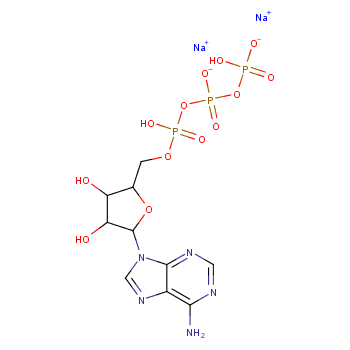
Adenosine 5'-triphosphate disodium salt (ATP-Na2; CAS 987-65-5; C10H14N5Na2O13P3; MW 551.14 anhydrous, commonly supplied as the trihydrate near 605.19) is the workhorse nucleotide of industrial biochemistry. Its 2026 market is no longer a single market: diagnostic reagent manufacturers, molecular biology and cell culture suppliers, food and nutrition formulators and cosmetic ingredient houses now buy the same molecule against four different regulatory frameworks, four different purity philosophies and four different packaging regimes. Understanding which track a consignment is on is the first task of any sourcing decision.
Technically the molecule is unforgiving. The triphosphate chain hydrolyses progressively to ADP, AMP and adenosine; the solid is strongly hygroscopic and absorbs enough water to invalidate an assay on a dry basis; and the sodium salt is thermally labile enough that warm, humid warehousing shows up as a measurable rise in free phosphate within weeks. Specifications therefore must fix HPLC purity, related nucleotide profile, inorganic phosphate, heavy metals and water content together, and logistics must be built around dry, cold, sealed handling.
This paper compares fermentative and enzymatic routes with chemical phosphorylation, sets out the analytical and stability controls that separate grades, maps the food, pharmaceutical, diagnostic and cosmetic tracks, and closes with the packaging and cold-chain practices that protect the triphosphate chain. It is written for B2B buyers; nothing here is a therapeutic or efficacy claim.
II. Product Deep Dive: Molecular Mechanisms and Production Evolution
2.1 Physicochemical Properties and Mechanisms
ATP is a white, crystalline, intensely hygroscopic powder, freely soluble in water and essentially insoluble in most organic solvents. The molecule comprises adenine, ribose and a chain of three phosphate groups linked by phosphoanhydride bonds whose hydrolysis is strongly exergonic, which is why ATP functions as the universal energy currency in enzymatic phosphorylation, kinase and luciferase reactions. In the disodium salt the phosphates are partially neutralised, giving an aqueous solution near neutral pH; below pH 4 and above pH 9 the rate of hydrolytic degradation accelerates sharply.
- Triphosphate integrity and related nucleotides: The commercial specification turns on the distribution of ADP, AMP and adenosine, not merely on total assay. Enzymatic routes deliver a cleaner 5'-selective profile, whereas chemical phosphorylation generates 2'- and 3'-isomers alongside pyrophosphate and inorganic phosphate. Ion-pair or anion-exchange HPLC with UV detection is the standard method, and buyers should require reporting of each congener rather than a single purity figure.
- Water, sodium and metal content: Karl Fischer water, sodium assay and heavy metals interact: absorbed water dilutes the active content, while residual magnesium, manganese or iron from enzymatic steps accelerates hydrolysis and interferes with downstream polymerase and kinase assays. High-grade material therefore fixes water below a tight limit, declares sodium stoichiometry and applies ICP-MS screening consistent with ICH Q3D where pharmaceutical or diagnostic use is intended.
2.2 Synthesis and Manufacturing Technologies
Two production philosophies supply the market, and the choice between them is visible in the impurity profile long before it is visible in the price.
- Fermentation and enzymatic phosphorylation: Leading producers generate adenosine or AMP from yeast-derived RNA by enzymatic hydrolysis and fermentation, then convert it to ATP with kinase cascades — adenylate kinase with acetate kinase or polyphosphate kinase — using acetyl phosphate, phosphoenolpyruvate or polyphosphate as donor, often with cofactor regeneration and immobilised enzymes. The route is 5'-selective, aqueous and comparatively green, with low metal carryover and a clean isomer profile, at the cost of higher capital and tighter bioburden control.
- Chemical phosphorylation: Direct phosphorylation of adenosine with phosphoryl chloride or trialkyl phosphate donors is cheaper in capital and scalable in bulk, but it is weakly regioselective, produces 2'- and 3'-phosphate isomers and inorganic phosphate, and requires acidic work-up that generates saline, phosphate-rich effluent. Material from this route is acceptable for industrial and some food applications after ion-exchange and crystallisation, but rarely satisfies the nucleotide-purity expectations of diagnostic or transcription-grade buyers.
2.3 Core Application Matrix
- Diagnostics and life-science reagents: The dominant high-value use is the firefly luciferase ATP bioluminescence reaction, which underpins hygiene monitoring, microbial detection, cell viability and proliferation assays, and ATP-dependent kinase screening. This segment buys on functional performance — low ADP background, defined water content, absence of nuclease and microbial contamination — and is the least price-elastic.
- Food and nutrition applications: Where food use is intended, eligibility must be verified jurisdiction by jurisdiction: the EU Union list of authorised food additives with a matching use, China's GB 2760, and in the United States a listed additive use or a food-grade monograph such as the Food Chemicals Codex. Authorisations granted to other 5'-ribonucleotides must not be assumed to extend to ATP.
- Pharmaceutical, cell culture and cosmetic use: Pharmaceutical and bioprocess grades serve as reagents and process components rather than as active treatments, and should meet USP or Ph.Eur. monograph expectations where claimed, with ICH Q3D elemental and microbial limits. Cosmetic use requires confirmation that the ingredient is permitted in the target market inventory, and no therapeutic or performance claim may be attached to the material.
III. Global Market Supply-Demand Landscape and Export Trends
3.1 Demand Drivers and Market Shifts
Demand growth is disproportionately driven by reagents rather than by bulk. Hygiene-monitoring and rapid-microbiology consumables, cell-based assay kits, and the broader expansion of molecular biology and enzymatic synthesis consume steadily more high-purity nucleotide, while food and industrial volumes grow only with population and formulation cycles. The shift toward enzymatic synthesis in fine chemicals has also created a new class of buyer: process chemists using ATP as a regeneration cofactor at pilot scale.
3.2 Capacity Distribution and Export Flows
Capacity tracks the fermentation industry. Chinese producers in Shandong, Jiangsu and Zhejiang operate integrated starch-to-glucose-to-fermentation nucleotide chains and dominate bulk and mid-grade supply; Japanese and Korean manufacturers, with long-standing nucleotide fermentation expertise, hold the premium reagent and diagnostic positions; European and North American participants increasingly function as GMP-grade finishers, reagent formulators and cold-chain distributors rather than primary manufacturers. Export flows therefore run from Asian bulk origins into regional repackaging and quality-release hubs.
3.3 Market Bifurcation and Pricing Dynamics
Pricing splits by grade far more than by origin. Bulk industrial and food-grade material competes on glucose and fermentation cost, energy and purification yield, and trades as a commodity. Diagnostic and molecular-biology grades, which add nuclease-free handling, endotoxin and bioburden testing and tighter nucleotide profiling, command multiples of that price for the same molecule. GMP-aligned material intended for pharmaceutical applications adds documentation and stability cost again. Buyers who specify the intended track clearly at enquiry stage avoid both overpaying for bulk needs and, more dangerously, receiving commodity material into a diagnostic application.
IV. In-depth Analysis of Global Compliance and Regulatory Barriers
ATP-Na2 is unusual in that the chemical itself is benign while the end use determines the regulatory burden. A single shipment can serve a food formulation, a diagnostic kit and a cosmetic product, each with a different authorisation and labelling obligation the supplier cannot discharge on the buyer's behalf.
4.1 European Market: REACH, CLP, and Sector-Specific Directives
- REACH status and chemical inventory: Importers must establish whether the substance is registered for the relevant tonnage band or exempt, obtain the supplier's REACH statement and confirm the number or exempt basis with the only representative or EU importer. Because nucleotide salts may be treated differently by hydrate form, the confirmation should reference the exact CAS and hydrate state.
- Sector-specific food and cosmetic rules: Food use requires an entry in the Union list of authorised food additives with a matching use category; cosmetic use requires the ingredient to be permitted under the cosmetics regulation with correct labelling. In both cases the buyer, not the chemical supplier, carries responsibility for the claim, and no therapeutic or efficacy statement may accompany the material.
4.2 North American Market: TSCA, EPA, and FDA Regulations
- TSCA and FDA-facing quality expectations: Commercial import requires an active TSCA inventory listing; the certificate should name the correct CAS and hydrate form. Where material is supplied for pharmaceutical or diagnostic manufacture, buyers should expect ICH Q7-aligned documentation for the API-adjacent steps, ICH Q3D elemental reporting and, where claimed, conformity to the USP monograph or a validated in-house specification.
- Food-grade and FCC conformity: Food applications in the United States require a lawful basis — a listed food additive use or a food-grade monograph such as the Food Chemicals Codex — together with facility registration and labelling compliance. Suppliers should be asked to state precisely which monograph and which edition the certificate of analysis is tested against.
4.3 The Critical Hurdle: Quality Control and Safety Limits
Compliance Warning: Three specification failures account for most disputes. First, water: ATP-Na2 is strongly hygroscopic, and a certificate quoting assay without a Karl Fischer result and a stated anhydrous or as-is basis is not interpretable. Second, the nucleotide profile: ADP, AMP and adenosine must be reported individually, because ADP in particular generates background signal in luciferase assays and competes in kinase reactions. Third, inorganic phosphate and heavy metals: residual phosphate indicates degradation or incomplete purification, and transition metals catalyse further hydrolysis. For diagnostic, cell culture and transcription use, add endotoxin, bioburden and DNase/RNase-free statements, and for pharmaceutical use add ICH Q3D screening. No therapeutic or efficacy claim may be made for this material, and food use must be confirmed against the applicable additive list before formulation.
V. Green Trade Barriers and ESG in Manufacturing
Nucleotide manufacture is a fermentation-and-purification business, which means its environmental profile is dominated by sugar feedstock, water use, cooling and the saline phosphate-rich effluent from ion-exchange regeneration. Buyers in consumer-facing sectors increasingly ask for the same evidence here as for any other bio-based ingredient.
5.1 Carbon Footprint and Circular Economy
Cradle-to-gate emissions concentrate in fermentation aeration and cooling, in downstream concentration and in freeze-drying, which is energy-intensive and non-negotiable for a thermally labile nucleotide. Practical reductions come from heat recovery across evaporators, high-efficiency lyophilisation cycles with optimised shelf loading, solvent-free aqueous processing, and recovery of phosphate from regeneration streams as a fertiliser-grade by-product. Because the process is already aqueous, meaningful gains come from water reuse and from the energy source rather than from solvent substitution.
5.2 Sustainable Sourcing and Traceability
Feedstock traceability is the substantive issue: fermentation-grade glucose is typically derived from corn, cassava or wheat starch, and customers with deforestation or responsible-sourcing commitments will ask for origin and, where relevant, evidence that the starch supply chain is free from conversion-linked sourcing. Buyers should expect ISO 9001 and ISO 14001, a statement on genetically modified processing aids where enzymes are used, and confirmation that the production organism handling complies with national biosafety rules for contained fermentation.
VI. Supply Chain Resilience and Export Logistics
ATP-Na2 is not dangerous to transport, but it is fragile in a way that matters commercially: moisture, warmth and time convert triphosphate into diphosphate, and a shipment that arrives caked or with elevated inorganic phosphate has lost real value even though nothing leaked. Logistics should therefore be designed as a stability programme with freight attached.
6.1 Packaging Standards and Moisture/Contamination Control
- Sealed, desiccated primary packaging: Lyophilised or crystalline material is filled into aluminium foil laminate pouches or amber glass and HDPE bottles under low humidity, heat-sealed with desiccant and humidity indicator, then overpacked in drums or cartons. Reagent and diagnostic grades are filled under controlled humidity with validated headspace, and buyers should require evidence of sealing integrity rather than relying on visual inspection on receipt.
- Cold storage and aliquoting discipline: Storage is typically at −20 °C, protected from light, with dry handling and minimal headspace; some grades ship refrigerated or with cold packs for short transit. Buyers should specify aliquot sizes matched to consumption so that a working container is not repeatedly warmed and re-frozen, since freeze–thaw cycling and condensation are the commonest causes of in-house degradation.
6.2 Dangerous Goods Identification and Transit Protocols
The salt has no UN number and is not class-restricted under IMDG, IATA DGR or ADR as a non-hazardous solid; where dry ice is used, carbon dioxide as UN 1845, Class 9, is the regulated element and must be declared and packaged accordingly, with cargo-aircraft quantity limits. Transit practice is to minimise duration, use validated insulated shippers with temperature loggers for high-value grades, and require the receiving quality unit to review the record and re-test water content and nucleotide profile before release.
VII. Enterprise Global Expansion Strategy Guide
For manufacturers moving into higher-value tracks and for buyers consolidating suppliers, three moves consistently pay back.
- Declare the end-use track at enquiry: Quote against food, diagnostic, pharmaceutical or cosmetic destination explicitly and build the certificate of analysis around that track — FCC and additive status for food, endotoxin and nuclease-free statements for reagents, Q3D and monograph conformity for pharmaceutical. This prevents both over-specification and dangerous under-specification.
- Invest in stability and moisture evidence: Generate real-time and accelerated stability data at the declared storage condition with water content and ADP as trending attributes, and share the protocol with customers. Stability evidence is what converts a nucleotide supplier from a catalogue vendor into a qualified source.
- Regionalise finishing and cold-chain inventory: Hold bulk in the primary manufacturing region but finish, aliquot and release in regional hubs with validated cold storage, so that last-mile delivery is short and monitored. For hygroscopic, thermally labile material, distance travelled after the cold-chain break is the dominant quality risk.
VIII. Conclusion
ATP-Na2 is a commodity molecule sold into non-commodity applications. The chemistry is mature and the routes are understood; what separates suppliers is the ability to hold the triphosphate chain intact from fermenter to freezer, to report ADP, water and inorganic phosphate as separate facts, and to document end-use authorisation for the customer's track. Enzymatic routes will continue to gain share where purity and metal content matter, while chemical phosphorylation retains bulk and industrial applications.
Buyers should qualify on stability evidence and grade discipline, insist on sealed desiccated packaging with monitored cold chain, and verify food and cosmetic authorisation before formulation. No therapeutic or efficacy claim is made or implied in any application.
IX. Industry Resource Connection and Supplier Ecosystem
Powered by Guidechem
This white paper is exclusively compiled by the Guidechem Intelligence Team based on global customs data, regulatory databases, and industry research. Guidechem is a leading global B2B chemical platform, dedicated to connecting global buyers with verified, high-quality manufacturers.
Relying on Guidechem's extensive global database, we have mapped the core participants in the current global Adenosine 5'-triphosphate disodium salt (ATP-Na2) supply chain:
- China — integrated fermentation nucleotide base: Producers in Shandong, Jiangsu and Zhejiang run starch-to-glucose-to-fermentation nucleotide chains with enzymatic phosphorylation, dominating bulk and mid-grade supply and increasingly offering diagnostic-grade material. Buyers should audit water control, lyophilisation capacity and metal content, which are where bulk-origin material most often falls short.
- Japan and Korea — premium reagent and diagnostic grades: Manufacturers with long-established nucleotide fermentation expertise supply the highest-purity diagnostic and molecular-biology material, with rigorous nucleotide profiling, low ADP background, nuclease-free filling and strong documentation. Their premium is justified in applications where assay background determines kit performance.
- United States and European Union — GMP finishing, formulation and cold-chain distribution: Regional participants convert imported bulk into pharmaceutical, diagnostic and cosmetic-compliant grades through finishing, aliquoting, quality release and documented cold-chain warehousing, and carry the regulatory-facing documentation for food additive and cosmetic inventory status. They trade margin for proximity, traceability and auditability.
Disclaimer: The content of this white paper is compiled based on public market data and regulatory information available as of 2026. Global chemical regulations are subject to dynamic adjustments. In actual export operations, enterprises must consult professional regulatory advisors or relevant competent authorities to obtain the latest compliance guidance.



 EN
 Agricultural News
 Food News
 Industrial News
 Cosmetic News
 Pharmaceutical News
 Science News


 12YRS

