-
We detected your language preference as English. Would you like to switch to the English version for a better experience?
Switch to English
Stay here


Every high-performance protective coating that outlasts a single season — the refinish clearcoat on a car, the epoxy lining of a chemical storage tank, the polyurethane topcoat on a wind turbine tower — is almost always a two-component (2K) system. In the can, you have a resin (also called the base or Part A) carrying reactive functional groups, and a separate hardener (Part B, the crosslinker or curing agent) that reacts with those groups after mixing. The film is not formed by simple solvent evaporation; it is formed by chemical crosslinking — a polymerization reaction that builds a three-dimensional network in situ on the substrate.
Formulators who treat the hardener as "just the activator" run into familiar failures: short pot life, soft films that never reach hardness, CO2 blistering, amine blush, or off-ratio films that delaminate within months. Understanding the reaction chemistry — hydroxyl groups meeting isocyanates, epoxide rings opened by amines, and the equivalent-weight arithmetic that ties it all together — is what separates a robust specification from a coating failure. This guide walks through the mechanism of resin–hardener crosslinking, the major chemical families, stoichiometric mix-ratio calculation, and the regulatory framework (REACH, VOC directives, ASTM and ISO test standards) that governs these systems.
| Function | Target Applications | Key Specifications | Compliance Status |
|---|---|---|---|
| 2K polyurethane crosslinking: hydroxyl-functional resin + polyisocyanate hardener | Automotive refinish and OEM clearcoats, industrial maintenance topcoats, wood and plastic coatings | NCO content of hardener ~11–22%; NCO:OH index typically 1.0–1.2; pot life 2–8 h; VOC < 420 g/L | REACH registered; EU Directive 2004/42/EC VOC limits; diisocyanates classified EU H334 (Resp. Sens. 1) |
| 2K epoxy-amine crosslinking: epoxy resin + amine/polyamide hardener | Marine and protective primers, tank and pipe linings, concrete floor coatings, structural adhesives | EEW 180–200 for liquid DGEBA resins; AHEW-based stoichiometry; cure 7–10 days to full properties | REACH registered; bisphenol A epoxy resins classified Skin Sens. 1 / Aquatic Chronic 2 under EU CLP |
A coating resin is a low-to-medium molecular-weight polymer deliberately decorated with reactive groups — hydroxyl (–OH) groups on polyurethane resins, oxirane (epoxide) rings on epoxy resins, carboxyl or carbonyl groups on other systems. Left alone, these resins are processable: they flow, level and wet the substrate. The hardener is a small molecule or oligomer carrying the complementary functionality — isocyanate (–N=C=O), amine (–NH2), or hydrazide groups. When Part A and Part B are mixed, the complementary groups find each other and form covalent bonds, converting a collection of linear or branched chains into a single crosslinked network whose molecular weight is effectively infinite. This network is the film: insoluble, mechanically tough, and chemically resistant.
In 2K polyurethane coatings, a hydroxyl-functional acrylic or polyester resin reacts with a polyfunctional isocyanate hardener — typically the isocyanurate trimer of hexamethylene diisocyanate (HDI, CAS 822-06-0) or of isophorone diisocyanate (IPDI, CAS 4098-71-9). Each isocyanate group undergoes nucleophilic addition with a hydroxyl group to form a urethane linkage (–NH–CO–O–), releasing no by-product:
Because a single hardener molecule carries three or more NCO groups and each resin chain carries many OH groups, one addition event at each site stitches the whole mixture into a network. The reaction is fast even at room temperature, which is why 2K polyurethanes deliver "reactive speed": dust-free dry in 15–30 minutes and recoatable within hours. The trade-off is a limited pot life — once mixed, the reaction proceeds in the mixing cup just as it does on the substrate.

Isocyanate groups react with hydroxyls (urethane), amines (urea) and water (CO2-releasing side reaction).
Water is the formulator's enemy in this chemistry. Isocyanate reacts with moisture to form an unstable carbamic acid that splits into an amine and carbon dioxide; the amine then reacts with further NCO groups to form urea crosslinks. The urea is not the problem — the evolved CO2 gas is, because it becomes trapped as bubbles and pinholes in the drying film. This is why moisture contamination in 2K PU systems causes blistering, and why specifications demand dry solvents, controlled humidity, and sealed containers.
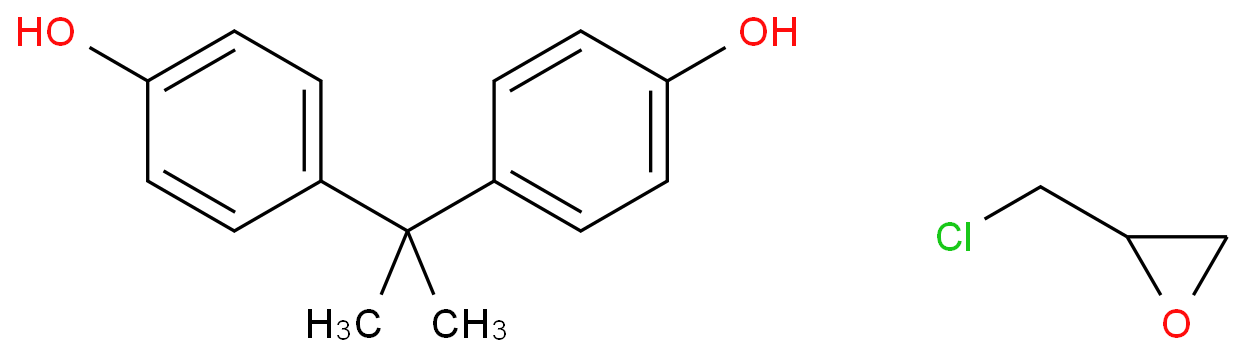
In 2K epoxy systems, the resin is most commonly bisphenol A diglycidyl ether (DGEBA, CAS 25068-38-6) — an oligomer with a terminal epoxide ring at each end. The hardener is a polyamine, polyamide, or amine adduct. A primary amine nitrogen attacks the least-hindered carbon of the epoxide ring in a nucleophilic ring-opening addition, producing a β-hydroxy secondary amine; the newly generated secondary amine then opens a second epoxide to form a tertiary amine linkage. No volatile by-product is released, so the crosslinking is a true addition cure with minimal film shrinkage:

Stepwise epoxy-amine addition: each amine hydrogen can open one epoxide ring, generating hydroxyl groups that improve adhesion.
Note a chemical elegance here: every crosslinking step generates a free hydroxyl group. These OH groups contribute strongly to adhesion on steel, concrete and galvanized metal — one reason epoxy-amine primers dominate heavy-duty protection under ISO 12944 anti-corrosion systems. The same chemistry explains the classic defect of fast amine hardeners: amine blush, a whitish, tacky film of amine carbamate formed when unreacted amine scavenges atmospheric carbon dioxide and moisture during humid, cold-temperature cures.
What ties resin and hardener together quantitatively is the functional group equivalent weight — the mass of a component that supplies one mole of reactive groups. For polyols this is the hydroxyl equivalent weight (derived from the hydroxyl value); for isocyanate hardeners it is the NCO equivalent weight (42 g per mole NCO, so a hardener with 22% NCO content has an equivalent weight of roughly 190 g/eq); for epoxies it is the epoxy equivalent weight (EEW) and for amines the amine hydrogen equivalent weight (AHEW). To fully crosslink, you mix components in amounts that deliver equal equivalents of complementary groups — adjusted by an intentional index (excess NCO, or excess amine) when the chemistry benefits from it.

Mix-ratio arithmetic: parts of hardener per 100 parts resin = (equivalent weight of hardener groups ÷ equivalent weight of resin groups) × 100 × index.
The workhorse family for finishes demanding gloss, exterior durability and chemical resistance. Aromatic hardeners (TDI adducts, CAS 26471-62-5) cure fast and cheaply but yellow under UV, so they are confined to primers and interior use. Aliphatic hardeners — HDI biurets and isocyanurates (e.g., the HDI homopolymer, CAS 28182-81-2, widely supplied as a low-monomer polyisocyanate) and IPDI trimers — deliver the non-yellowing weatherability required of automotive and aerospace topcoats. Limitations: moisture sensitivity (CO2 blistering), respiratory sensitization hazards requiring strict exposure control, and a hardening cost per kilogram well above commodity resins.
Chosen where adhesion, corrosion resistance and film build matter more than UV stability. Hardener chemistry spans aliphatic amines (fast, blush-prone), amine adducts (reduced blush, safer handling), polyamides (flexible, tolerant ratios, slower), cycloaliphatic amines (chemical resistance, floor coatings) and Mannich bases (cold-temperature cure, water-tolerant application). Limitations: chalk on UV exposure restricts epoxies to primers and interiors, and cure slows dramatically below ~10 °C unless accelerated hardeners are specified.
The same reactive chemistry can be packaged in one can. Moisture-cure polyurethanes use free NCO-terminated prepolymers that crosslink with ambient humidity to form urea linkages — excellent for field-applied maintenance coatings, at the cost of slow, humidity-dependent cure. Blocked isocyanates carry the NCO group temporarily capped with a thermally labile group (MEKO, malonate ester, diethylamine adducts); stoving at 140–180 °C releases the free isocyanate to react with the polyol, enabling stable one-component baking enamels for coil, automotive OEM and can coatings. Hydrazide crosslinkers such as adipic dihydrazide (CAS 1071-93-8) react with carbonyl-functional (keto- or aldehyde-bearing) polymers at moderate temperature, forming hydrazone linkages in low-temperature bake and self-crosslinking dispersion systems. Each of these families trades the mixing control of a 2K system against the application convenience of one component.
For completeness, many decorative coatings still avoid separate hardeners entirely: alkyd resins crosslink by oxygen uptake through auto-oxidative drying of unsaturated fatty acid side chains, and UV-cure acrylates crosslink by free-radical photopolymerization of multifunctional acrylate oligomers. These systems illustrate the boundary condition of the topic: a "resin + hardener" architecture is chosen precisely when the formulator needs the crosslink density, or the reaction selectivity, that oxygen or light-driven curing cannot deliver through the film in thick, pigmented or field-applied layers. More background on resin crosslinking chemistry and curing agent selection can be found in the Guidechem encyclopedia.
| System | Key CAS / Component | Cure Condition | Pot Life / Recoat | Strengths | Limitations |
|---|---|---|---|---|---|
| 2K aliphatic PU (acrylic polyol + HDI isocyanurate) | 28182-81-2 (HDI homopolymer) | Room temperature, 20–80 °C force-dry | 2–8 h pot life; recoat 2–6 h | Gloss, UV stability, chemical and abrasion resistance | Moisture sensitivity; isocyanate sensitization controls |
| 2K aromatic PU (polyester polyol + TDI adduct) | 26471-62-5 (TDI) | Room temperature, fast | 1–4 h pot life | Fast cure, low cost, hardness | Yellows on UV exposure; interior/ primer use |
| 2K epoxy-amine (DGEBA + polyamide) | 25068-38-6 (DGEBA) | Room temperature, 7–10 days to full cure | 30 min–4 h pot life | Adhesion, corrosion protection, high film build | Chalking outdoors; slow cold-weather cure |
| Moisture-cure PU (NCO prepolymer, 1K) | 101-68-8 (MDI-based prepolymers) | Ambient humidity, 24–72 h | No mixing; can life months if sealed | One-component convenience; tough elastomeric films | Humidity-dependent cure; CO2 pinholing in thick films |
| Blocked isocyanate baking enamel (1K) | 4098-71-9 (IPDI derivatives) | 140–180 °C stoving, 10–30 min | No pot life; shelf-stable | One-component automation; excellent flow | High energy cost; not for field application |
| Hydrazide-cured keto-functional polymer | 1071-93-8 (adipic dihydrazide) | Ambient to 80–120 °C bake | Latent; stable one-component | Low-temperature crosslinking; waterborne-compatible | Slower crosslink; carbonyl-functional resin required |
| Alkyd (oxidative, no hardener) | Long-oil alkyd resin | Air/oxygen, touch-dry 4–8 h | No pot life | Low cost, easy brush application | Slow through-cure; moderate chemical resistance |
A two-component coating succeeds or fails at the mixing station. The correct hardener quantity is not a guess — it falls directly out of the equivalent-weight calculation:
Worked example (2K PU): an acrylic polyol with hydroxyl equivalent weight 1,000 g/eq is crosslinked with an HDI isocyanurate hardener of NCO equivalent weight 190 g/eq at an NCO:OH index of 1.05. Hardener required = 100 × 190 ÷ 1,000 × 1.05 ≈ 20 parts per 100 parts resin. Worked example (2K epoxy): a DGEBA resin with EEW 190 is cured with a polyamide of AHEW 150 at 1:1 stoichiometry: hardener = 100 × 150 ÷ 190 ≈ 79 parts per 100 parts resin. Always verify the supplier's stated equivalent weight (by hydroxyl value, NCO content or EEW titration) rather than relying on generic literature values.
Practical processing guidance for 2K application:
| Jurisdiction / Body | Regulation or Standard | Relevance to Resin–Hardener Systems |
|---|---|---|
| European Union — Chemicals | REACH Regulation (EC) No 1907/2006; Regulation (EU) 2020/1149 | Registration of polyols, epoxies, polyisocyanates; mandatory training requirement for professional users of diisocyanates since August 2023 |
| European Union — Classification | CLP Regulation (EC) No 1272/2008 | Diisocyanates carry EUH204 and Resp. Sens. 1 (H334); DGEBA epoxies carry Skin Sens. 1 and Aquatic Chronic 2 |
| European Union — Air | Directive 2004/42/EC (Decopaint Directive) | VOC content limits for 2K reactive systems: e.g., 420 g/L for 2K performance coatings, 500 g/L for two-pack reactive primers (category j) |
| United States — Air | US EPA 40 CFR Part 59 (National VOC Emission Standards); Ozone Transport Commission state rules | VOC limits for automobile refinish coatings and industrial maintenance coatings drive high-solids 2K formulation |
| United States — Worker Safety | OSHA 29 CFR 1910 Subpart Z; ACGIH TLVs | Exposure control for TDI/HDI (sensitizers): supplied-air respirators for spray application of isocyanate hardeners |
| International — Test Standards | ASTM D2369, ASTM D4752, ASTM D4541; ISO 2812, ISO 4628, ISO 12944 | VOC content determination, MEK-rub cure verification of PU films, pull-off adhesion, chemical resistance, durability and corrosion-protection qualification |
Because the same crosslinking reaction that builds the protective film runs at room temperature. Once the reactive groups (OH + NCO, or epoxide + amine hydrogen) are combined, network formation begins in the container: viscosity climbs, the pot life clock starts, and the material eventually gels into an unusable solid. Separate packaging keeps the reactive partners apart during storage, which is why most 2K systems specify at least 12 months shelf life for unmixed components stored cool and dry.
Stoichiometry must match equivalents of functional groups. Excess resin leaves unreacted hydroxyl or epoxide groups that plasticize the film — soft, slow-drying, poor solvent resistance. Excess hardener is often worse: surplus isocyanate reacts with atmospheric moisture to release CO2, causing microbubbles and pinholes, while surplus amine migrates to the surface, blushes with carbon dioxide, and destroys intercoat adhesion. Small deliberate indices (e.g., NCO:OH of 1.05–1.20) are intentional — they compensate for moisture and ensure full network conversion — but sloppy off-ratio mixing is never acceptable.
The bisphenol A ether backbone of DGEBA epoxies absorbs UV radiation and undergoes photo-oxidative degradation, breaking the polymer surface down into a chalky, eroding layer. Aliphatic polyurethanes built from HDI or IPDI hardeners contain only UV-stable aliphatic and cycloaliphatic structures, and their urethane linkage is far more photochemically robust. This is why the industry-standard duplex system pairs an epoxy-amine primer (adhesion, corrosion resistance) with an aliphatic PU topcoat (UV durability, gloss retention) — each chemistry doing the job its structure suits.
Every lever that speeds crosslinking shortens pot life: more reactive hardeners (primary amines, low-monomer HDI trimers), higher catalyst loading, higher temperature, higher functionality. Formulators decouple the two by choosing slower but selective chemistry (polyamide amines, IPDI trimers), adding catalyst only where possible, using low-monomer polyisocyanates to keep the reaction controllable, or moving to blocked or moisture-cure one-component systems when the application cannot tolerate a pot life at all. End users manage it operationally: mix only what can be applied within the stated pot life, use smaller batches in hot weather, and use plural-component spray equipment that meters and mixes at the gun for large jobs.
|
 |
 |
|
 EN
EN
 Agricultural News
 Food News
 Industrial News
 Cosmetic News
 Pharmaceutical News
 Science News

 1YR
1YR


