-
We detected your language preference as English. Would you like to switch to the English version for a better experience?
Switch to English
Stay here


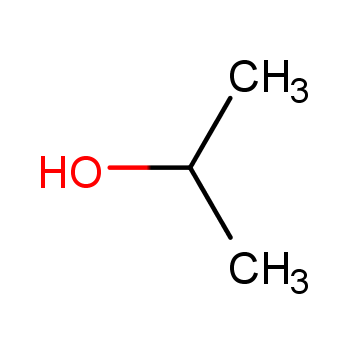
2-Propanol, with the chemical formula C3H8O and CAS number 67-63-0, is a colorless and flammable alcohol, often used in industrial settings as a solvent and cleaning agent.
Isopropanol, also known as isopropyl alcohol, is a commonly used alcohol in laboratories and healthcare for disinfection and as a solvent. It shares the same molecular structure and formula as 2-propanol (C3H8O) but differs in its usage and the naming conventions.
While 2-propanol and isopropanol are often used interchangeably due to their identical molecular structure, understanding their specific applications and contexts can help determine the best use for each in industrial and healthcare settings.
2-Propanol is described by the molecular formula C3H8O, where the hydroxyl group (OH) is attached to the second carbon atom of the propyl chain. This is why it is also known as 2-propanol.
Isopropanol is another name for 2-propanol and is commonly used as a synonym. It is derived from the same molecular formula, C3H8O, but the term "isopropyl" refers to the specific structural arrangement of the carbon atoms. Both compounds are structural isomers, meaning they share the same molecular formula but differ in their molecular structures.

The synthesis of 2-propanol, also known as isopropanol, typically involves the hydration of propene (propylene), which is derived from petroleum. This process occurs through the reaction of propene with water in the presence of an acid catalyst. The reaction can be represented as follows:
Reaction:
Propene (C3H6) + H2O → 2-Propanol (C3H8O)
The reaction is carried out in an acidic medium (usually sulfuric acid) at elevated temperatures. The acid catalyzes the hydration, leading to the addition of a water molecule across the double bond of propene, forming 2-propanol.
Another method of synthesizing 2-propanol involves the reduction of acetone (CH3COCH3). In this process, acetone is reduced using hydrogen gas in the presence of a catalyst, such as nickel or platinum. This reduction reaction converts the carbonyl group (C=O) of acetone into a hydroxyl group (OH), resulting in the formation of 2-propanol.
Reduction Reaction:
Acetone (CH3COCH3) + H2 → 2-Propanol (C3H8O)
These methods are commonly employed in both industrial and laboratory settings to produce 2-propanol, with the hydration of propene being the most widely used commercial process. The reduction of acetone is typically used in smaller scale laboratory synthesis or where acetone is readily available as a starting material.
2-Propanol and isopropanol have broad applications across various fields, including industrial, healthcare, and laboratory environments. Both compounds are excellent solvents for organic materials, and they share similar uses in cleaning, disinfecting, and as solvents.

2-Propanol is widely used as a solvent in industrial cleaning. Its ability to dissolve oils, greases, and other organic compounds makes it an effective choice for cleaning machinery, equipment, and various other industrial materials. It is often employed in the formulation of cleaning agents for electronic devices and precision instruments. 2-propanol’s relatively low toxicity and quick evaporation rate make it suitable for use in controlled environments.
Isopropanol is predominantly used in healthcare and laboratory settings as a disinfectant and antiseptic. Its ability to kill bacteria and viruses makes it ideal for sanitizing surfaces, medical instruments, and even skin before injections. Isopropanol is commonly found in rubbing alcohol, which is used for cleaning minor cuts and wounds. In laboratory settings, it is employed for cleaning vials, tubes, and other glassware, ensuring that equipment is free of contaminants.
When comparing 1-propanol vs 2-propanol, the latter is generally considered a better solvent due to its higher volatility and ability to dissolve a wider range of organic materials. 1-propanol, while still useful, is typically employed in different contexts where a slower evaporation rate is necessary, such as in certain chemical formulations.
Both 2-propanol and isopropanol have important roles in the production of pharmaceutical products, paints, coatings, and other chemical formulations. In the pharmaceutical industry, isopropanol is used as a solvent for drug formulations, particularly for topical medications and lotions. It is also employed in the preparation of vaccines, where its solvent properties help in dissolving active ingredients. In the paint industry, 2-propanol is used to improve the flow and drying properties of paints and coatings, contributing to their smooth finish and quick setting times. Furthermore, isopropanol is often used in the production of cosmetics and perfumes, acting as a solvent for fragrances and essential oils.
In conclusion, 2-propanol and isopropanol are nearly identical compounds in terms of their molecular structure and physical properties. However, their applications differ significantly based on the contexts in which they are used. 2-propanol is mainly used in industrial cleaning, while isopropanol is more commonly employed as a disinfectant in healthcare and laboratory environments. Understanding the distinctions between these two alcohols can help ensure their proper use in various fields.
| Drawback |
2-Propanol |
Isopropanol |
|---|---|---|
| Toxicity | Moderately toxic if ingested or inhaled in large quantities | Moderately toxic if ingested or inhaled in large quantities |
| Flammability | Highly flammable, requires careful handling | Highly flammable, requires careful handling |
| Skin Irritation | May cause mild skin irritation with prolonged contact | May cause mild skin irritation with prolonged contact |
| Environmental Impact | Can contribute to pollution if not disposed of properly | Can contribute to pollution if not disposed of properly |
If you're looking to purchase these compounds, Guidechem is your go-to platform for sourcing high-quality raw materials and reliable suppliers. With our extensive global network, we connect you to a wide range of Isopropanol suppliers, ensuring you find the right products to meet your specific research or production requirements. Whether you're in pharmaceuticals, food additives, or other industries, Guidechem simplifies the sourcing process, offering verified supplier information, competitive pricing, and seamless communication.
[1]Isopropanol and 2-Propanol: Industrial and Laboratory Uses by J. A. Smith.
[2]Alcohols in Industrial Cleaning by L. M. Brown.
[3]The Role of Isopropanol in Healthcare and Laboratory Settings in Journal of Chemical Safety.
[4]Comparative Toxicity of Alcohols in Industrial Applications by R. K. Taylor.
[5]Flammability and Safety Considerations in the Use of Alcohols in Journal of Safety Science.
|
 |
 |
 |
 |
 |
 EN
EN
 Agricultural News
 Food News
 Industrial News
 Cosmetic News
 Pharmaceutical News
 Science News

 1YR
1YR


