-
We detected your language preference as English. Would you like to switch to the English version for a better experience?
Switch to English
Stay here


Every hair care formulator eventually faces the same question posed by consumers and marketing teams alike: which conditioning ingredients actually deliver? The market is crowded with contradictory claims — silicone-free, sulfate-free, naturally derived, salon-grade — while damaged, color-treated and chemically processed hair still demands measurable reductions in wet-combing force, frizz control and long-lasting softness. Choosing the wrong conditioning agent leads to limp, heavy hair, product buildup, incompatibility with the surfactant base, or a formula that fails on the half-head test. This guide compares the major classes of hair conditioning agents — cationic surfactants, cationic polymers, silicones, fatty alcohols and proteins — and explains which ones perform best for each application, substrate and claim platform.
| Function | Target Applications | Key Specifications | Compliance Status |
|---|---|---|---|
| Primary cationic conditioning & anti-static agent (behenyl quaternary ammonium salt) | Rinse-off conditioners, hair masks, intensive repair treatments, co-wash cleansers | Behentrimonium chloride, CAS 17301-53-0; C22 alkyl quat; typical use level 0.5–3% | CIR-reviewed; compliant with EU Regulation (EC) No 1223/2009; listed in INCI as INCI-name ingredient |
| Targeted deposit-on-damage conditioning film (amino-functional silicone) | Rinse-off and leave-in serums, color-care and damaged-hair lines, heat-protection sprays | Amodimethicone, CAS 107592-79-2; cationic silicone emulsion; typical use level 0.5–3% | CIR safe as used; EU REACH restrictions on D4/D5 cyclomethicone carriers apply (Regulation (EU) 2018/35) |
Hair conditioning is fundamentally a surface phenomenon. The alpha-keratin fiber has an isoelectric point near pH 3.67, so at typical cosmetic pH values of 4–7 the cuticle surface carries a net negative charge. Bleaching, perming, UV exposure and aggressive cleansing oxidize cystine disulfide bonds to cysteic acid residues, which dramatically increases the negative surface charge (zeta potential) of damaged hair. This is the physical basis of selective conditioning: cationic (positively charged) ingredients are electrostatically attracted to the hair surface, and the more damaged the fiber, the more strongly they adsorb.
Once the cationic headgroup anchors to the cuticle, the long hydrophobic alkyl tail or silicone backbone orients outward, creating a thin lubricating film. The measurable results are a lower coefficient of friction, easier wet and dry combing, reduced flyaway (anti-static effect), improved shine from a smoother cuticle surface, and better alignment of the cuticle scales. Nonionic ingredients such as dimethicone and fatty alcohols deposit by hydrophobic interaction and coacervation rather than electrostatics, which is why their substantivity profile — and their removability by shampoo — differs from that of quats and cationic polymers.
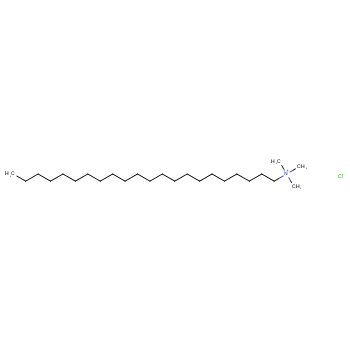
The benchmark cationic surfactants are produced by quaternization of a tertiary fatty amine with an alkyl halide. For example, behentrimonium chloride (INCI: Behentrimonium Chloride), the C22 workhorse of modern rinse-off conditioners, is synthesized from N,N-dimethylbehenamine and methyl chloride:
A milder, more sustainable route produces the behentrimonium methosulfate (BTMS) family used in many "gentle" or plant-derived conditioners: vegetable-derived fatty acids (typically rapeseed/canola) are first esterified with triethanolamine, then the ester amine is quaternized with dimethyl sulfate. Because the ester bonds are readily hydrolyzed after rinse-off, esterquats show improved environmental biodegradability and reduced aquatic toxicity compared with classical alkyl quats — an increasingly important selection criterion under EU ecolabel and retailer ingredient policies.
Long-chain quats such as cetrimonium chloride (C16, CAS 112-02-7) and behentrimonium chloride (C22, CAS 17301-53-0) remain the gold standard for rinse-off conditioning performance per unit cost. Adsorption is driven by the electrostatic attraction described above, and longer alkyl chains give heavier, more substantive conditioning — C22 behentrimonium chloride outperforms C16 homologues on very damaged, coarse or African-textured hair. Representative commercial products are sold as 80–85% active flakes or 30% active solutions. Limitations: classical quats can be irritating to eyes and skin at higher levels, they are incompatible with anionic surfactants (precipitating as insoluble salts), and they show poorer aquatic biodegradability than esterquats. In the EU, cetrimonium chloride is restricted by Annex III of Regulation (EC) No 1223/2009 to 2.5% in rinse-off hair products and 0.25% in leave-on hair products.
Behentrimonium methosulfate (CAS 81646-13-1), most commonly supplied as BTMS-25 or BTMS-50 (25% or 50% active dispersed in cetearyl alcohol), delivers nearly quat-level detangling with dramatically milder sensory properties — a characteristic creamy, powdery after-feel rather than a waxy drag. The paired fatty alcohol forms lamellar gel networks that build viscosity without added electrolytes, simplifying "clean label" formulations. Limitations: higher cost-in-use than behentrimonium chloride, slower cold-processability, and methosulfate quats are still cationic and still incompatible with anionic surfactant systems.
Polyquaternium-10 (cationic hydroxyethylcellulose, CAS 68610-92-4), Polyquaternium-7 and guar hydroxypropyltrimonium chloride (CAS 65497-29-2) carry multiple positive charges per chain, so a single polymer strand bridges many anionic sites on the cuticle. Their key advantage is performance in 2-in-1 shampoos: with anionic surfactants they form charge-neutralized coacervate complexes that deposit onto the hair during rinsing as the formula is diluted. Cationic guar, derived from a naturally occurring galactomannan, is the go-to choice for "naturally derived" claims in clear shampoo systems. Limitations: over-conditioning and cumulative buildup with repeated use, an unmistakable "coated" feel at overdose, and some polymers (notably Polyquaternium-7 and older Polyquaternium-11 grades) are poorly removed by mild sulfate-free shampoos.
Dimethicone (CAS 63148-62-9) and dimethiconol provide the highest lubricity of any conditioning class: very low surface tension lets the fluid spread into a microscopically thin hydrophobic film, delivering gloss, slip and heat protection at low cost. Amodimethicone (an amino-functional silicone, CAS 107592-79-2) combines silicone slip with a cationic amine group, so it selectively anchors to the most damaged, most negatively charged zones of the fiber — an elegant answer to the question of where conditioning is needed most. Limitations: non-functional silicones can accumulate on fine hair, dull the color of some dyes, and require anionic or amine surfactants for removal; in the EU, D4 (556-67-2) and D5 (541-02-6) cyclomethicones are restricted to less than 0.1% in wash-off products under REACH Regulation (EU) 2018/35, which has pushed the market toward dimethicone/blends and emulsified amino silicone systems.
Cetearyl alcohol (CAS 67762-27-0), cetyl alcohol and oleyl alcohol are the structural backbone of every cream-rinse conditioner: paired with the quat they build the lamellar gel network that gives body and opacity, and they contribute plasticizing, emollient deposition of their own. Natural oils and butters (coconut, argan, shea) add shine and support "naturally derived" claims, and coconut oil is one of the few triglycerides shown to penetrate the hair shaft and reduce protein loss. Limitations: oils alone are modest conditioners, weigh down fine hair, and the penetration benefit is limited to short, polar lipids; heavy applications require thorough rinsing to avoid greasiness.
Hydrolyzed proteins (keratin, wheat, silk, soy) and their quaternized derivatives (e.g., hydrolyzed wheat protein hydroxypropyltrimonium chloride) offer dual action: low molecular weight fragments penetrate partially into the cortex to improve moisture retention and elasticity, while larger fragments film-form on the surface. Panthenol (pro-vitamin B5, CAS 16485-10-2) similarly penetrates the fiber, where it is oxidized to pantothenic acid and is reported to improve flexibility and reduce breakage. Limitations: proteins are consumed and depleted by repeated washing (hence the "rebonding" cycle marketing), their conditioning intensity is below that of quats and silicones, and wheat/soy derivatives raise allergen labeling questions in some markets.
| Ingredient (INCI) | CAS No. | Class | Water Solubility | Substantivity / Stability | Sensory Profile | Typical Use Level |
|---|---|---|---|---|---|---|
| Behentrimonium chloride | 17301-53-0 | C22 alkyl quat | Dispersible (hot) | Very high; stable pH 3–8 | Rich, heavy slip | 0.5–3% (rinse-off) |
| Behentrimonium methosulfate (BTMS) | 81646-13-1 | Esterquat | Dispersible (hot) | High; hydrolyzes after rinse | Creamy, powdery, mild | 1–5% |
| Cetrimonium chloride | 112-02-7 | C16 alkyl quat | Dispersible/soluble | Moderate; excellent anti-static | Light, clean | 0.5–2.5% (EU cap, rinse-off) |
| Dimethicone | 63148-62-9 | Non-functional silicone | Insoluble | High lubricity; removable film | Slick, high gloss | 0.5–5% |
| Amodimethicone | 107592-79-2 | Amino silicone | Insoluble (emulsion) | Targets damaged zones; durable | Soft, smooth, non-greasy | 0.5–3% |
| Polyquaternium-10 | 68610-92-4 | Cationic cellulose polymer | Soluble | Very high; may build up | Light, smooth | 0.1–1% |
| Guar hydroxypropyltrimonium chloride | 65497-29-2 | Cationic galactomannan | Soluble (slow hydration) | High on damaged hair | Light-soft, natural claim | 0.1–0.5% |
A conventional rinse-off cream conditioner is built as an oil-in-water emulsion stabilized by a quat/fatty-alcohol lamellar gel network. The standard process: (1) hydrate any water-phase polymers (guar, Polyquaternium-10) fully in deionized water before heating — incomplete hydration causes "fish eyes" and grit; (2) heat the water phase to 75–80°C; (3) separately melt the fatty phase (cetearyl alcohol, cetyl alcohol, quat flakes or BTMS concentrate) to 75–80°C; (4) add the oil phase to the water phase with moderate homogenization (2000–4000 rpm, 3–5 minutes), then sweep-mix while cooling to build the gel network viscosity; (5) add heat-sensitive ingredients — panthenol, preservative, fragrance, and silicone emulsions — below 40°C; (6) adjust pH to 4.0–5.0 with citric acid to match hair's isoelectric domain and maximize quat substantivity; (7) cool to 30°C, then thicken with electrolyte (NaCl) only after the network has fully set. A representative daily rinse-off conditioner framework:
| Phase | Ingredient (INCI) | Function | % w/w |
|---|---|---|---|
| A | Aqua (deionized water) | Vehicle | q.s. to 100 |
| A | Glycerin | Humectant, guar dispersant | 2.0 |
| A | Disodium EDTA | Chelant | 0.1 |
| B | Cetearyl alcohol | Gel network, body | 6.0 |
| B | Behentrimonium chloride | Primary conditioner | 2.0 |
| B | Dimethicone (100 cSt) | Lubricity, gloss | 1.5 |
| C | Panthenol | Cortex conditioning | 0.5 |
| C | Phenoxyethanol / ethylhexylglycerin | Preservative | 1.0 |
| C | Parfum, citric acid to pH 4.5 | Fragrance / pH adjuster | 0.3 / q.s. |
| Jurisdiction | Authority / Framework | Status for Conditioning Ingredients | Key Notes |
|---|---|---|---|
| United States | FDA, FD&C Act + MoCRA (2022) | Quats, silicones, fatty alcohols and polyquats are permitted cosmetics ingredients; CIR reviews support safe use; no premarket approval for most products | MoCRA adds facility registration, product listing and adverse-event reporting duties |
| European Union | Regulation (EC) No 1223/2009 | Cetrimonium chloride limited to 2.5% (rinse-off) / 0.25% (leave-on) in hair products (Annex III); CPSR and Responsible Person required | Behentrimonium chloride and BTMS commonly used at 1–5% in rinse-off hair products in line with supplier and CIR guidance |
| European Union (REACH) | Regulation (EU) 2018/35 (Annex XVII) | D4 (556-67-2) and D5 (541-02-6) restricted to <0.1% in wash-off cosmetic products | Drives reformulation from cyclomethicone carriers to dimethicone blends and emulsions |
| Scientific advisory | SCCS (EU), CIR (US) | SCCS opinions on cyclomethicones (D4/D5); CIR assessments conclude alkyl trimonium salts, polyquats and silicones safe as used in hair conditioning products | Check the latest CIR/SCCS monographs when setting maximum use levels |
| China | NMPA, Safety and Technical Standards for Cosmetics | Cationic surfactant and silicone restrictions broadly aligned with the EU; imported hair conditioners require registration or filing | Full INCI labeling and Chinese-language safety assessment dossier required |
There is no universal winner — the best choice depends on hair damage level and product format. For overall rinse-off performance per dollar, behentrimonium chloride (CAS 17301-53-0) is the industry benchmark: high substantivity on damaged, negatively charged hair and heavy, salon-grade slip. For mildness and a premium creamy after-feel, BTMS is preferred; for fine hair, lighter C16 quats or cationic guar avoid weigh-down; for damaged tips and color care, a low-dose amodimethicone gives targeted, durable repair feel. Most commercial conditioners deliberately combine two or more classes.
Non-functional silicones such as dimethicone deposit a thin hydrophobic film that standard anionic shampoos remove effectively, so buildup is uncommon with normal washing. Amino-functional silicones like amodimethicone are more durable because they bind electrostatically, but they are typically formulated at low levels and are still removable by conventional surfactants. Real buildup problems usually trace to cationic polymers (Polyquaternium-7/-10) paired with sulfate-free, mild cleansing systems that lack the surfactant power to strip them.
A quat surfactant carries a single positive charge on a small molecule and works mainly by lowering surface friction; a cationic polymer such as Polyquaternium-10 or cationic guar carries hundreds of charges along a chain, so it forms a continuous, durable film by bridging many binding sites on the cuticle. Critically, polymers can survive in anionic shampoo bases as insoluble coacervates that deposit during rinsing — the mechanism behind 2-in-1 shampoos — whereas free quats would simply precipitate with the anionic surfactant.
The standard instrumental methods are wet- and dry-combing force reduction (Dia-Stron Mini-TRX or equivalent tensile apparatus) on standardized tresses, expressed as percent reduction in total combing work versus an untreated or placebo control. These are complemented by fiber-to-fiber friction measurements, surface analysis (ATR-FTIR, XPS for quat deposition), shine and moisture instrumental readings, and finally half-head salon testing on real panellists to confirm consumer-perceivable differences. A claim-worthy conditioner typically shows at least a 20–30% reduction in wet combing force.
 |
 |
 |
|
 EN
EN
 Agricultural News
 Food News
 Industrial News
 Cosmetic News
 Pharmaceutical News
 Science News

 3YRS
3YRS

