
I. Executive Summary
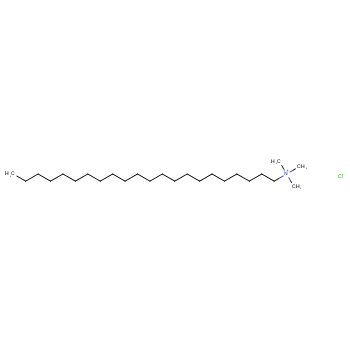
Behentrimonium chloride (CAS 17301-53-0) is a C22 monoalkyl quaternary ammonium surfactant, chemically docosyltrimethylammonium chloride with formula C25H54ClN and relative molecular mass 404.16 g/mol. Its structure pairs a permanently cationic trimethylammonium head group with a saturated behenyl chain long enough to deliver substantive conditioning without the build-up associated with shorter homologues. Commercial material is supplied as flakes, pastilles or an alcoholic solution, typically at 70 to 85 percent active matter, and active content rather than delivered weight is the basis on which formulators buy.
It is one of the workhorse conditioning agents of the personal care industry, used in rinse-off conditioners, masks, leave-in detanglers and creams where cationic charge drives deposition on negatively charged damaged hair and skin. Demand is shaped by formulation trends rather than by industrial cycles: sulfate-free surfactant systems, silicone-reduction programmes and the search for conditioning quats with better aquatic profiles.
This white paper is written for ingredient buyers, formulators and contract manufacturers in the cosmetics and home care supply chain. It covers the physical chemistry of cationic deposition, the oleochemical route from behenic acid to the quaternary salt, application practice including preservation and compatibility, the European, North American and Chinese regulatory perimeter, and the environmental obligations attached to quaternary ammonium compounds.
II. Product Deep Dive: Molecular Mechanisms and Production Evolution
2.1 Physicochemical Properties and Mechanisms
Conditioning by a cationic surfactant is an electrostatically driven deposition process. Hair keratin carries a net negative charge at formulation pH, and that charge density increases with bleaching, colouring and weathering, so a permanently cationic head group anchors to damaged sites while the long alkyl chain orients outward to provide lubricity and hydrophobicity. The behenyl chain length is deliberate: it raises the melting range and the Krafft point, gives a more substantive deposited film and reduces the irritation potential associated with shorter chain quaternary ammonium compounds.
- Aggregation behaviour and gel network formation: Like all single-chain cationic surfactants, the substance forms micelles above a critical concentration, and added electrolyte compresses the electrical double layer and shifts aggregation behaviour. Formulators therefore tune deposition with salt level, co-surfactants and fatty alcohols, which associate with the quat to form the lamellar gel network responsible for conditioner rheology.
- Interaction with anionic and sulfate-free systems: Direct combination with anionic surfactants at comparable molar levels produces charge neutralisation, precipitation or loss of conditioning, which is why cationic conditioning is normally delivered in a separate rinse-off step or through structured systems that keep the species apart until deposition. That constraint shapes the sulfate-free conversation, because replacing sulfate surfactants changes the charge and solubility balance of a shampoo and therefore changes which conditioning agents can be used and at what level.
2.2 Synthesis and Manufacturing Technologies
Manufacture is a multi-stage oleochemical sequence. Behenic acid, obtained by hydrogenation of erucic acid from high-erucic rapeseed or fish oil, or by fractionation of hydrogenated vegetable oils, is converted to the nitrile by reaction with ammonia at elevated temperature over a dehydration catalyst. Hydrogenation of the nitrile gives primary behenylamine, reductive methylation with formaldehyde and hydrogen gives N,N-dimethylbehenylamine, and quaternisation with methyl chloride delivers the final salt.
- Quaternisation control and impurity profile: Quaternisation with methyl chloride is run in alcohol or aqueous alcohol under pressure with base present to capture hydrogen chloride, and is driven to completion because residual tertiary amine is both an odour problem and a specification item. Key specification entries are active matter, free amine and amine salt, chloride content, pH of a defined solution, colour and residual solvent.
- Form, flaking and handling: The finished product is flaked, pastilled or retained as an alcoholic solution depending on the customer's dosing equipment, and the flaked form needs controlled cooling and anti-caking handling because the material softens at modest temperatures. Hygroscopicity influences flow and dissolution rate, so packaging and storage conditions form part of the specification.
2.3 Core Application Matrix
- Hair conditioners, masks and leave-in treatments: The principal use is rinse-off and leave-in hair conditioning, where deposition on damaged sites delivers detangling, wet combability and reduced static. Use levels are set by product type and by the applicable cosmetic restriction, and the ingredient is normally delivered within a lamellar gel network with fatty alcohol rather than as a standalone solution.
- Cationic emulsifier in creams and styling products: The substance also functions as an emulsifying and conditioning component of skin creams, body butters and styling products, where it stabilises oil-in-water systems and contributes a characteristic powdery after-feel.
- Industrial, home care and mineral applications: Beyond cosmetics, alkyl trimethyl ammonium chlorides are used as antistatic agents, fabric softening components and organophilic modifiers for clay and mineral systems.
III. Global Market Supply-Demand Landscape and Export Trends
3.1 Demand Drivers and Market Shifts
Demand is being reshaped by three formulation trends. Sulfate-free shampoo systems have moved conditioning performance into the shampoo itself and into paired conditioners, which raises the value of quats that deposit efficiently without anionic incompatibility. At the same time, brand and retailer pressure on quaternium compounds, driven by aquatic toxicity concerns, is encouraging substitution with readily biodegradable esterquats wherever performance allows.
3.2 Capacity Distribution and Export Flows
Capacity follows oleochemical infrastructure. Europe and North America host integrated behenic acid and quaternary ammonium production tied to rapeseed and to palm or coconut fractions, while Asia-Pacific, particularly China and India, has expanded rapidly in fatty amine and quaternary ammonium capacity. Export flows run from oleochemical hubs to cosmetic manufacturers and contract formulators worldwide, and from Asian quaternary plants to Western blenders.
3.3 Market Bifurcation and Pricing Dynamics
Pricing tracks the oleochemical chain, specifically behenic acid, fatty amine and methyl chloride, and is quoted on active matter rather than as-supplied weight. Food-grade versus technical-grade fatty acid feedstock and certified sustainable oil programmes create a visible price spread, as does the difference between flake and alcoholic solution presentations. Buyers should normalise quotations on active content, residual amine and solvent content before comparing, because as-supplied prices are otherwise misleading.
IV. In-depth Analysis of Global Compliance and Regulatory Barriers
A cationic surfactant used in cosmetics is regulated as a cosmetic ingredient, as an industrial chemical and as an aquatic hazard, and the three regimes do not align neatly. Maximum use concentrations sit in cosmetics law, aquatic classification sits in CLP, and any antimicrobial positioning triggers biocidal product rules. Unlike a pharmaceutical active substance admitted through a drug master file (DMF) or a certificate of suitability (CEP), a cosmetic ingredient is admitted through its restriction-list entry and the responsible person's safety assessment.
4.1 European Market: REACH, CLP, and Sector-Specific Directives
- Cosmetics regulation restrictions and preservation: Under the European cosmetics regulation, alkyl trimethyl ammonium conditioning agents are subject to restriction-list entries that set maximum use concentrations by product type, and formulators must verify the exact entry applicable to the C22 homologue for leave-on and rinse-off applications. The ingredient must appear under its INCI name on the label, and the responsible person must hold a safety assessment and a product information file. Cationics are not listed preservatives, so preservation must still be achieved with an authorised preservative and validated by preservative efficacy testing.
- REACH registration and CLP aquatic hazard: Manufacturers and importers at or above one tonne per year require a REACH registration covering human health and environmental endpoints rather than the ICH Q7 and Q11 framework applied to pharmaceutical active substances, and quaternary ammonium compounds typically carry acute and chronic aquatic hazard classifications with very low effect concentrations. CLP notification drives GHS labelling and safety data sheet content, and concentrated material may ship as an environmentally hazardous solid.
4.2 North American Market: TSCA, EPA, and FDA Regulations
- MoCRA, FDA and TSCA obligations: In the United States cosmetic ingredients are now governed by the Modernization of Cosmetics Regulation Act, which brings facility registration, product listing, responsible person duties, safety substantiation and recordkeeping through the Food and Drug Administration. Separately, the substance is listed on the TSCA inventory and EPA oversight applies to non-cosmetic commercial use and to discharge permits. Any antimicrobial or sanitising claim would move a product into biocidal or pesticide regulation, a materially different regime.
- State-level and retailer requirements: California Proposition 65, state chemical disclosure laws and retailer restricted substance lists increasingly govern what formulators may use and at what level. Residual reactants such as formaldehyde from reductive methylation and alkylating agents from quaternisation are the specific analytes those lists target.
4.3 The Critical Hurdle: Quality Control and Safety Limits
Compliance Warning: The decisive issues in this category are aquatic toxicity and residual reactants. Buyers should require per-lot certificates giving active matter, free amine and amine salt, chloride content, residual solvent, pH of a defined solution, colour and heavy metals, together with a current safety data sheet reflecting acute and chronic aquatic hazard classification. Formulators must separately confirm the maximum use concentration permitted for the intended product type and must not assume that a cationic surfactant contributes preservation: preservative efficacy testing remains mandatory for water-containing cosmetic products. No consumer dosing guidance is given here, and antimicrobial claims are a regulatory trap unless the product is registered as a biocidal product.
V. Green Trade Barriers and ESG in Manufacturing
The environmental profile of a quaternary ammonium compound is defined by aquatic toxicity and by the oleochemical feedstock behind the behenyl chain, and both are now material to brand qualification. The first is managed through classification, effluent control and, where necessary, formulation substitution; the second through certified vegetable oil sourcing and land-use due diligence.
5.1 Carbon Footprint and Circular Economy
Scope 3 emissions dominate, led by vegetable oil cultivation and processing, hydrogenation and the fatty amine chain, while Scope 1 and Scope 2 arise from high-temperature amination, hydrogenation and flaking, and all three should be reported together in one Scope 1-3 inventory. Because quaternary ammonium compounds are toxic to aquatic organisms at very low concentrations, effluent control is a licence condition rather than a voluntary measure: activated sludge inhibition must be monitored and spent quat streams treated rather than diluted.
5.2 Sustainable Sourcing and Traceability
Traceability centres on the oil. Buyers should ask whether behenic acid is rapeseed, fish or palm derived and, for palm-derived chains, require certified sustainable supply with documented mass balance and land-use due diligence consistent with the European deforestation regulation and equivalent schemes.
VI. Supply Chain Resilience and Export Logistics
In solid presentations the substance is handled as ordinary industrial freight, with two practical concerns: thermal softening of flaked material and containment of dust and spillage. Alcoholic solution presentations change the picture entirely because they bring flammable liquid classification into scope.
6.1 Packaging Standards and Moisture/Contamination Control
- Thermal and moisture control: Flaked and pastilled material is packed in lined drums or bags with a moisture barrier and stored below the softening range, with pallets protected from compression during transit. Water uptake affects active matter determination and flow, so packs are closed at controlled humidity and supplied with desiccant where required. Alcoholic solutions are packed in UN-approved steel or high-density polyethylene containers appropriate to the flash point of the solvent system.
- Segregation of cosmetic, technical and certified grades: Because one plant may produce cosmetic, technical and certified sustainable grades, packaging is the control point. Distinct label formats, lot prefixes and pre-shipment line clearance prevent technical grade material entering a cosmetic chain, and certificates of analysis must state grade, active matter and residual data.
6.2 Dangerous Goods Identification and Transit Protocols
Flaked material typically moves as non-hazardous freight at ambient temperature, with protection from heat sources and from container condensation, since softening and caking are the most common arrival complaints. Alcoholic solution presentations require dangerous goods documentation for flammable liquids, including UN number, packaging group and segregation from oxidisers. Where the concentrated solid meets aquatic chronic hazard criteria, environmentally hazardous solid classification under UN3077 may apply and marine pollutant status can attach to sea freight.
VII. Enterprise Global Expansion Strategy Guide
Suppliers win in this category by reducing qualification friction for cosmetic customers. The three priorities below reflect what brand owners and contract formulators actually audit.
- Document the maximum use concentration position: Because alkyl trimethyl ammonium conditioners are restricted by product type, suppliers able to state the applicable restriction, the INCI name and a defensible safety assessment position shorten customer formulation cycles.
- Invest in residuals and aquatic data: Per-lot data on free amine, residual solvent and alkylating agent purge, supported by ready biodegradation and aquatic toxicity studies, answers the questions that retailer restricted substance lists and REACH dossiers both ask.
- Build formulation and CDMO service capability: Brand owners need compatibility screening, preservative efficacy testing support, rheology and deposition testing, and custom blends with fatty alcohols or alternative quats. Offering pilot and toll blending under ISO 9001 and ISO 14001 systems, with ISO 22716 good manufacturing practice and cGMP-style change control where pharmaceutical-adjacent customers require it, captures value beyond the molecule.
VIII. Conclusion
Behentrimonium chloride is a mature cationic surfactant whose commercial position is now defined less by performance than by regulation and perception. Its conditioning mechanism, electrostatic deposition of a permanently charged head group bearing a long saturated chain, is well understood and difficult to replace in rinse-off systems.
For buyers the practical guidance is to qualify on active matter, residual amine and aquatic classification, and to confirm the permitted use concentration for each product type before formulation work begins. For manufacturers and CDMOs the opportunity lies in documented, certified grades with formulation support and in readiness for esterquat substitution where brand policy demands it. Nothing in this document addresses consumer use, and no therapeutic or antimicrobial claim may be attached to the ingredient as supplied.
IX. Industry Resource Connection and Supplier Ecosystem
Powered by Guidechem
This white paper is exclusively compiled by the Guidechem Intelligence Team based on global customs data, regulatory databases, and industry research. Guidechem is a leading global B2B chemical platform, dedicated to connecting global buyers with verified, high-quality manufacturers.
Relying on Guidechem's extensive global database, we have mapped the core participants in the current global Behentrimonium chloride supply chain:
- North America Supply Tier: Demand tier of cosmetic brand owners and contract formulators, with purchasing gated by MoCRA facility and product listing obligations, retailer restricted substance lists and state-level disclosure requirements.
- Europe Supply Tier: Compliance-led tier governed by cosmetics regulation restrictions, REACH registration, CLP aquatic classification and preservative efficacy expectations, with certified vegetable oil sourcing increasingly mandatory.
- Asia-Pacific and China Supply Tier: Volume tier anchored in expanding fatty amine and quaternary ammonium capacity, supplying bulk cosmetic and technical grade material plus toll blending, with growing ISO 9001 and ISO 14001 certification.
Disclaimer: The content of this white paper is compiled based on public market data and regulatory information available as of 2026. Global chemical regulations are subject to dynamic adjustments. In actual export operations, enterprises must consult professional regulatory advisors or relevant competent authorities to obtain the latest compliance guidance.


 EN
EN
 Agricultural News
 Food News
 Industrial News
 Cosmetic News
 Pharmaceutical News
 Science News

 3YRS
3YRS

