-
We detected your language preference as English. Would you like to switch to the English version for a better experience?
Switch to English
Stay here


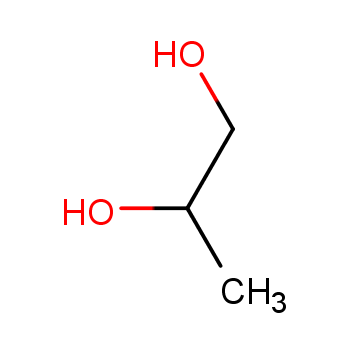
Propylene glycol, chemically 1,2-propanediol with CAS registry number 57-55-6, is a clear, colorless, viscous, and virtually odorless diol that ranks among the most broadly used industrial and specialty chemicals worldwide. Functioning simultaneously as a solvent, humectant, antifreeze, and pharmaceutical/cosmetic excipient, it bridges commodity petrochemical markets and high-value regulated applications. This white paper provides B2B buyers, formulators, and supply-chain leaders with a comprehensive 2026 market, technical, and compliance assessment of propylene glycol.
Global demand is anchored by its inclusion in foods (E1520), pharmaceuticals (USP/Ph.Eur. grade), cosmetics (MoCRA/EU framework), and innumerable industrial formulations from unsaturated polyester resins to heat-transfer fluids. The molecule's low toxicity relative to ethylene glycol and its favorable hygroscopic and solvency profile make it a default choice where human contact is plausible. Supply is integrated with propylene oxide production, linking PG economics to the broader olefins and derivatives complex.
For enterprise decision-makers, propylene glycol is a high-volume, mature product where margin accrues from grade positioning, supply reliability, and regulatory conformance rather than novelty. Successful sourcing requires understanding the propylene-oxide feedstock linkage, differentiating industrial, USP, and food grades, and navigating REACH, TSCA, FDA, and emerging ESG mandates. This paper delivers an actionable framework for resilient, compliant PG procurement and market strategy.
Propylene glycol is a two-carbon-side-chain diol (C3H8O2, MW 76.09 g/mol) that is fully miscible with water and many organic solvents, with a high boiling point (≈188 °C), low vapor pressure, and low acute toxicity. Its hygroscopicity and ability to depress freezing point while remaining low-volatility make it an ideal humectant and antifreeze. The molecule is chemically stable but can oxidize under strong heating to form aldehydes and organic acids, requiring controlled processing temperatures.
Propylene glycol is produced predominantly by hydration of propylene oxide, which itself is derived from propylene via chlorohydrin or, increasingly, cleaner hydrogen-peroxide (HPPO) routes. The hydration yields a crude PG stream purified by distillation to industrial, food, or USP grade depending on residual-content and metal specifications. Bio-based routes from glycerol (a biodiesel by-product) are emerging as a sustainability-differentiated alternative feeding circular-economy narratives.
Propylene glycol demand is shaped by resilient construction-linked polyester-resin consumption, steady pharmaceutical and cosmetic growth, and substitution dynamics favoring PG over more toxic ethylene glycol in consumer-adjacent uses. A notable shift is the rise of bio-based PG and regulatory pressure on volatile organic compounds, nudging formulators toward lower-emission, renewable-labeled materials. APAC industrialization and middle-class consumption expansion sustain the strongest volume growth globally.
Global capacity is distributed across North America, Europe, and a rapidly expanding Asia-Pacific base led by China, with integrated propylene-oxide producers capturing cost leadership. Export flows run from Middle East and Asian integrated complexes toward formulation and resin hubs in the US, EU, and Southeast Asia. Capacity shifts reflect olefin feedstock advantage, HPPO technology adoption, and environmental permitting that favors cleaner PO routes over legacy chlorohydrin plants.
The PG market bifurcates into industrial bulk and high-purity food/pharma/cosmetic grades, with specialty grades earning premia for documentation, low metals, and consistent oligomer control. Pricing is tightly coupled to propylene and propylene-oxide economics plus energy, generating cyclical swings that bulk buyers hedge through formula-based contracts. Supply surpluses from new Asian capacity periodically compress margins, while feedstock shocks transmit rapidly into spot pricing.
Although a well-established substance, propylene glycol traverses food, drug, cosmetic, and industrial regimes, producing a layered compliance surface for exporters. Operators must map the intended grade to the correct monograph (USP, Ph.Eur.) and food/cosmetic authorization, and maintain dossiers resilient to FDA, EFSA, and APAC review. Accurate grade-to-application declaration is the most effective safeguard against detention and recall.
Propylene glycol's petrochemical lineage carries concentrated ESG exposure through propylene-oxide feedstock, energy use, and VOC emissions, making green-trade and bio-content claims increasingly subject to verification. Carbon-border adjustment, VOC caps, and responsible-care certification now influence buyer preference and lender appetite. Producers that substantiate decarbonization and bio-based routing with primary data gain a durable commercial edge in regulated markets.
PG's Scope 1–3 emissions are dominated by propylene-oxide production, distillation energy, and feedstock carbon intensity, making HPPO adoption, renewable-powered distillation, and bio-glycerol feedstock the highest-leverage reductions. ISO 14001-certified sites pursuing ISO 14067 product-carbon-footprinting can substantiate ESG claims. Circular-economy practices—recovering and reusing process water and catalysts—lower both intensity and cost.
End-to-end traceability from propylene oxide to finished drum is essential for food-safety, GMP, and ESG assurance, supported by batch-records, supplier qualification, and ERP-tracked custody. ISO 9001-certified sites with documented responsible-care and, where relevant, bio-content certification provide defensible provenance. Transparent traceability also satisfies emerging supply-chain due-diligence rules on environmental and labor conduct governing chemical procurement.
Propylene glycol's low volatility and low acute toxicity simplify logistics versus hazardous solvents, but its viscosity, hygroscopicity, and food/pharma status still demand disciplined, contamination-free handling. Resilient planning favors dedicated, cleaned tankage, redundant routing, and qualified bulk and drum carriers. Regional safety-stock of high-purity grades buffers feedstock shocks, port disruption, and formulation-line downtime for critical buyers.
Propylene glycol is not a listed dangerous good under ADR/IMDG when shipped as a pure liquid, but its mild irritancy and slip hazard require SDS-driven handling and spill containment during transfer. Carriers should be briefed on response (absorbent, PPE) and route shipments to avoid extreme cold that increases viscosity and slows unloading. Pre-cleared HS classification and bulk-contract logistics reduce border dwell time and demurrage exposure.
Enterprises aiming to scale propylene glycol sourcing or market entry should pursue a grade-segmentation and resilience-led strategy that treats feedstock linkage, supply continuity, and regulatory conformance as the core competitive assets. The objective is to convert a commodity diol into a dependable, documented, and defensible supply platform across applications. Strategic rigor consistently outperforms opportunistic spot buying over a full market cycle.
Propylene glycol remains an indispensable, versatile diol whose value is defined by grade integrity, supply reliability, and regulatory conformance across food, pharma, cosmetic, and industrial domains. Its demand foundation in resins, excipients, and consumer products provides durable, cycle-resilient growth through 2026 and beyond. Enterprises that internalize its feedstock linkage and grade-critical realities will avoid the pitfalls that ensnare inexperienced buyers.
The defining success factors are disciplined supplier qualification, verified grade and purity assays, and proactive conformance with REACH, CLP, TSCA, FDA, and emerging ESG mandates. Organizations that institutionalize these capabilities will secure resilient, compliant propylene glycol supply and protect product safety—the ultimate measure of performance in this foundational chemical category.
Powered by Guidechem
This white paper is exclusively compiled by the Guidechem Intelligence Team based on global customs data, regulatory databases, and industry research. Guidechem is a leading global B2B chemical platform, dedicated to connecting global buyers with verified, high-quality manufacturers.
Relying on Guidechem's extensive global database, we have mapped the core participants in the current global Propylene glycol supply chain:
Disclaimer: The content of this white paper is compiled based on public market data and regulatory information available as of 2026. Global chemical regulations are subject to dynamic adjustments. In actual export operations, enterprises must consult professional regulatory advisors or relevant competent authorities to obtain the latest compliance guidance.
|
 |
 |
 |
 |
 |
 EN
EN
 Agricultural News
 Food News
 Industrial News
 Cosmetic News
 Pharmaceutical News
 Science News

 1YR
1YR

