-
We detected your language preference as English. Would you like to switch to the English version for a better experience?
Switch to English
Stay here


Consumers judge a sauce, yogurt, soup, or beverage within seconds — and texture is usually the first thing they notice. When a dressing separates, a gravy goes lumpy, or a plant-based drink feels thin and watery, the product fails on the shelf no matter how good it tastes. Food thickeners are the hydrocolloids, starches, and proteins that formulators rely on to build viscosity, stabilize emulsions, suspend particles, and deliver the mouthfeel consumers expect. With the global market for these ingredients expanding steadily — driven by clean-label demand, convenience foods, and the explosion of plant-based and premium beverage categories — understanding which thickener does what, at what dosage, and under which regulatory regime has become a core formulation skill.

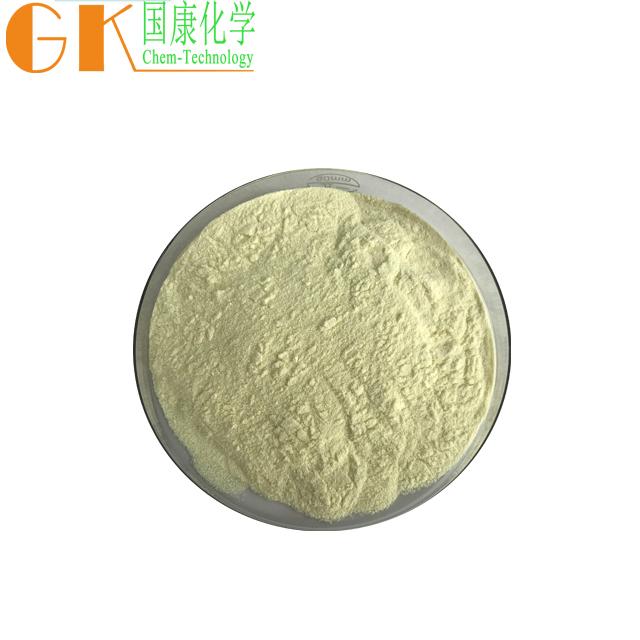
Kudzu root powder — one of many plant-derived thickeners used across the food industry
| Function | Target Applications | Key Specifications | Compliance Status |
|---|---|---|---|
| Viscosity building, suspension, mouthfeel enhancement | Sauces, soups, dressings, dairy drinks, bakery fillings, plant-based beverages | Typical use level 0.05–2.0%; hydration temperature, shear and pH stability, viscosity grade | GRAS status under 21 CFR or FDA food additive petitions; E-number authorization in the EU (Regulation (EC) No 1333/2008) |
| Water binding, syneresis control, freeze-thaw stability | Frozen meals, retorted sauces, cultured dairy, restructured meats, glazes | Water-binding capacity, gel strength (bloom equivalent), ionic tolerance, synergy with starch or milk protein | JECFA safety evaluations with ADI values; compliance with FCC and EU purity specifications |
Food thickeners are long-chain macromolecules — mostly polysaccharides and proteins — that dramatically increase the viscosity of water at very low concentrations. The underlying mechanism is hydrodynamic: when a hydrocolloid such as xanthan gum (CAS 11138-66-2) hydrates, its chains uncoil and trap large volumes of water within their coil envelopes. Dissolved polymer chains occupy far more space than their dry mass suggests, which slows water movement and raises viscosity through chain entanglement. In the language of polymer chemistry, thickening efficiency is governed by the intrinsic viscosity and molecular weight of the gum, its degree of substitution or branching, and the extent of intermolecular associations.
Every hydrocolloid must first disperse and hydrate before it can thicken. Dispersion means separating individual particles so they do not clump; hydration means water penetrating the particle and fully solvating the polymer chain. gums with high cold-water solubility like guar gum hydrate quickly at room temperature, while others — locust bean gum, for example — require heating above roughly 80 °C to reach full viscosity. Starches thicken through an entirely different pathway: heating in water disrupts the crystalline structure of the granule, allowing amylose and amylopectin to leach out and swell in a process called gelatinization.
Some thickeners form true gels rather than simple viscous solutions. Alginates extracted from brown seaweed gel when divalent calcium ions bridge the carboxylate groups along the guluronic acid blocks of the polymer chain. This "egg-box" cross-linking reaction is the basis of many restructured foods, from onion rings to pimiento strips:
Carrageenan behaves similarly with the potassium and calcium ions naturally present in dairy systems, which is why it so effectively suspends cocoa particles in chocolate milk while contributing a light, creamy body. Pectin gels with sugar and acid in jams and jellies through a combination of hydrogen bonding and hydrophobic interactions.
Most food hydrocolloid solutions are pseudoplastic (shear-thinning): their viscosity drops under shear — during pumping, filling, or chewing — and recovers when the shear is removed. This behavior is highly desirable. A salad dressing flows freely from the bottle under shear, yet clings to the lettuce once poured. Xanthan gum is the benchmark for shear-thinning performance and yield value, which is why it dominates suspension applications even at use levels as low as 0.05–0.2%. The viscosity profile of the finished product is ultimately a function of concentration, temperature, pH, ionic strength, and the presence of other ingredients such as sugars, salts, and proteins that compete for water.
Food thickeners can be grouped into families by botanical or biological origin, and each family carries a characteristic texture signature, hydration behavior, and cost position. The main categories used across the food industry are summarized below.
Starch — from corn, waxy maize, tapioca, potato, wheat, or rice — is the workhorse of food thickening and the largest category by volume. Native starch is inexpensive and label-friendly, but it breaks down under shear, heat, and acid, and it retrogrades (sets into an undesirable gel) on storage. Modified food starches (E 1400–1452 in the EU; regulated in the US under 21 CFR 172.892) are chemically or physically treated to improve freeze-thaw stability, acid tolerance, and process tolerance. Traditional starch-based thickeners such as kudzu root powder, arrowroot, and other botanical powders occupy a small but growing niche in clean-label and Asian-traditional cooking applications.
These seed gums consist of a mannose backbone with galactose side branches. Guar gum (CAS 9000-30-0) hydrates rapidly in cold water and provides economical, high viscosity in sauces, ice cream, and baked goods. Locust bean gum (E 410, CAS 9000-40-2) requires heat to hydrate and gives a creamy, elastic texture; it is prized in ice cream and cream cheese, often in synergy with carrageenan. The main limitation of this family is poor tolerance to high heat and acidic conditions.
Extracted from red and brown seaweeds, these thickeners interact strongly with milk protein. Carrageenan (CAS 9000-07-1) binds casein micelles, making it uniquely suited to dairy suspension and bodying. Alginates (E 400–404) gel instantly with calcium, enabling spherification and restructured foods. Agar (E 406) sets to a firm, clear gel at very low concentrations but carries a premium price.
Xanthan gum (E 415, CAS 11138-66-2) is produced by fermentation of sugar by Xanthomonas campestris. It offers unmatched stability across pH, temperature, and salt ranges and strong yield stress for particle suspension — at a cost premium over starch and guar. Gellan gum (E 418) forms gels with exceptional flavor release and is widely used in beverages, desserts, and cultured products. Learn more about fermentation-derived ingredients in the Guidechem biopolymer encyclopedia entry.
Carboxymethyl cellulose (E 466, CAS 9004-32-4) is a water-soluble cellulose ether used widely in beverages, ice cream, and bakery fillings for its smooth, short texture. Microcrystalline cellulose (E 460(i), CAS 9004-34-6) acts as a suspending agent and fat mimetic in pourable dressings and low-fat spreads. These synthetic-adjacent but food-safe polymers are robust across a wide processing window, though they are increasingly scrutinized by clean-label formulators.
Pectin (CAS 9000-69-5), extracted from citrus peel and apple pomace, is the classic gelling agent for jams and jellies; high-methoxy pectin gels with sugar and acid, while low-methoxy (amidated) pectin gels with calcium and is used in low-sugar and acidic dairy drinks. Gum arabic, a tree exudate, functions more as an emulsifier and encapsulating agent than a primary thickener.
Gelatin (CAS 9000-70-8), derived from collagen, gels on cooling to deliver the characteristic melt-in-the-mouth texture of desserts, gummies, and aspics. It is unmatched in sensory terms but is animal-derived (a limitation for vegetarian and halal/kosher markets) and thermally reversible. Protein concentrates and isolates from soy, pea, and whey increasingly serve a dual role as nutritional fortifiers and viscosity builders in high-protein beverages. Find qualified gelatin suppliers on Guidechem for confectionery and dessert grades.
| Thickener | CAS / E-number | Hydration & Solubility | Stability & Texture | Typical Use Level | Key Applications |
|---|---|---|---|---|---|
| Modified corn starch | CAS 9005-25-8 (native); E 1400 series (modified) | Requires heating to 62–80 °C for gelatinization | Good body; shear/acid sensitivity depends on modification; economical | 1–6% | Gravies, soups, pie fillings, sauces |
| Xanthan gum | CAS 11138-66-2; E 415 | Cold-water soluble, rapid hydration | Excellent pH, heat, and salt tolerance; strong shear-thinning and yield value | 0.05–0.5% | Dressings, sauces, beverages, gluten-free bakery |
| Guar gum | CAS 9000-30-0; E 412 | Cold-water soluble, very fast hydration | High viscosity per cost; limited heat and acid stability | 0.1–1.0% | Ice cream, baked goods, instant sauces |
| Carrageenan | CAS 9000-07-1; E 407 | Hot soluble; kappa/iota/lambda types differ in gelation | Reacts with milk protein; creamy to firm gels; good suspension | 0.02–0.5% | Chocolate milk, dairy desserts, deli meats |
| Pectin | CAS 9000-69-5; E 440 | Cold dispersible; full solubility with shear and heat | Clean, glossy gel with excellent flavor release | 0.1–1.0% | Jams, fruit preparations, acidified dairy drinks |
| Carboxymethyl cellulose | CAS 9004-32-4; E 466 | Cold-water soluble; viscosity depends on grade | Smooth, short texture; good ice crystal control | 0.1–0.8% | Beverages, ice cream, syrups |
| Gelatin | CAS 9000-70-8; regulated as a food ingredient in the EU | Hydrates in warm water; gels on cooling | Thermoreversible gel; unmatched melt-in-mouth texture | 0.5–10% | Gummies, desserts, yogurt, aspics |
The selection logic is rarely "one gum fits all." In practice, formulators blend hydrocolloids to exploit synergies — for example, xanthan plus locust bean gum produces a markedly higher viscosity than either gum alone, and starch plus a small amount of xanthan delivers both economical body and long-term suspension. Explore additional ingredient options in the Guidechem food additives encyclopedia.
A thickener that performs perfectly in the lab can fail on the production line if hydration, order of addition, or process conditions are wrong. The following standard operating framework covers the critical control points.
| Step | Action | Critical Parameters |
|---|---|---|
| 1. Pre-blend | Dry-blend the gum with 5–10 parts of sugar or other dry ingredient | Prevents clumping ("fisheyes") on contact with water |
| 2. Disperse | Add pre-blend into vortexing water or liquid phase under high shear | Water temperature per gum type (cold for guar/xanthan; hot for LBG, starch) |
| 3. Hydrate | Hold with agitation until full viscosity develops | 20–30 min typical; verify by viscosity measurement; salts and acids delay hydration |
| 4. Process | Add remaining ingredients, then heat, homogenize, or pasteurize as required | Match gum to process temperature, shear, and pH of the formula |
| 5. Verify | Measure viscosity at defined shear rate and temperature; check over shelf life | Target specification window; monitor syneresis and freeze-thaw behavior |
| Component | Typical Level | Function |
|---|---|---|
| Milk or plant-base liquid | to 100% | Continuous phase |
| Carrageenan | 0.02–0.04% | Protein reactivity; suspension; body |
| Xanthan or CMC | 0.05–0.15% | Mouthfeel and viscosity floor |
| Sugar / sweetener system | per product target | Taste; aids gum dispersion |
Food thickeners are among the most heavily evaluated food additives, with a long history of safe use and well-established specifications. Compliance requirements differ by jurisdiction, so formulators must confirm that both the ingredient identity and the use level are authorized in every target market.
| Jurisdiction | Authority / Framework | Status of Major Thickeners |
|---|---|---|
| United States | FDA — GRAS provisions and food additive regulations (21 CFR 172, 182) | Xanthan, guar, carrageenan, alginate, pectin, CMC, modified starch (21 CFR 172.892) permitted at GMP or specified levels |
| European Union | Regulation (EC) No 1333/2008 and Commission Regulation (EU) No 231/2012 (purity criteria) | Authorized as E 410–418, E 440, E 460–466 with category-specific maximum levels |
| International (JECFA/WHO) | JECFA safety evaluations and Codex GSFA (CODEX STAN 192-1995) | "Group ADI not specified" for xanthan, guar, LBG, carrageenan (refined), alginates, CMC, pectin |
| Quality specifications | Food Chemicals Codex (FCC); national pharmacopoeia where applicable | Identity, viscosity grade, moisture, ash, heavy metals, and microbiological limits |
Xanthan gum offers the broadest process tolerance, maintaining viscosity from pH 2 to 12, at high salt concentrations, and through repeated heating and cooling cycles. This is why it is the default choice for retorted hot-fill sauces and acidic dressings. Chemically cross-linked modified starches are the strongest starch-based alternative for high-shear, high-heat processes such as UHT soups.
Growth is driven by three converging trends: rising demand for convenience and processed foods in emerging markets; the rapid expansion of plant-based dairy alternatives, which depend heavily on hydrocolloids to mimic the body of milk fat and protein; and the clean-label reformulation wave, which pushes manufacturers to replace synthetic-sounding additives with recognizable ingredients like starches, pectin, and gums. Premium sports and clinical nutrition beverages, which require suspension of insoluble particles, add further demand.
Traditional root and tuber powders such as kudzu, arrowroot, and tapioca are essentially native starches. They carry strong consumer perception and are suitable for clean-label positioning, but they lack the process tolerance of modified starch or xanthan — they thin under prolonged heat and shear, retrograde on storage, and require higher use levels. For most industrial applications they are a labeling decision rather than a performance upgrade.
Partially. Fat mimetics based on modified starch, microcrystalline cellulose, and certain gums replicate the lubrication and body that fat provides at a fraction of the calories. They cannot, however, fully reproduce flavor release or the melting behavior of real fat, so successful low-fat formulations typically combine a mimetic with emulsifiers and careful flavor rebalancing.
 |
|
 |
 |
 |
 |
 EN
EN
 Agricultural News
 Food News
 Industrial News
 Cosmetic News
 Pharmaceutical News
 Science News

 1YR
1YR

