-
We detected your language preference as English. Would you like to switch to the English version for a better experience?
Switch to English
Stay here


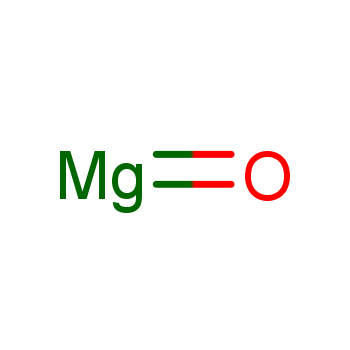
Formulators fortifying foods and supplements with magnesium face a familiar trade-off: highly bioavailable organic magnesium salts are expensive and drag plenty of bulk along for the ride, while the most magnesium-dense option on the market is often overlooked. Magnesium oxide (CAS 1309-48-4), an inorganic white powder known commercially as light or heavy magnesia, packs roughly 60% elemental magnesium by weight — nearly four times the magnesium content of magnesium citrate — and it does far more than fortification alone. From controlling pH in canned vegetables to keeping powdered drink mixes free-flowing, MgO quietly performs at least eight distinct jobs in food and beverage production. This guide breaks down each use, the chemistry behind them, and the regulatory and formulation considerations that come with this remarkably versatile GRAS ingredient.
| Function | Target Applications | Key Specifications | Compliance Status |
|---|---|---|---|
| Nutrient fortification (magnesium source), pH control, anti-caking, color retention, anti-mold agent | Dietary supplements, meal replacements, powdered beverages, baked goods, canned vegetables, salt and powdered mixes | CAS 1309-48-4; MgO ≥ 96.0% (FCC); ~60.3% elemental Mg; heavy vs. light grades by bulk density | US FDA GRAS (21 CFR 184.1431); EU food additive E 530; JECFA INS 530, ADI "not specified" |
| Firming agent, free-flow aid, tableting excipient, chlorophyll stabilizer | Canned/frozen peas and beans, cocoa and chocolate products, chewing gum, infant formula, processed cheese | Food Chemicals Codex monograph; low aqueous solubility (~0.0086 g/100 mL at 25°C); mild alkalinity | Codex GSFA permitted; FCC/USP grades available; EU Regulation (EC) No 1333/2008 Annex II |
Food-grade magnesium oxide is manufactured the same way industrial magnesia is, with tighter purity controls at the finishing stage. The dominant route is the calcination of mined magnesite (magnesium carbonate), while a second route precipitates magnesium hydroxide from seawater or brine before firing. Both decompositions yield a highly reactive oxide whose physical character depends on calcination temperature:
Light magnesium oxide (low bulk density, high surface area) is produced at lower calcination temperatures and reacts quickly with acids and moisture, making it ideal for pH control and anti-mold functions. Heavy magnesium oxide (dense, larger particles) is fired harder, is less reactive, and is the preferred grade for fortification and tableting where a neutral, stable Mg carrier is needed.
Four properties explain nearly everything MgO does in food. First, its extremely limited water solubility (about 0.086 g/L at ambient temperature) means it dissolves slowly and only as acid is available, giving it a gentle, self-limiting alkalinity rather than a pH spike. Second, that mild alkaline buffering neutralizes organic acids: in the gut this is the classic antacid action (MgO + 2H+ → Mg2+ + H2O), and in canned vegetables it preserves chlorophyll by preventing the acid-catalyzed swap of the central Mg2+ ion for pheophytin's hydrogen — the reaction that turns peas olive-drab. Third, MgO is hygroscopic and moisture-scavenging: it binds trace water in powders and cake doughs, which keeps salt, seasoning blends, and cake mixes free-flowing and slows starch retrogradation in baked goods. Fourth, its high neutralizing and binding capacity per gram — the highest elemental magnesium density of any food-grade magnesium compound at approximately 60.3% — makes it the most economical magnesium atom for money in fortification.
Every food-grade magnesium ingredient balances elemental density, solubility, bioavailability, and cost. Understanding the family helps formulators pick the right tool — or the right blend.
The most concentrated source (~60% Mg) and the cheapest per unit of magnesium, but the least soluble. Because it dissolves only in stomach acid, its bioavailability is lower than organic salts in supplement contexts, yet perfectly adequate when MgO is used for its functional (non-nutrient) roles. Its dual personality — nutrient plus processing aid — is unique in the family.
Magnesium carbonate (CAS 546-93-0) offers ~28–30% Mg and mild alkalinity for flow and anti-caking; magnesium hydroxide (CAS 1309-42-8, E 528) is a stronger antacid used in pH adjustment; magnesium chloride (CAS 7786-30-3, E 511) is highly soluble and hygroscopic — excellent for liquid fortification but a handling burden in powders; magnesium sulfate (E 518) supplies Mg plus sulfate in water fortification. All share the low cost of inorganic sources but vary widely in solubility and taste impact (chloride and sulfate can taste bitter/salty at high levels).
Magnesium citrate (~16% Mg) and magnesium lactate (~10–12% Mg) dissolve readily, taste relatively neutral, and show better absorption in human trials, making them the default choice for premium beverage and supplement fortification. The trade-offs: lower Mg density (requiring two to four times the dosage of MgO) and significantly higher cost per gram of magnesium.
Chelates such as magnesium bisglycinate (~14% Mg) are the bioavailability leaders — absorbed partly via peptide pathways, gentle on the GI tract, and nearly tasteless — but they are the most expensive per Mg atom and are rarely justified where MgO's functional properties (alkalinity, moisture scavenging) are also needed.
| Compound | CAS Number | Elemental Mg | Water Solubility | Stability & Sensory | Typical Food Applications |
|---|---|---|---|---|---|
| Magnesium oxide | 1309-48-4 | ~60.3% | Very low (~0.086 g/L) | Excellent stability; mildly alkaline; tasteless at low levels | Supplements, powders, baked goods, canned vegetables, anti-caking |
| Magnesium carbonate | 546-93-0 | ~28–30% | Very low; reacts with acids | Stable, free-flowing; slight chalkiness | Table salt anti-caking, mineral enrichment, chewing gum |
| Magnesium citrate | 3344-18-1 | ~16% | High | Hygroscopic; tart-saline taste at high use | Beverages, effervescents, premium supplements |
| Magnesium hydroxide | 1309-42-8 | ~41.7% | Very low (~0.009 g/L) | Stable slurry; strong alkalinity; chalky | pH control, color modification, antacid formulations |
| Magnesium chloride | 7786-30-3 | ~11.8% | Very high (deliquescent) | Highly hygroscopic; bitter-salty | Water/beverage fortification, tofu coagulant, brines |
| Magnesium bisglycinate | 14781-45-4 | ~14% | High (chelated) | Stable; virtually tasteless; GI-friendly | Premium supplements, sports nutrition |
| Magnesium sulfate | 7487-88-9 | ~9.8% | High | Stable; distinctly bitter | Brewing water adjustment, mineral water, tofu |
Magnesium oxide earns its place in the ingredient cabinet through sheer versatility. Below are the eight functional roles it performs in food and beverage systems, with practical guidance for each. Source MgO from qualified magnesium oxide suppliers offering FCC-grade material with certificates of analysis for every lot.
As a nutrient source, MgO's ~60% elemental content means one gram delivers ~603 mg of magnesium — so tablets, capsules, and powders can hit label claims (US FDA Daily Value: 420 mg Mg for adults) with minimal bulk. Typical supplement tablets contain 250–500 mg MgO per unit, often blended with magnesium citrate or glycinate to balance density against absorption. Use heavy MgO for direct compression: its density and compressibility outperform the light grade on tablet presses.
In canned peas, green beans, and asparagus, a small dose of MgO (typically 0.05–0.2%) in the brine or blanch water neutralizes organic acids leached from the vegetables, holding pH high enough to protect chlorophyll and keep color vivid. In processed cheese, MgO adjusts acidity and contributes to smooth emulsification. Because MgO dissolves only as acid is present, it self-limits — a forgiving feature for process control.
In table salt, seasoning blends, powdered drink mixes, and cake and pancake mixes, 0.1–0.5% MgO absorbs ambient and residual moisture, preventing clumping and maintaining pourability. Light MgO, with its enormous surface area, is the grade of choice here. It is frequently paired with magnesium carbonate or tricalcium phosphate for full humidity-range protection.
Beyond buffering, MgO reinforces vegetable texture by interacting with pectin during thermal processing, helping cell walls retain firmness through retorting. Frozen green vegetables benefit similarly during blanching. This dual color-plus-texture function makes MgO a quiet workhorse in the canned vegetable industry — one of its oldest documented food applications.
Surface dusting or wrapper incorporation of MgO creates a mildly alkaline microenvironment that inhibits mold growth on bread and wrapped cheeses. Historically, MgO-coated cheese wraps extended shelf life of long-ripening cheeses before modern preservatives took over, and the practice persists in specialty applications. It also serves as a GRAS carrier for other functional ingredients.
In yeast-raised and chemically leavened baked goods, small MgO additions (0.05–0.15% of flour weight) bind free water in the dough, modulating rheology and slowing crumb staling. Bakers also use it as a "buffer" against excessive acidity in sourdough systems where a milder flavor profile is desired.
Heavy MgO flows well, compresses cleanly, and doubles as an active — a rare combination that lets formulators claim magnesium while using MgO as part of the diluent system. It also functions as a glidant/flow aid in powder premixes and as an alkalinizing excipient in pharmaceutical-style supplement manufacturing.
In infant formula, follow-on formula, medical foods, meal replacements, and fortified cereal premixes, MgO is the standard magnesium source because of its concentration, cost, and stability through extrusion and retort processing. The same logic applies to pet food and animal feed premixes, where MgO contributes magnesium without adding chloride load or hygroscopicity. For more on the broader ingredient category, see the food-grade mineral fortification encyclopedia entry.
| Jurisdiction / Body | Reference | Status for MgO in Food |
|---|---|---|
| United States (FDA) | 21 CFR 184.1431 (GRAS affirmation); nutrient labelling per 21 CFR 101.9 | GRAS for use as a nutrient supplement and processing aid in foods with no limitation other than current good manufacturing practice; magnesium is a mandatory nutrient fact label entry (Daily Value 420 mg) |
| European Union | Regulation (EC) No 1333/2008, Annex II (as amended by Regulation (EU) No 1129/2011); Commission Regulation (EU) No 231/2012 (specifications) | Approved food additive E 530 in specified categories (e.g., cocoa/chocolate products, chewing gum, dietary foods for special medical purposes, food supplements, infant and follow-on formulae) at quantum satis; magnesium also permitted as a mineral substance per Regulation (EU) No 1169/2011 |
| JECFA / WHO-FAO | INS 530; Codex GSFA (Codex STAN 192-1995); JECFA specifications for magnesium oxide | INS 530 with ADI "not specified"; permitted as food additive in Codex-standard categories; also the reference magnesium source for Codex nutrient fortification guidelines |
| Quality standards | Food Chemicals Codex (FCC) monograph for Magnesium Oxide; USP-NF monograph; E 530 purity criteria in Regulation (EU) No 231/2012 | FCC requires MgO content ≥ 96.0% after ignition, with limits for acid-insoluble substances, arsenic, lead, and loss on ignition; buy to FCC or USP grade for food and supplement use |
| Other reference markets | FSANZ Schedule 15–16; Japan Specifications and Standards for Food Additives (MHLW) | Permitted as magnesium oxide in Australia/New Zealand and Japan subject to national use conditions; verify category limits locally before export |
MgO is less soluble than organic magnesium salts, so its fractional absorption is lower — particularly in people with low stomach acid. However, because it is ~60% elemental magnesium, the absolute amount of magnesium delivered per gram is unmatched, and at normal supplement doses it still meaningfully raises serum and dietary magnesium intake. Many formulators combine MgO with a soluble salt (citrate, glycinate) to balance cost, bulk, and absorption. In applications where MgO serves a functional role — pH control, anti-caking, moisture scavenging — bioavailability is not the selection criterion at all.
The difference is physical, not chemical — both are MgO (CAS 1309-48-4) and both meet the same FCC assay. Light MgO is produced at lower calcination temperatures, has a bulk density of roughly 0.1–0.2 g/mL, high surface area, and high reactivity: choose it for anti-caking, pH control, anti-mold, and moisture scavenging. Heavy MgO is fired harder, has a bulk density of roughly 0.4–1.0 g/mL, and compresses well: choose it for tablets, capsules, and dense fortification premixes. Substituting one for the other without reformulation is a leading cause of production problems.
Yes. JECFA has assigned magnesium oxide (INS 530) an ADI of "not specified," the most favorable safety category, and US FDA affirms it as GRAS (21 CFR 184.1431) with no numerical limit beyond good manufacturing practice. In the EU, E 530 is permitted in specific food categories at quantum satis under Regulation (EC) No 1333/2008. Practical dosing is bounded by function and physiology: excess magnesium from any source can have a laxative effect, which self-limits over-fortification in beverages and powders.
Direct addition to acidic beverages is problematic: MgO consumes the beverage's acidity (raising pH), can react with organic acids to form precipitates, and leaves visible white haze if not fully solubilized. For beverages, soluble salts or chelated magnesium are the better choice. In clean-label contexts, MgO is well positioned — it is a simple inorganic compound, appears on labels as "magnesium oxide," carries E-number acceptance in the EU, and is widely accepted by major clean-label retailers as both a mineral source and a flow aid.
 |
|
 |
 |
 |
 |
 EN
EN
 Agricultural News
 Food News
 Industrial News
 Cosmetic News
 Pharmaceutical News
 Science News

 2YRS
2YRS

