-
We detected your language preference as English. Would you like to switch to the English version for a better experience?
Switch to English
Stay here


Magnesium oxide (CAS 1309-48-4), commonly termed magnesia, is a versatile inorganic mineral with annual global consumption exceeding 12 million metric tons, spanning refractory and construction materials, environmental treatment, animal feed, human nutraceuticals, and pharmaceutical applications. Its performance is defined by calcination temperature, which controls reactivity, surface area, and the light- versus dead-burned distinction that segments the market from high-reactivity pharmaceutical and food grades to dense refractory grades. As a naturally abundant oxide derived from magnesite, brucite, or seawater, magnesia sits at the intersection of bulk industrial mineral commerce and tightly regulated health-product supply.
This white paper analyzes magnesium oxide as a multi-grade inorganic chemical whose commercial strategy hinges on matching calcination-derived reactivity to application and on satisfying the divergent purity, heavy-metal, and microbial requirements of food, pharmaceutical, and industrial buyers. We examine its acid-neutralizing and refractory chemistry, the calcination and purification routes that define grade, and the application matrix from heartburn relief to steel-furnace linings. The analysis addresses the supply concentration in China, environmental pressure on calcination, and the compliance architecture spanning REACH, TSCA, USP, and Ph.Eur.
For B2B buyers and producers in 2026, the imperative is securing low-impurity, traceable magnesia for health applications while managing price and carbon exposure from energy-intensive calcination, and building resilient sourcing as magnesium-deficiency awareness drives nutraceutical demand. The following sections provide a qualification and strategy framework for this deceptively complex commodity mineral.
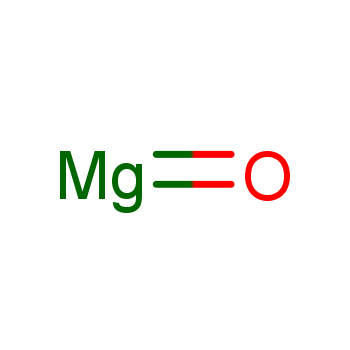
Magnesium oxide is an ionic refractory oxide with the formula MgO and molar mass 40.30 g/mol, forming a cubic periclase lattice that is white to off-white as a powder and essentially insoluble in water, though it reacts slowly with moisture to form magnesium hydroxide. Its key commercial variable is reactivity, set by calcination: light- or caustic-calcined magnesia produced below about 900 degrees Celsius is porous and reactive, while dead-burned magnesia sintered above 1500 degrees Celsius is dense, chemically inert, and valued for refractoriness. Magnesium oxide melts near 2852 degrees Celsius, giving it outstanding high-temperature stability, and it is mildly alkaline with the ability to neutralize acids.
Commercial magnesia is produced by calcining natural magnesite (magnesium carbonate) or brucite, or by precipitating magnesium hydroxide from seawater, brine, or dolomite followed by calcination to the oxide. The calcination temperature and feed purity determine the grade: caustic-calcined magnesia from magnesite or hydroxide at moderate temperature yields reactive material for health and environmental uses, while high-purity seawater or synthetic routes feed the pharmaceutical and electronic grades after extensive washing and purification to strip heavy metals and chloride.
Demand is structurally anchored by steel and cement refractories, which track heavy-industrial output, and by rising health-segment consumption as magnesium supplementation moves into mainstream wellness and clinical nutrition. Environmental regulations favoring sulfur and heavy-metal capture sustain technical-grade demand, while the convergence of sports-nutrition and preventive-health trends expands nutraceutical-grade magnesia, shifting mix toward higher-purity, certified material in developed markets.
China dominates global magnesia capacity, particularly dead-burned and fused grades from Liaoning magnesite reserves, and is the leading exporter of refractory and technical material, while the United States, Europe, and Turkey maintain seawater and brine-based production for higher-purity health and specialty grades. Export flows run from Northeast Asia to global steel and chemical markets, with growing intra-Asian and Indian consumption; trade is sensitive to Chinese environmental curtailments and export-quota or quality-control campaigns that periodically tighten supply and lift prices.
Pricing bifurcates sharply between low-value refractory and technical grades traded on energy and raw-ore economics and premium pharmaceutical, food, and reactive grades carrying heavy-metal and documentation premiums. Energy-intensive calcination ties cost to coal, gas, and electricity prices, while environmental-enforcement cycles in China inject volatility; buyers manage this through grade-appropriate sourcing, forward contracts, and dual-qualification of health-grade supply to avoid substitution risk.
Magnesium oxide traverses chemical-substance registration for industrial material and pharmacopeial or food-additive authorization for health grades, requiring market-entry teams to align specifications to the correct pathway and to maintain both SDS and monograph documentation. Its low inherent toxicity lowers food-safety barriers, but heavy-metal and impurity control remains exacting for regulated health buyers.
Magnesium oxide's ESG profile is dominated by the energy intensity and CO2 emissions of calcination and sintering, since decomposing carbonate feed releases process CO2 and high-temperature dead-burning consumes substantial fuel. Producers pursuing Scope 1-3 accounting and ISO 14067 product-carbon disclosure are increasingly favored by brand-owner and steel-industry customers with decarbonization commitments, and green-trade exposure grows as carbon-border mechanisms mature.
Decarbonization centers on fuel switching to natural gas or hydrogen, waste-heat recovery in calciners, and substitution of seawater or brine routes that avoid carbonate-derived process CO2, while circular-economy models recover magnesium from industrial byproducts and recycle refractory spend back into lower-grade applications. Producers that capture and utilize process CO2 or co-fire with biomass compress both emissions and cost, strengthening the ESG case for modernized, integrated plants relative to legacy coal-fired calciners.
Traceability expectations require documented ore or brine origin, confirmation of responsible mining and no-conflict sourcing where relevant, and transparent reporting of calcination route and any additives used. Digital batch records linking the Certificate of Analysis to the calcination campaign support rapid quality and recall investigations, and ISO 14001 environmental management plus third-party audits have become baseline for suppliers serving regulated Western pharmaceutical, food, and steel customers navigating green-procurement and emissions-reporting frameworks.
Magnesia supply chains are exposed to Chinese capacity concentration, energy-price shocks, and environmental curtailments, so resilient buyers maintain multi-origin sourcing and buffer stock of critical health grades. As a non-hazardous but dust-generating mineral, logistics emphasize containment and contamination control rather than dangerous-goods protocols, though reactively alkaline material requires dry handling.
Magnesium oxide is not classified as a dangerous good under GHS transport rules and ships as non-hazardous general cargo by sea, rail, or road, reducing freight cost and documentation burden relative to reactive chemicals, though carriers apply dust and moisture-sensitivity handling notes for bulk powder. Transit risk centers on moisture ingress, which converts surface oxide to hydroxide and raises impurity, and on contamination from mixed loads, so shippers should specify lined, clean, dry containers, verify seals on arrival, and protect high-purity health grades from humid or incompatible environments during long-haul intercontinental movement.
Expansion in the magnesia market rewards grade specialization, calcination efficiency, and compliance maturity rather than volume alone, and participants should anchor strategy on health-grade certification, low-carbon production, and resilient sourcing to defend margin in a bifurcated, commodity-to-specialty environment.
Magnesium oxide's breadth, from steel-furnace refractories to essential magnesium supplementation, secures its position as a structurally indispensable mineral whose demand is diversified across heavy industry and rising health markets. The decisive competitive variables in 2026 are calcination-driven grade integrity, low-impurity health-grade supply, and the decarbonization needed to clear emerging green-trade barriers.
Producers and distributors that combine certified multi-grade capability, low-carbon manufacturing, and resilient traceable sourcing will capture durable share as buyers consolidate around trusted partners. Guidechem's supplier ecosystem mapping enables global procurement teams to identify verified magnesium oxide manufacturers capable of meeting the exacting standards of the modern regulated marketplace.
Powered by Guidechem
This white paper is exclusively compiled by the Guidechem Intelligence Team based on global customs data, regulatory databases, and industry research. Guidechem is a leading global B2B chemical platform, dedicated to connecting global buyers with verified, high-quality manufacturers.
Relying on Guidechem's extensive global database, we have mapped the core participants in the current global Magnesium oxide supply chain:
Disclaimer: The content of this white paper is compiled based on public market data and regulatory information available as of 2026. Global chemical regulations are subject to dynamic adjustments. In actual export operations, enterprises must consult professional regulatory advisors or relevant competent authorities to obtain the latest compliance guidance.
 |
 |
|
 |
 |
 |
 EN
EN
 Agricultural News
 Food News
 Industrial News
 Cosmetic News
 Pharmaceutical News
 Science News

 2YRS
2YRS

