-
We detected your language preference as English. Would you like to switch to the English version for a better experience?
Switch to English
Stay here


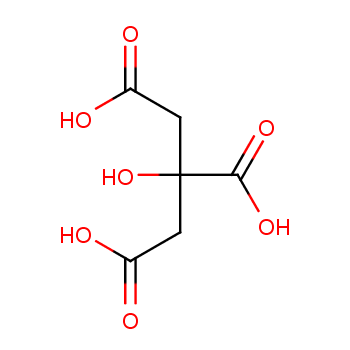
The citric acid cycle is a crucial biochemical process in human metabolism, closely related to energy production and maintaining internal balance. In this cycle, citric acid (also known as citrate) participates in various metabolic reactions within the mitochondria, generating energy and synthesizing other biomolecules. The operation of the citric acid cycle is essential not only for our bodily health but also for our daily activities and survival. In this article, we primarily explore the complexity of the citric acid cycle, including its processes, intermediates, and outputs, to understand its importance in cellular metabolism.
The citric acid cycle—also known as the Krebs cycle, Szent-Györgyi-Krebs cycle, or TCA cycle (tricarboxylic acid cycle)—is a series of biochemical reactions that release energy stored in nutrients like carbohydrates, fats, and proteins, in the form of ATP, by oxidizing acetyl coenzyme A (acetyl-CoA). It is used by respiring organisms (as opposed to fermenting organisms) to generate energy, whether through anaerobic or aerobic respiration. Additionally, the cycle provides precursors for certain amino acids and serves as a source of reducing equivalents (NADH) for many other reactions. Its central importance to many biochemical pathways suggests it as one of the earliest components of metabolism. Despite being labeled a "cycle," the metabolites do not have to follow a specific route, and at least three alternative parts of the citric acid cycle are recognized.

- Citrate Formation: Acetyl-CoA reacts with oxaloacetate in the presence of citrate synthase to produce citrate or citric acid.
- Isocitrate Formation: Citrate is converted to isocitrate, an isomer, through aconitase.
- Isocitrate Decarboxylation and Oxidation: Isocitrate undergoes oxidative decarboxylation in the presence of isocitrate dehydrogenase to form α-ketoglutarate. This step releases CO2 and produces NADH.
- Formation of Succinyl-CoA: α-Ketoglutarate is oxidized and combined with coenzyme A to form succinyl-CoA in the presence of α-ketoglutarate dehydrogenase. This enzyme releases a second molecule of NADH, CO2, and a proton.
- GTP Production: Succinyl-CoA is converted to succinate by succinyl-CoA synthetase, generating a GTP molecule through a process called substrate-level phosphorylation.
- Formation of Fumarate: Succinate is oxidized to fumarate in the presence of succinate dehydrogenase, producing FADH2.
- Formation of Malate: Fumarate is converted to malate by fumarase.
- Formation of Oxaloacetate: Malate is oxidized to oxaloacetate by malate dehydrogenase, regenerating the starting molecule for the cycle.
- Carbon Dioxide (CO2): Two molecules of CO2 are released per cycle as a byproduct of acetyl group breakdown.
- ATP (Adenosine Triphosphate): One ATP molecule is directly produced per cycle through substrate-level phosphorylation.
- NADH: Three NADH molecules are generated by removing high-energy electrons from intermediates during the cycle.
- FADH2: One FADH2 molecule is produced by removing high-energy electrons from another intermediate.
- Acetyl-CoA: A two-carbon molecule derived from glucose, fatty acids, or amino acids, serves as the fuel entering the cycle.
- Carbon Dioxide (CO2): Two molecules of CO2 are released per cycle as a byproduct of acetyl group breakdown.
- ATP: One ATP molecule is directly produced per cycle through substrate-level phosphorylation.
- NADH: Three NADH molecules are generated by removing high-energy electrons from intermediates during the cycle.
- FADH2: One FADH2 molecule is produced by removing high-energy electrons from another intermediate.
- Acetyl group entry: A two-carbon acetyl group from acetyl-CoA enters the cycle, bringing potential energy for extraction.
- CO2 release: Two carbon atoms from the original acetyl group are released as CO2 each round, eventually eliminating them from the cycle.
- Generation of high-energy carriers: NADH and FADH2 capture the energy released from carbon skeleton breakdown. These reduced electron carriers do not directly produce ATP in the cycle but act as energy shuttles in the subsequent stage of cellular respiration (electron transport chain), generating a large amount of ATP.
- Regeneration of starting molecules: Oxaloacetate, the four-carbon molecule starting the cycle, is regenerated at the end, allowing the cycle to continue processing new acetyl groups.
Two key electron carriers play roles in the citric acid cycle, shuttling electrons that are subsequently used to produce ATP:
- NAD+ (Nicotinamide Adenine Dinucleotide): This electron carrier is reduced to NADH in the citric acid cycle. NAD+ accepts a hydride ion (H+) and two electrons from specific molecules in the cycle involving isocitrate and succinate. This process of "reducing" NAD+ to NADH captures the energy released during these molecule breakdowns.
- FAD (Flavin Adenine Dinucleotide): Similar to NAD+, FAD is reduced to FADH2 in the citric acid cycle. FAD accepts two electrons from another intermediate molecule (succinate). Like NADH, FADH2 carries the captured energy for later use.
The citric acid cycle is a metabolic pathway that utilizes several key intermediate molecules. Here are some important participants:
- Acetyl-CoA: A two-carbon molecule derived from glucose, fatty acids, or amino acids, serves as the fuel entering the cycle.
- Citrate: A six-carbon molecule formed by condensation of acetyl-CoA and oxaloacetate at the start of the cycle.
- Isocitrate: Another six-carbon molecule produced by rearrangement of citrate.
- α-Ketoglutarate: A five-carbon molecule obtained by removing a carbon atom as CO2 from isocitrate.
- Succinyl-CoA: A four-carbon molecule formed by oxidation of α-ketoglutarate and attachment of coenzyme A.
- Succinate: Formed from succinyl-CoA, a four-carbon molecule.
- Fumarate: Produced by oxidation of succinate, a four-carbon molecule.
- Malate: Formed from fumarate, a four-carbon molecule.
- Oxaloacetate: Regenerated at the end of the cycle from malate, the starting four-carbon molecule.
These intermediate molecules play critical roles in the cycle: some serve as starting materials for further reactions in the cycle, while others participate in reactions generating electron carriers (FADH2). Malate is converted back to oxaloacetate, ensuring the continuity of the cycle.
The Krebs cycle is a series of chemical reactions that allow cells to use the energy from carbohydrates. It begins with glucose entering the cell. This energy is used for various cellular processes such as protein and membrane synthesis and maintaining cell functions. It produces carbon dioxide and water as waste. To use the energy from glucose for these processes, it must be converted into another type of energy—adenosine triphosphate (ATP). Glucose converted into ATP produces cellular respiration. The Krebs cycle is an important part of the cellular respiration process.
The Krebs cycle also produces NADH and FADH2 molecules, which are used in oxidative phosphorylation to produce ATP. It also produces two molecules of carbon dioxide per cycle (one CO2 is produced when one of the four carbons in the citrate molecule is oxidized). The cycle generates three hydrogen ions (H+). So, we can say the net yield per Krebs cycle is:
- 3 NADH molecules
- 1 FADH2 molecule
- 1 GTP molecule
- 2 CO2 or carbon dioxide molecules
- 3 (H+) hydrogen ions
Through this exploration, we gain insight into the importance and mechanism of the citric acid cycle in human metabolism. The citric acid cycle is not only a key process for energy production but also an essential component for maintaining internal balance and health. Understanding the principles and functions of the citric acid cycle helps us better focus on our health and lifestyle. Explore its processes and significance in energy production and cellular function today!
[1] https://www.khanacademy.org/science/biology/cellular-respiration-and-fermentation/pyruvate-oxidation-and-the-citric-acid-cycle/a/the-citric-acid-cycle
[2] https://praxilabs.com/en/blog/2023/01/02/krebs-cycle/
[3] https://www.ncbi.nlm.nih.gov/books/NBK556032/
[4] https://www.sciencedirect.com/science/article/abs/pii/S0014489411000592?via%3Dihub
[5] https://www.sciencedirect.com/science/article/abs/pii/S0014489411000592?via%3Dihub
 |
 |
 |
 EN
EN
 Agricultural News
 Food News
 Industrial News
 Cosmetic News
 Pharmaceutical News
 Science News


 3YRS
3YRS


