-
We detected your language preference as English. Would you like to switch to the English version for a better experience?
Switch to English
Stay here


The D-xylose test is a method used to determine the concentration of D-xylose in specific samples, with wide applications and practical significance. Through the D-xylose test, the concentration of D-xylose in the sample can be accurately measured. This article will explore the principles, methods, and outcomes of the D-xylose test.
D-xylose is a monosaccharide (carbohydrate) that is typically easily absorbed by the human body. The test determines the extent of someone's absorption of xylose. It measures the levels of xylose in the blood and urine after ingesting a standardized amount, assessing the individual's overall carbohydrate absorption capacity.
Human food digestion occurs in three stages: first, proteins, fats, and carbohydrates are broken down in the stomach by acids and enzymes, then in the small intestine by pancreatic enzymes and bile from the liver. They are then absorbed, primarily in the small intestine, and finally, nutrients are transported throughout the body for use or storage.
If there is insufficient bile or pancreatic enzymes available, carbohydrates and other foods cannot be properly digested. If a condition prevents the absorption of nutrients in the intestines, they are lost through excretion in feces. In both cases—improper digestion or absorption—affected individuals may experience symptoms related to malabsorption, and in severe cases, malnutrition and vitamin deficiencies.
The D-xylose absorption test is not routine and is not widely used. Several major health organizations, including the American Gastroenterological Association, the World Gastroenterology Organisation, and the British Society of Gastroenterology, have not included this test in their guidelines for assessing possible malabsorption.
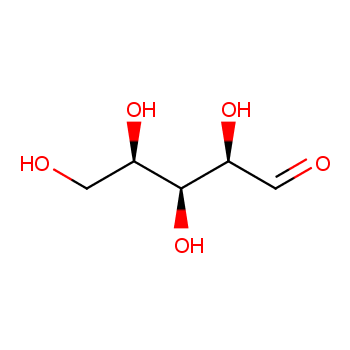
Xylose, like most sugars, can adopt multiple structures depending on conditions. D-xylose is the form typically endogenously occurring in organisms. It can be synthesized into the enantiomer, L-xylose. Below is the Fischer projection of D-xylose:

This molecule has a five-carbon chain (pentose), with a hydroxyl (OH) group on each carbon, except one (C=O, carbonyl). The key feature of a D-sugar is placing the hydroxyl group on the highest numbered chiral carbon (C-4 in this case). In Fischer's projection, horizontal lines represent bonds projecting outwards, while vertical lines represent bonds projecting inwards. The hydroxyl group on C-4 points to the right, indicating it is a D-sugar.
Do not eat or drink anything (even water) for 8 to 12 hours before the test. You will be asked to rest during the examination. Failure to restrict activity may affect test results. You may be told to stop taking certain medications that could affect the test results. Medications that could affect test results include aspirin, atropine, indomethacin, isoniazid, and phenylbutazone. Do not stop taking any medications without prior consultation with healthcare providers.
The test requires blood and urine samples. These checks include:
- Collection of a clean catch urine specimen
- Venipuncture (blood draw)
There are several ways to perform this test. Below describes a typical procedure, but ensure you follow specific instructions from your doctor.
The patient will be asked to drink 8 ounces (240 milliliters) of water containing 5 teaspoons (25 grams) of a sugar called D-xylose. The amount of D-xylose excreted in the urine over the next 5 hours will be measured. Blood samples may be collected 1 hour and 3 hours after drinking the liquid. In some cases, samples may be collected every hour. The amount of urine produced within 5 hours will also be checked. Patients will be instructed on how to collect all urine over 5 hours.
Normal results depend on how much D-xylose is given. In most cases, the test results are either positive or negative. A positive result means D-xylose is present in the blood or urine, indicating absorption by the intestines.
Normal value ranges may vary slightly between different laboratories. Some labs use different measurement methods or test different samples. Discuss with healthcare providers the implications of specific test results.
The D-xylose absorption test measures the levels of D-xylose in blood or urine samples. The test is conducted to help diagnose issues with the small intestine's absorption of nutrients from food. The test may also be referred to as the xylose tolerance test. D-xylose is typically easily absorbed by the intestines. When absorption issues occur, D-xylose is not absorbed by the intestines, resulting in lower levels in the blood and urine.
Under normal circumstances, after ingesting a D-xylose solution, the small intestine absorbs sugar, which is then excreted in urine. If there are difficulties in absorbing nutrients in the intestines, the amount of D-xylose in the urine may be lower than expected. Normal D-xylose absorption test results typically show: Blood: peak concentration around 2 hours after drinking; Urine: almost all D-xylose cleared within 5 hours.
There is no standard range for normal D-xylose levels because different laboratories may use slightly different measurement methods. Your doctor will interpret your results based on the specific test used and your medical history.
In the D-xylose test, low levels of D-xylose in urine indicate potential issues with nutrient absorption in the small intestine, also known as malabsorption syndrome.
D-xylose is a simple sugar that is typically easily absorbed by the small intestine with minimal breakdown. The test involves ingesting a solution containing D-xylose and then measuring the amount excreted in urine over a specific period. If the small intestine functions properly, a significant portion of D-xylose will be absorbed, leaving only a small amount excreted in urine. Patients with renal insufficiency may exhibit high blood levels but low urinary levels. In such cases, blood levels are used to assess malabsorption. Various conditions affecting digestion and absorption may lead to a decrease in xylose levels. Therefore, low urinary D-xylose levels indicate ineffective sugar absorption, possibly due to various conditions affecting the small intestine.
If your urinary D-xylose levels are low, consulting your doctor for further evaluation and diagnosis to determine the optimal treatment for the underlying cause is crucial.
The D-xylose test is normal in pancreatic insufficiency because it evaluates different aspects of digestion compared to those handled by pancreatic enzymes.
This test assesses the small intestine's ability to absorb monosaccharides (D-xylose). Under normal circumstances, the small intestine effectively absorbs D-xylose with minimal breakdown.
This condition occurs when the pancreas fails to produce enough digestive enzymes. These enzymes aid in the breakdown of complex molecules like proteins, fats, and carbohydrates in the small intestine.
D-xylose absorption does not require pancreatic enzymes. It is a small sugar that the intestinal mucosa can directly absorb without any enzymatic breakdown. Therefore, even in individuals with pancreatic insufficiency, unable to digest other nutrients properly, the D-xylose test may still be normal.
The D-xylose test itself does not cause clinical manifestations. It is a diagnostic tool that does not directly impact the body. However, this test may sometimes cause some minor side effects due to ingestion of the sugar solution:
- Diarrhea
- Nausea
- Vomiting
- Abdominal bloating
These side effects are usually mild and transient. If you experience any discomfort during the testing process, inform the healthcare professional administering the test.
The test may be performed when an individual exhibits signs and symptoms of malabsorption, such as:
- Chronic diarrhea
- Unexplained weight loss
- Abdominal pain
- Steatorrhea (fat in stools)
- Fatigue
- Signs of malnutrition
If you are experiencing any of these symptoms, your doctor may request a D-xylose test to help diagnose the underlying cause.
In conclusion, the D-xylose test is an important diagnostic tool that helps us understand the levels of D-xylose in samples, with significant implications for biological research and medical diagnostics. If you have any questions or need further understanding regarding the D-xylose test, it is advisable to consult professional physicians or experts in the relevant field, who will be able to provide you with more detailed information and guidance. Hopefully, this article will help you better understand the significance and application of the D-xylose test.
[1]https://myhealth.alberta.ca/Health/Pages/conditions.aspx?hwid=hw6154
[2]https://www.mountsinai.org/health-library/tests/d-xylose-absorption
[3]https://ufhealth.org/conditions-and-treatments/d-xylose-absorption
[4]https://www.testing.com/tests/xylose-absorption-test/
[5]https://commons.wikimedia.org/wiki/File:D-Xylose_Fischer.png
|
 |
 |
 EN
EN
 Agricultural News
 Food News
 Industrial News
 Cosmetic News
 Pharmaceutical News
 Science News


 3YRS
3YRS

