-
We detected your language preference as English. Would you like to switch to the English version for a better experience?
Switch to English
Stay here


Dihydrostreptomycin sulfate is a commonly used antibiotic with extensive applications and significant pharmacological effects. As a member of the streptomycin class of antibiotics, dihydrostreptomycin sulfate is widely employed in the medical field for treating various infectious diseases such as respiratory and skin infections. Its unique chemical structure and antimicrobial mechanism confer superior antibacterial activity and broad-spectrum efficacy. This paper aims to delve into the definition, applications, and properties of dihydrostreptomycin sulfate, intending to provide readers with a comprehensive understanding of this important antibiotic and promote its wider application and further research in the medical field.
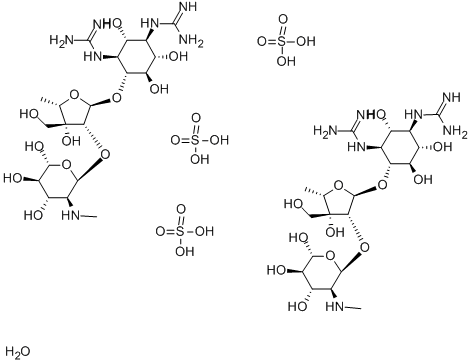
Dihydrostreptomycin sulfate, also known as Dihydrostreptomycin Sesquisulfate, has the molecular formula C40H86N14O37S3 and dihydrostreptomycin sulfate molecular weight of 1461.41. It is a semi-synthetic aminoglycoside antibiotic with bactericidal properties. Dihydrostreptomycin sulfate inhibits protein synthesis by binding to the 30S ribosomal subunit. This antibiotic exhibits activity against most Gram-positive and Gram-negative bacteria and is used in the treatment of conditions such as pulmonary tuberculosis and leptospirosis. It is a derivative of streptomycin with antibacterial activity and is soluble in aqueous solutions.
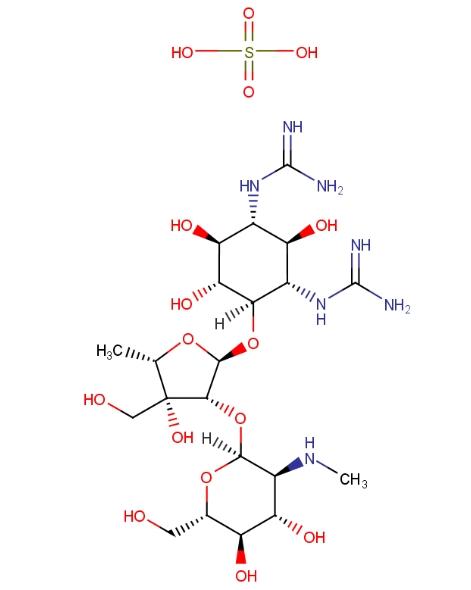
Dihydrostreptomycin sulfate is utilized as an antibiotic for treating severe bacterial infections. It belongs to the class of aminoglycoside antibiotics and acts by inhibiting bacterial growth. However, due to the risk of severe side effects, the U.S. Food and Drug Administration withdrew approval for all drugs containing dihydrostreptomycin sulfate in the United States. Its applications include:
Dihydrostreptomycin sulfate is effective against a variety of bacteria, including both Gram-positive and Gram-negative organisms. It is particularly useful in treating infections caused by organisms such as:
- Mycobacterium tuberculosis (Tuberculosis)
- Leptospira (Leptospirosis)
Due to its mechanism of action, dihydrostreptomycin sulfate is still used in research to study the uptake and selection of aminoglycosides in cell cultures.
Dihydrostreptomycin sulfate is a potentially hazardous substance if mishandled. It is essential to refer to the Material Safety Data Sheet (MSDS) before handling this material. MSDS, now commonly referred to as Safety Data Sheets (SDS), contains information about material hazards, how to handle it safely, and emergency procedures in case of incidents. Based on SDS provided by different suppliers, here are some key points about dihydrostreptomycin sulfate:
Dihydrostreptomycin sulfate is freely soluble in water solutions, indicating easy solubility in water at room temperature. There may be slight variations in solubility values between different sources. The predicted water solubility listed by Drugbank is 16.0 mg/mL. However, individual solubility tests may vary slightly due to factors such as temperature or between batches. It is worth noting that dihydrostreptomycin sulfate is insoluble in certain organic solvents such as DMSO.
The CAS Registry Number (CAS RN), also known as a CAS Number, is a unique identifier assigned by the Chemical Abstracts Service (CAS) to each chemical substance described in the open scientific literature. CAS numbers are used to index substances in the CAS registry, a database containing information on over 155 million chemical substances. CAS registration is an essential resource for scientists, researchers, and regulatory agencies worldwide. The CAS number for dihydrostreptomycin sulfate is 5490-27-7.
Minimize the generation and accumulation of dust as much as possible. Adhere to good hygiene practices when handling chemical materials. Refer to Section 8. Wash hands after handling. Remove contaminated clothing and wash before reuse. Avoid inhalation and ingestion. Refrain from eating, drinking, smoking, or using personal items while handling chemicals. Avoid contact with eyes, skin, and clothing.
Prevent freezing and physical damage. Keep away from food and beverages. Seal containers in a cool, dry, well-ventilated area, away from incompatible substances. Avoid storage near extreme heat, ignition sources, or open flames.
In conclusion, dihydrostreptomycin sulfate is an antibiotic widely used in the medical field, with its unique chemical structure and mechanism of action making it one of the important drugs for treating various infectious diseases. In recent years, with the increasing severity of antibiotic resistance, research and application of dihydrostreptomycin sulfate also face new challenges and opportunities. In the future, further research into the pharmacology and antibacterial mechanisms of dihydrostreptomycin sulfate is needed, continuously exploring its new uses and applications in clinical treatment and infection prevention. At the same time, rational use and management of antibiotics need to be strengthened to protect human health and ensure the sustainable use of antibiotic resources.
[1] https://go.drugbank.com/salts/DBSALT001676
[2]https://www.fishersci.com/store/msdspartNumber=S25797&productDescription=STREPTOMYCIN+SULFATE+5+G&vendorId=VN00115888&countryCode=US&language=en
[3] https://goldbio.com/product/3149/dihydrostreptomycin-sulfate
[4] https://pubchem.ncbi.nlm.nih.gov/compound/21653
|
 EN
EN
 Agricultural News
 Food News
 Industrial News
 Cosmetic News
 Pharmaceutical News
 Science News

 1YR
1YR