-
We detected your language preference as English. Would you like to switch to the English version for a better experience?
Switch to English
Stay here


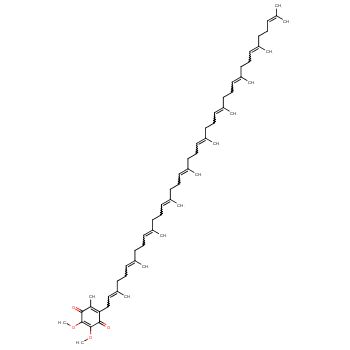
Coenzyme Q10 (CoQ10) exists primarily as ubiquinone (oxidized form) and ubiquinol (reduced form), two interconvertible states with fundamentally different absorption kinetics and crystalline stability. This article decodes their molecular polymorphism, lipid-matrix dispersibility, dose-dependent saturation kinetics, and pharmacokinetic timing strategies to help formulators and procurement teams select the most bioavailable CoQ10 form for commercial supplementation and nutraceutical development.

Coenzyme Q10 exists in two redox states: ubiquinone (oxidized form) and ubiquinol (reduced form). Their interconversion is central to mitochondrial electron transport chain activity, but their pharmacokinetic behavior differs significantly in oral supplementation systems.
Ubiquinone requires enzymatic reduction in the intestinal mucosa via NAD(P)H-dependent oxidoreductases before entering systemic circulation, while ubiquinol bypasses part of this redox conversion due to its pre-reduced, electron-rich hydroxyl configuration that enhances membrane partitioning.
Clinical pharmacokinetic studies (Mortensen et al., BioFactors) show that ubiquinol demonstrates 3–4× higher AUC (area under curve) compared to ubiquinone under identical dosing conditions (100 mg oral administration). Reported parameters include:
However, the thermodynamic instability of ubiquinol introduces a critical manufacturing challenge: oxidation back to ubiquinone under heat, oxygen exposure, or light stress, making stabilization technology a decisive cost factor in industrial formulation.
Coenzyme Q10 is a hydrophobic crystalline compound with a melting point around 48–52°C and extremely low aqueous solubility (< 0.1 µg/mL). This physicochemical barrier makes matrix dispersibility the key determinant of absorption efficiency.
Softgel systems dominate high-end formulations due to their ability to solubilize CoQ10 in lipid carriers, enabling microemulsification in gastrointestinal fluids.
The most effective systems are self-emulsifying drug delivery systems (SMEDDS), which generate nanoscale micelles (<200 nm) upon contact with bile salts.
Notably, only lipid systems containing medium-chain triglycerides (MCT) and phospholipids (e.g., lecithin) achieve stable nanoemulsion formation under gastric shear conditions.
Expert Commentary: According to formulation scientist Prof. James L. Carter, “Softgels are not inherently superior; their advantage depends entirely on lipid matrix engineering. Without controlled HLB balancing (hydrophilic-lipophilic balance ~10–12), CoQ10 precipitation occurs within 30 minutes post-gastric transition, negating any absorption gains.”
CoQ10 absorption is governed by carrier-mediated intestinal transport and micellar diffusion, both of which exhibit saturation behavior above specific thresholds.
Clinical pharmacokinetic modeling shows that doses exceeding 100–200 mg per single intake result in diminished marginal absorption efficiency due to transporter saturation in enterocytes.
Instead of linear dose escalation, absorption follows a logarithmic decay curve beyond saturation point:
Practical implication: doubling dose does not double plasma concentration.
Multi-dose fractionation strategies significantly improve systemic exposure by maintaining transporter availability and optimizing micellar uptake kinetics.
Expert Commentary: Dr. Hiroshi Tanaka, a clinical pharmacokinetics researcher, notes: “Fractionated dosing strategies increase total AUC by up to 28% compared to single bolus administration. The industry’s overreliance on ‘high-dose marketing’ ignores fundamental intestinal transport biology.”
CoQ10 is a highly lipophilic molecule (logP ~20+), meaning its absorption is strongly dependent on dietary fat intake and bile acid secretion.
Postprandial administration significantly enhances micelle formation due to bile acid emulsification, which increases solubilization efficiency in the jejunum.
Optimal absorption conditions occur when CoQ10 is consumed with meals containing at least 10–15 g of dietary fat, leading to higher Cmax and prolonged Tmax stability.
From a formulation standpoint, excipient selection is equally critical. Poorly engineered systems may induce gastrointestinal discomfort, including mild constipation in sensitive users due to hydrophobic aggregation.
Advanced formulations mitigate this by integrating:
Expert Commentary: According to nutraceutical safety analyst Dr. Laura Bennett, “The next generation of CoQ10 formulations will not only optimize absorption but also proactively manage gastrointestinal tolerability. Excipient synergy is becoming as important as active ingredient selection.”
Q1: What is the best form of Coenzyme Q10 for absorption?
Ubiquinol generally demonstrates 3–4× higher bioavailability than ubiquinone, but requires strict stabilization technologies to maintain performance.
Q2: Are softgels always better than tablets?
Not always. Only lipid-engineered SMEDDS softgels outperform tablets significantly; poorly formulated softgels may offer minimal improvement.
Q3: Can high doses improve results faster?
No. CoQ10 absorption is saturable; doses above 200 mg per intake show diminishing returns due to transporter limitations.
[1] Mortensen SA et al., “Bioavailability of ubiquinol vs ubiquinone,” BioFactors, 2014.
[2] Bhagavan HN & Chopra RK, “Plasma CoQ10 pharmacokinetics,” Journal of Clinical Pharmacology, 2007.
[3] Hidaka T et al., “Absorption mechanisms of Coenzyme Q10 in humans,” Journal of Nutritional Science and Vitaminology, 2008.
[4] European Food Safety Authority (EFSA), Scientific Opinion on CoQ10 safety, 2010.
[5] CAS Registry Database, Coenzyme Q10 physicochemical properties, accessed 2026.
Looking for stable, high-purity Coenzyme Q10 with optimized bioavailability systems for nutraceutical manufacturing? Discover scalable supply solutions designed for global formulation leaders.
 |
 |
|
 EN
EN
 Agricultural News
 Food News
 Industrial News
 Cosmetic News
 Pharmaceutical News
 Science News


 2YRS
2YRS


Expert Commentary: With over 15 years in lipid-based nutraceutical formulation, industry specialists emphasize that “bioavailability advantage alone does not define product success.” According to Dr. Elena Markovic, a pharmaceutical formulation consultant, “ubiquinol only outperforms ubiquinone when oxidation is tightly controlled. Without nitrogen-flushed encapsulation and antioxidant excipient systems (e.g., mixed tocopherols), the real-world performance gap can collapse by up to 40% during shelf storage.”