-
We detected your language preference as English. Would you like to switch to the English version for a better experience?
Switch to English
Stay here


Coenzyme Q10 (Ubiquinone) is a highly temperature- and light-sensitive lipophilic compound widely used in nutraceutical and pharmaceutical formulations. Its low melting range (48–52°C), susceptibility to UV-induced oxidation, and moisture-driven caking behavior make industrial storage and supply chain management a critical quality determinant. This article translates physicochemical constraints into enforceable warehouse SOPs and supply chain forecasting models, helping procurement and PMC teams reduce degradation risk, optimize bulk inventory turnover, and implement compliant nitrogen-protected storage strategies aligned with 2026 industry best practices.

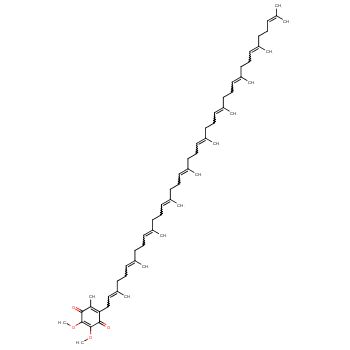
Coenzyme Q10 (Ubiquinone, CAS 303-98-0) is a crystalline, lipophilic quinone with a narrow thermal stability window. Its melting point of 48°C–52°C represents a critical “thermal redline”: once exceeded, polymorphic transition and partial liquefaction can occur, leading to irreversible agglomeration (caking) upon re-solidification. In industrial warehousing environments, especially in summer rooftop or non-HVAC-controlled zones, localized temperature spikes frequently surpass this threshold, triggering physical degradation before chemical decomposition is even detected.
In parallel, CoQ10 is highly susceptible to photo-oxidation under UV and visible light exposure. Reactive oxygen species formation accelerates the conversion of active ubiquinone into inactive oxidized byproducts, reducing both potency and redox efficacy in finished formulations.
Moisture further amplifies instability. Relative humidity above 50% promotes surface adsorption and capillary condensation within powder matrices, increasing particle adhesion and leading to flow failure in downstream encapsulation lines.
Once bulk drums are repeatedly opened in production cleanrooms, oxygen ingress becomes the dominant degradation driver. Each exposure cycle increases the oxygen partial pressure inside packaging headspace, gradually reducing redox stability and accelerating degradation kinetics.
Modern procurement teams are increasingly abandoning static historical averaging in favor of multi-factor rolling forecast systems. For Coenzyme Q10, demand is tightly coupled to downstream nutraceutical capsule production cycles, especially softgel manufacturing utilization rates and seasonal retail demand spikes (notably Q4 wellness and fitness campaigns).
A robust forecasting model integrates:
From a financial perspective, bulk purchasing must be evaluated using Total Cost of Ownership (TCO), not unit price alone.
Industry best practice (2026 benchmark) suggests bulk locking is only justified when MPS certainty exceeds 85% and inventory turnover is under 45 days. Beyond this threshold, oxidation-driven losses outweigh procurement discounts.
Expert Commentary: According to supply chain analyst Dr. Elaine Morgan (Pharma Logistics Review, 2025), “CoQ10 procurement behaves more like perishable inventory than a standard API. The economic inflection point is not price, but time-to-encapsulation.” This insight is reshaping how nutraceutical brands structure their annual sourcing contracts.
The reorder logic for Coenzyme Q10 must account for both classical inventory theory and chemical instability constraints. The standard reorder point (ROP) model is defined as:
ROP = (Daily Usage × Lead Time) + Safety Stock
However, for CoQ10, “lead time” is not static. Seasonal fermentation plant shutdowns in major production hubs (notably in Asia during summer maintenance cycles) can extend lead time by 20–40%, while maritime shipping containers exposed to heat may reach internal temperatures of 60°C+, invalidating conventional transit assumptions.
Safety stock must therefore include a degradation buffer, not just demand variance. This buffer accounts for assay decline under thermal stress and UV exposure during extended logistics chains.
In high-reliability nutraceutical supply chains, the “hard reorder trigger” is often set earlier than ERP systems suggest, particularly when ambient seasonal temperatures rise above transport-safe thresholds.
Expert Commentary: Senior SCM consultant Javier Liu notes that companies using purely statistical ROP models in CoQ10 sourcing experience up to 22% higher stockout risk during summer peaks. He recommends embedding real-time temperature logistics telemetry into reorder algorithms to dynamically adjust safety stock.
In disrupted supply chains—particularly during peak heat seasons or global logistics constraints—digital B2B platforms have become critical for emergency CoQ10 sourcing. However, procurement speed must never compromise chemical authenticity verification.
High-quality Coenzyme Q10 must meet the following minimum compliance thresholds:
Low-cost “spot offers” frequently represent aged stock or chemically altered material with reduced bioavailability. In nutraceutical manufacturing, this can lead to encapsulation inconsistencies and reduced clinical efficacy.
Emergency procurement protocols increasingly require dual verification: analytical (HPLC chromatogram validation) and logistical (verified temperature-controlled storage history).
Expert Commentary: Industry QA auditor Dr. Michael Stern emphasizes that “the biggest misconception in spot sourcing is assuming price transparency equals quality transparency. In reality, degradation history is invisible unless cold-chain telemetry is enforced.”
Looking for stable, high-purity Coenzyme Q10 with verified GMP compliance and controlled storage logistics? Discover how global nutraceutical manufacturers secure reliable supply chains with reduced oxidation risk and improved batch consistency.
[1] United States Pharmacopeia (USP 43–NF 38): Coenzyme Q10 Monograph
[2] ICH Q1A(R2): Stability Testing of New Drug Substances and Products
[3] EFSA Panel on Dietetic Products: Scientific Opinion on Ubiquinone Safety and Bioavailability (2023 update)
[4] Journal of Pharmaceutical Sciences: Stability of Lipophilic Quinones under Thermal and Photolytic Stress
[5] CAS Registry No. 303-98-0, Coenzyme Q10 Substance Database
|
 |
 |
 |
 |
 |
 EN
EN
 Agricultural News
 Food News
 Industrial News
 Cosmetic News
 Pharmaceutical News
 Science News

 2YRS
2YRS


Expert Commentary: With 15+ years in lipid-soluble API logistics, I have observed that >60% of CoQ10 quality failures are not due to synthesis defects but warehouse microclimate deviations. The most overlooked risk is “partial exposure cycling”—repeated short openings without nitrogen purge. In 2026, leading manufacturers are shifting toward single-use liner systems inside drums to eliminate headspace re-oxygenation entirely.