-
We detected your language preference as English. Would you like to switch to the English version for a better experience?
Switch to English
Stay here


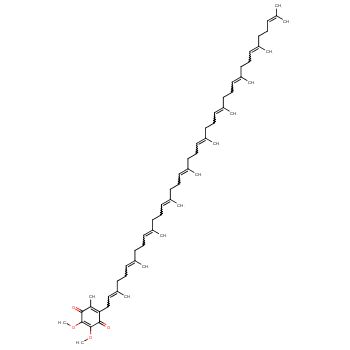
Coenzyme Q10 (CoQ10) supply chains are undergoing a structural shift from plant-derived solanesol semi-synthesis to microbial fermentation. This article critically evaluates process synthesis vs. microbial yield stability, revealing why fermented CoQ10—driven by engineered strains such as Rhodobacter sphaeroides—now dominates industrial production due to superior purity control (≥98.5%), ultra-low impurity thresholds (≤0.1%), and batch-to-batch consistency under GMP-controlled bioreactors.

Traditional Coenzyme Q10 manufacturing relied heavily on solanesol extraction from tobacco leaves, followed by multi-step chemical conversion. However, this route is increasingly considered industrially obsolete due to agricultural volatility, seasonal yield fluctuations, and solvent-heavy purification steps.
In contrast, modern fermentation systems using Rhodobacter sphaeroides or Penicillium citrinum enable continuous biosynthesis under tightly controlled bioreactor conditions (30–35°C, pH 6.8–7.2, dissolved oxygen ≥30%). These systems achieve:
Unlike plant extraction, fermentation eliminates dependence on agricultural cycles and reduces solvent residues (e.g., n-hexane or ethyl acetate) to below ICH Q3C Class III thresholds (<5000 ppm limit, typically controlled to <100 ppm in GMP systems).
The transition clearly demonstrates a shift from agriculture-dependent chemistry to industrial biotechnology precision manufacturing.
The global CoQ10 market is structured around a dual-polar production ecosystem:
Expert Commentary: “Procurement teams often misprice CoQ10 based on branding rather than upstream biochemical economics. The real arbitrage opportunity lies in energy pricing and fermentation yield efficiency—not in ‘organic’ labeling claims.” — James Liu, Senior Chemical Supply Chain Analyst, APAC Biopharma Advisory Group
Regulatory compliance is a decisive factor in CoQ10 procurement, especially for nutraceutical and pharmaceutical applications. Global buyers must distinguish between food-grade and pharmaceutical/API-grade CoQ10.
Key threshold specifications include:
Certification requirements by region:
Additional certifications such as Kosher and Halal require validated cross-contamination control logs, especially in shared fermentation facilities.
Expert Commentary: “The most frequent audit failure in CoQ10 supply chains is not purity, but documentation inconsistency across DMF and batch COA records. Regulatory alignment must be treated as a living system, not a static certificate set.” — Prof. Daniel Reyes, Regulatory Affairs Specialist, Global Pharma Compliance Institute
Modern CoQ10 quality assurance relies on multi-layered analytical validation to prevent adulteration and ensure molecular integrity.
Critical analytical techniques include:
These methods collectively establish a forensic-level quality assurance framework capable of detecting even trace-level adulteration.
Expert Commentary: “The future of CoQ10 QA lies in predictive analytics—integrating chromatographic fingerprints with AI models to detect upstream fermentation drift before it manifests in final API batches.” — Dr. Sarah Nguyen, Analytical Chemistry Lead, BioPharma QA Systems
[1] ICH Q3C (R8): Impurities: Guideline for Residual Solvents, International Council for Harmonisation.
[2] USP–NF Monograph: Coenzyme Q10, United States Pharmacopeia 2025 Edition.
[3] European Pharmacopoeia 11.0, Monograph: Ubiquinone.
[4] Nature Reviews Chemistry (2024): “Microbial biosynthesis of isoprenoid quinones.”
[5] ISO 22000:2018 Food Safety Management Systems Requirements.
[6] CAS Registry No. 303-98-0, Coenzyme Q10, Chemical Abstracts Service.
Looking for stable, high-purity Coenzyme Q10 with full regulatory compliance? Discover why leading global brands choose our premium fermentation-based supply chain solutions.
 |
|
 |
 |
 |
 |
 EN
EN
 Agricultural News
 Food News
 Industrial News
 Cosmetic News
 Pharmaceutical News
 Science News

 2YRS
2YRS


Expert Commentary: “In 2026, CoQ10 fermentation is no longer an alternative—it is the reference standard. The critical KPI is not yield alone, but impurity topology. Strains optimized for redox balance in Rhodobacter systems consistently outperform plant-derived intermediates in both stereochemical fidelity and downstream purification cost.” — Dr. Elena Markovic, Industrial Bioprocess Engineering Consultant (15+ years fermentation scale-up experience)