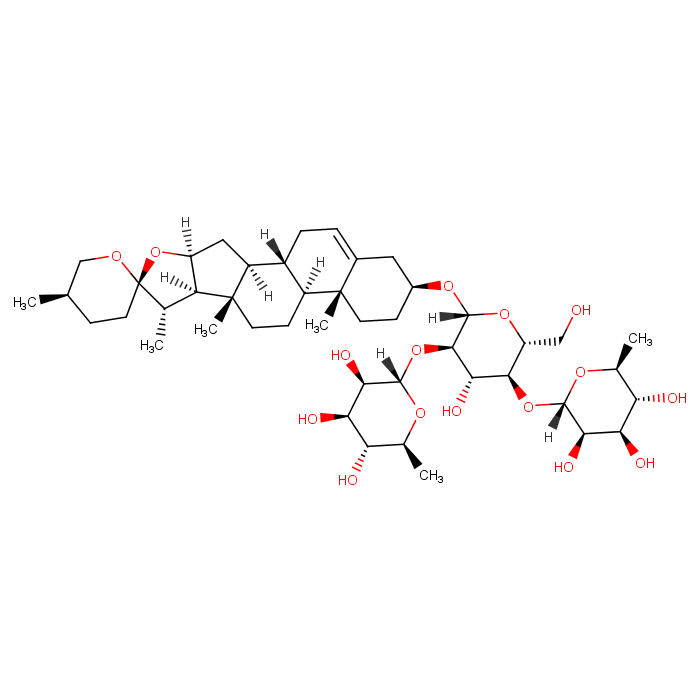
Dioscin, a natural substance with broad prospects for application, plays a crucial role in the field of healthcare. Dioscin offers various benefits, including antioxidant, anti-inflammatory, and antimicrobial functions, and is widely utilized in pharmaceuticals, health supplements, cosmetics, and other fields. Understanding the uses of dioscin is essential for fully harnessing its potential and maintaining health. This article will explore the uses of dioscin and its importance, aiming to provide readers with more information about this beneficial substance.
Dioscin, as a natural bioactive steroidal saponin, has gained great popularity for its medicinal benefits. With the continuous increase in the global incidence and mortality rates of diseases, there is an urgent need for non-toxic, non-invasive, and effective treatment options. Natural compounds have made significant contributions to this field. Recent studies have shown that dioscin has significant protective effects against various human malignancies, metabolic disorders, organ damage, and viral/fungal infections. The successful use of this plant compound has been widely adopted in traditional Chinese medical practices and is gradually becoming popular worldwide.
Currently, the number of patients with cancer, fibrosis, diabetes, chronic kidney disease, stroke, and osteoporosis is rapidly increasing. Discovering lead compounds for new drug development is crucial. Dioscin, a steroidal saponin, is an effective component of traditional Chinese medicines such as Liuwei Dihuang Decoction and Dihuang Xin'an Kang. What are the uses of dioscin? Data from the "PubMed" and "CNKI" databases show a significant increase in research on dioscin in recent years. Dioscin in the roots and stems of Dioscorea opposita (commonly known as Chinese yam) and Dioscoreaceae plants (such as Dioscorea zingiberensis C.H. Wright and Dioscorea nipponica Makino) is also an active compound. "Shennong's Classic of Herbal Medicine" records: "Chinese yam tastes sweet and flat, with the characteristics of reducing viscera and supplementing deficiency," and can also dispel cold and heat evils, tonify qi, and promote muscle growth. In addition, Chinese yam can also improve auditory and visual sensitivity and prolong life. Pharmacological experiments have shown that dioscin has various effects such as anti-tumor, anti-inflammatory, immunomodulatory, lipid-lowering, antiviral, antifungal, and anti-allergic effects. Furthermore, some recent studies have shown that dioscin can protect against liver, kidney, brain, and gastrointestinal damage and manage metabolic diseases such as diabetes, osteoporosis, obesity, and hyperuricemia by regulating multiple targets and signaling pathways. Therefore, dioscin is a promising multi-target candidate for treating certain diseases, indicating broad prospects for this natural product.
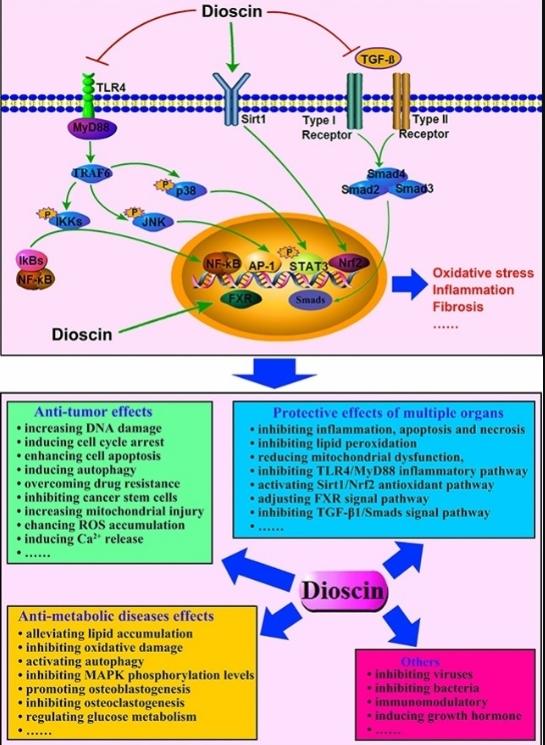
Research suggests that dioscin possesses a range of valuable properties for controlling various health conditions. Let's delve into some promising applications of dioscin:
Inflammation is the body's natural response to injury or infection. However, chronic inflammation can lead to various health issues. Studies indicate that dioscin's anti-inflammatory properties may help alleviate symptoms associated with inflammatory diseases such as arthritis, asthma, and inflammatory bowel disease.
The renal protective effect of natural products is often mediated by their antioxidant properties and, to some extent, their anti-inflammatory function. Natural products can improve the progression of diabetic nephropathy and enhance renal function by targeting multiple pathological processes and inhibiting or consuming various pathways (such as p38MAPK, JNK, ERK, TGF-β, RhoA, NF-kB, Wnt, JAK-STAT, AMPK, mTOR, Akt, and TXNIP). The mechanism studies of most renal protective natural products are conducted in animal models with induced hepatotoxicity. For example, fructose-induced renal damage and degeneration were significantly rescued by dioscin treatment. In rat kidney tissues, the inhibitory effect of dioscin on fibrosis, oxidative stress, and abnormal lipid metabolism can be mediated by restoring the normal expression of Sirt3. It is noteworthy that the decrease in Sirt3 expression may lead to NF-κB activation and cell death. In lipopolysaccharide (LPS)-induced inflammatory renal injury, dioscin can upregulate miR-let-7i to inhibit TLR4/MyD88. Aristolochic acid-induced renal injury can also be attenuated by this saponin through the farnesol X receptor-mediated signaling pathway. Dioscin also has several other ways to protect the kidneys from damage.
Research suggests that dioscin may have anti-cancer properties. Studies indicate that it can induce apoptosis (programmed cell death) in cancer cells and may inhibit their growth and proliferation. However, more research is needed to understand its effectiveness in cancer treatment.
Plant chemicals are essentially considered to be multifunctional. They are responsible for targeting different molecular pathways associated with disease pathophysiology. Plant chemicals regulate cell signaling mechanisms by synergistically targeting cellular targets, leading to the modulation of signaling mechanisms in cancer cells. Plant chemicals interfere with intracellular targets and have a direct impact on molecular pathways in cancer cells. In the process of regulating molecular pathways, plant chemicals demonstrate affinity for specific molecular targets, through which they inhibit carcinogenic effects and block mutagenic activity. Numerous studies have shown that certain plant chemicals, such as curcumin, resveratrol, green tea polyphenols, sulforaphane, vitamin E, dioscin, and quercetin, have been shown to target molecular pathways.
Dioscin may contribute to improving cardiovascular health. Research suggests that it may help lower cholesterol levels, improve blood circulation, and potentially reduce the risk of heart disease.
Some studies suggest that dioscin may play a role in diabetes management. It may help regulate blood sugar levels and improve insulin sensitivity. However, more research is needed to confirm these findings.
The anti-inflammatory properties of dioscin may be beneficial for skin health. It has potential uses in alleviating conditions such as eczema and psoriasis. However, further research is needed to validate its effectiveness when applied topically.
Dioscin has been shown to have anti-osteoporotic effects, promoting the proliferation and differentiation of osteoblasts in vitro and inhibiting the production of osteoclasts. Animal experiments (Zhao et al., 2016) studied the preventive and therapeutic effects of dioscin on retinoic acid-induced osteoporosis in rats. The rats were divided into blank group, model group, control group, and dioscin low dose (10 mg/kg), medium dose (30 mg/kg), and high dose (90 mg/kg) treatment group. Compared with the model group, the decrease in femoral length, femoral weight, and bone density in the dioscin group was significantly improved. The levels of estradiol and osteocalcin in the dioscin medium and high dose groups were significantly higher than those in the model group, and the levels of alkaline phosphatase (ALP) and tartrate-resistant acid phosphatase (TRAP) were significantly lower than those in the model group. It is speculated that dioscin may have a certain preventive and therapeutic effect on retinoic acid-induced osteoporosis, and its mechanism may be to increase estradiol levels and inhibit high bone conversion. Therefore, dioscin glycosides may exert anti-osteoporotic effects by promoting bone formation, inhibiting bone resorption, and regulating bone metabolism balance.
Early research suggests that dioscin may have other benefits, including:
Antiviral and Antifungal Effects: Dioscin may have antiviral and antifungal effects, but further research is needed.
Neuroprotective Effects: Dioscin may have neuroprotective effects, which may help in neurodegenerative diseases.
While research into the potential health benefits of dioscin is ongoing, consulting a healthcare professional is crucial before using dioscin supplements or treating any health condition with dioscin. Dioscin may interact with certain medications, and the long-term safety of its use requires further investigation.
The liver of humans or rodents can absorb dioscin through the OATP family transport system. After oral or intravenous administration of dioscin to rats, the level of dioscin in the liver within 24 hours is 10-7 times that in the plasma. The liver is an important organ for the uptake and metabolism of dioscin, but dioscin is metabolized slowly in the liver. Therefore, dioscin may have certain hepatotoxicity.
Some preclinical studies support this conclusion. Xu et al. evaluated the subchronic toxicity of dioscin in rats. They designed four doses (0, 75, 150, and 300 mg/kg/day) orally for 90 days; evaluated body weight, consumption of food and water; conducted urine tests, hematology, clinical, biochemical, and pathological examinations. The results showed that dioscin at a dose of 300 mg/kg/day was non-toxic to female rats, but exhibited a certain degree of chronic toxicity to male rats, with dose-dependent increases in levels of gastrin, gastrointestinal dilation, and hemolytic anemia. Another study showed that oral administration of total saponins extracted from Dioscorea bulbifera C.H. Wright at doses of 1125 mg/kg or higher in mice resulted in severe dose-dependent morphological damage to liver tissues, which in some cases proved to be fatal. It is worth noting that 1125 mg/kg is much higher than the dose typically prescribed in clinical practice (112.5 mg/kg); therefore, the results suggest that dioscin is safe. In a subchronic toxicity study, a dose of 510 mg/kg/day of steroid saponins significantly increased the serum total bilirubin levels in Sprague-Dawley rats and significantly decreased the protein content in the liver, indicating that long-term high-dose steroid saponins may damage the hepatic-biliary system, leading to impaired bilirubin release and hepatic protein synthesis.
At the mechanistic level, numerous studies have provided evidence that the hepatotoxic effects associated with high-dose dioscin may stem from dioscin-induced oxidative stress damage and upregulation of cytochrome P450 (CYP) expression. Fan et al. observed that high doses of dioscin could induce oxidative stress in rats, upregulate cytochrome P450 (CYPs), and increase hepatocyte apoptosis. This leads to liver dysfunction and disruption of bile acid homeostasis. In vitro studies have shown that exposure to high doses of dioscin reduces the viability of L-02 cells in a dose-dependent and time-dependent manner. Further experimental results confirm that dioscin induces intracellular oxidative stress, upregulates the expression of CYPs, thereby disrupting the function of cell membranes and mitochondrial membranes, ultimately leading to cell apoptosis. Similarly, Zhang et al. reported that treatment of HepG2 cells with dioscin at concentrations of 4 to 32 μmol/L for 12 hours induced oxidative stress and membrane damage. Dioscin activates the aryl hydrocarbon receptor (AhR), upregulates the expression of cytochrome P450 1A (CYP1A), and ultimately significantly inhibits the viability of HepG2 cells.
In clinical practice, cases of hepatotoxicity and gastrointestinal adverse reactions associated with dioscin have been reported. As early as 1999, Zhou et al. reported two cases of liver damage caused by the consumption of Diaoxinkang (mainly containing dioscin). Eight hundred hypertensive patients orally took dioscin tablets (80 mg, 3 times/day) for a course of 3.5 months; six patients developed individual liver dysfunction, with elevated serum transaminase levels; after discontinuation of dioscin, liver enzymes gradually returned to normal, and hepatoprotective and liver-reducing treatments were given. In addition to hepatotoxicity and gastrointestinal discomfort, cases of palpitations, back pain, and generalized weakness have also been reported after dioscin treatment, with relief occurring 4 hours after discontinuation of the drug.
The above studies suggest that long-term or high-dose use of dioscin can lead to liver dysfunction, and caution should be exercised when using related drugs in clinical practice.
DA-9801 containing dioscin completed Phase II clinical trials for the treatment of diabetic neuropathy in the United States in 2015, indicating its acceptable safety. In addition, Diaoxinkang capsules containing dioscin have been used in China for more than 20 years to treat cardiovascular diseases and were approved for use in the Netherlands in 2012. Without citing any other toxicity data, entering clinical trials and obtaining approval for entry into the drug market is sufficient to clarify the safety of dioscin for treatment.
Although intravenous injection of large doses of dioscin into mice can cause hepatocyte swelling and large nuclear cells, indicating its potential hepatotoxicity, dioscin does have hepatoprotective effects on mice and rats in many reports. However, if administered in large doses, the toxicity of dioscin must be considered. According to reports, the maximum safe dose of dioscin for rats in subchronic toxicological evaluation is 300 mg/kg/day.
Using pooled human liver microsomes (H161) as the reaction system, dioscin, at a high concentration of 200 μM, had no inhibitory effect on four UDP-glucuronosyltransferases (UGTs, UGT1A1, UGT1A4, UGT1A9, and UGT2B7) and six of eight cytochrome P450 enzymes (CYPs) tested (CYP1A2, CYP2A6, CYP2B6, CYP2C8, CYP2C9, and CYP3A4). Even for the two enzymes (CYP2C19 and CYP2D6) inhibited by dioscin, their IC50 values were higher than 150 μM. Since in addition to drug transporters, CYP450 and UGT are also involved in drug-drug interactions, these results suggest that if used in combination with dioscin, dioscin may have almost no or very weak effects on the metabolism of other drugs, although more work is needed.
Through the discussions above, it's evident that dioscin, as a significant natural compound, harbors various potential health benefits. Ranging from antioxidative, anti-inflammatory to antimicrobial properties, dioscin presents broad prospects for application, aiding in the promotion of bodily health and immunity. By fully harnessing dioscin as this beneficial substance, we can add an extra layer of protection to our health.
[1] https://www.sciencedirect.com/topics/chemistry/dioscin
[2] Tao X, Yin L, Xu L, et al. Dioscin: A diverse acting natural compound with therapeutic potential in metabolic diseases, cancer, inflammation, and infections. Pharmacological Research, 2018, 137: 259-269.
[3]https://www.researchgate.net/publication/335174806_Recent_Advances_in_the_Pharmacological_Activities_of_Dioscin
[4] https://www.noldus.com/blog/alzheimers-dioscin
[5] https://www.sciencedirect.com/science/article/pii/S0753332223018498
[6] https://pubmed.ncbi.nlm.nih.gov/34919768/
 |
|
 |


 6YRS
6YRS