-
We detected your language preference as English. Would you like to switch to the English version for a better experience?
Switch to English
Stay here


Disodium EDTA, also known as edetate disodium, is an odourless white crystalline powder used throughout the food industry as a chelating agent, preservative aid, colour-retention aid, curing agent and antioxidant synergist. Its defining capability is the sequestration of trace metal ions in aqueous systems, which indirectly protects colour, flavour, texture and shelf life in products as different as salad dressing, pickled cucumbers, canned beans, canned seafood and carbonated soft drinks.
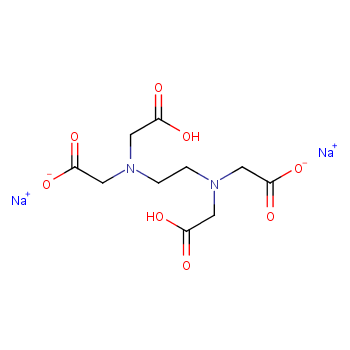
For product developers, the technical question is not simply whether disodium EDTA chelates metals, but how its binding behaviour, pH dependence, interaction with other preservatives and regulatory ceilings interact with the rest of the formula and the destination market. This guide consolidates those considerations into a practical B2B framework.
| Function | Suitable Users | Core Technical Indicators | Compliance Framework |
|---|---|---|---|
| Chelating agent and preservative aid | Sauce, dressing and canned-goods manufacturers seeking protection against metal-catalysed spoilage in aqueous systems | CAS 139-33-3; molar mass 372.24 g/mol; pH of 1% solution 4.3 to 4.7; freely soluble in water and practically insoluble in ethanol | Authorised in many markets as a sequestrant with category-specific maximum levels; INS 386; EU additive E385 |
| Colour and flavour retention aid | Producers of pickles, dehydrated fruit and canned vegetables where enzymatic browning and colour drift are concerns | Binds iron and copper that participate in polyphenol oxidase and oxidative reactions, stabilising natural pigments and aroma compounds | Use level must remain within the maximum permitted for the specific food category |
| Antioxidant synergist | Developers of fat-rich, oxidation-prone products who combine EDTA with primary antioxidants | Removes pro-oxidant trace metals so that primary antioxidants are not consumed by metal-driven initiation reactions | Counted against the same category limits; labelling requirements differ by market |
| Stabiliser in beverages and seafood | Beverage bottlers and seafood processors needing protection against metal-driven haze, discolouration and off-flavour | Slows development of oxidative off-notes and supports colour and texture in canned and iced-storage products | Category maxima apply; some markets restrict use to named foods |
Disodium EDTA is the disodium salt of ethylenediaminetetraacetic acid, a synthetic aminopolycarboxylic acid built from ethylenediamine, formaldehyde and sodium cyanide. The industrial synthesis first yields tetrasodium EDTA, which is then converted into the disodium, calcium disodium and other salt forms according to the intended application. It does not occur naturally and is manufactured to a defined purity and salt composition.
Physically, it is a white, odourless crystalline powder or granule with a slightly salty taste and a shelf life that can exceed sixty months. Its chemical formula is C10H14N2Na2O8, and a 1 percent aqueous solution sits at pH 4.3 to 4.7. It dissolves freely in water and is practically insoluble in ethanol, which aligns it with aqueous formulation platforms.
From a formulator's viewpoint, the importance of disodium EDTA is that it removes the invisible drivers of deterioration. Iron and copper occur at trace levels in water, raw materials and processing equipment, and even parts-per-million concentrations catalyse oxidation and enzymatic browning. By binding these ions into stable complexes, it addresses the root cause of many shelf-life failures rather than masking their symptoms.
Explore the disodium EDTA technical encyclopedia for additional chemical and application information.
| Parameter | Specification / Description |
|---|---|
| Chemical name | Disodium dihydrogen ethylenediaminetetraacetate |
| Common names | Disodium EDTA, edetate disodium, disodium edetate |
| Molecular formula | C10H14N2Na2O8 |
| Molar mass | 372.24 g/mol |
| CAS Number | 139-33-3 |
| EC Number | 205-358-3 |
| INS / FEMA number | INS 386; FEMA 4520 |
Disodium EDTA is a functional additive rather than a bulk ingredient. Its technical value derives from three linked behaviours: chelation of metal ions, interruption of metal-catalysed oxidation and browning, and synergistic support of other preservation systems. Together these explain nearly every application in which it appears.
When disodium EDTA dissolves, its four carboxylate groups and two nitrogen atoms arrange themselves around a metal cation to form a stable, water-soluble ring complex known as a chelate. Because the molecule wraps around the ion at multiple points, it binds iron, copper, calcium and other multivalent cations far more strongly than single-point ligands can, removing them from the reactive pool. This sequestration is the foundation of every other function.
Many deteriorative reactions in food are catalysed by trace metals. Iron and copper accelerate the decomposition of lipid hydroperoxides, generating free radicals that drive rancidity in fat-rich products, while copper is a cofactor for polyphenol oxidase, the enzyme responsible for browning in cut fruit and vegetables. By binding these ions, disodium EDTA slows the initiation steps of both pathways.
Disodium EDTA is not itself a strong radical scavenger, but it acts as an antioxidant synergist by removing the metal ions that would otherwise consume primary antioxidants such as tocopherols or ascorbate. It also supports preservative systems by depriving spoilage organisms of metal nutrients and by making the cell envelopes of Gram-negative bacteria more permeable to antimicrobials, which is why it frequently appears alongside sorbate or benzoate.
Disodium EDTA is produced synthetically by reacting ethylenediamine with formaldehyde and sodium cyanide to build the ethylenediaminetetraacetate backbone, a route that yields tetrasodium EDTA as the primary product. The tetrasodium salt is then partially neutralised or ion-exchanged to obtain the disodium form, and the product is purified, crystallised and dried to a defined assay and particle size.
Because performance depends on the exact salt form and on the absence of interfering impurities, manufacturers rely on close process control and analytical verification. For food-grade material, buyers should confirm assay, pH of a standard solution, loss on drying, heavy-metal limits, the correct salt identity where relevant, and microbiological quality, matching each batch certificate against the approved purchasing specification.
From a formulation perspective, the most relevant comparison is among the EDTA salt forms and the alternative chelating agents, because they share the same chelating backbone but differ in counter-ions, regulatory status and performance in different pH windows. Grouping them correctly is essential, because a specification written for one salt does not transfer to another.
Disodium EDTA is the mildly acidic chelating salt most widely used as a general sequestrant in aqueous foods. It combines strong metal binding with good water solubility and a pH close to neutrality, which makes it convenient in dressings, sauces and beverages.
Calcium disodium EDTA carries calcium as well as sodium and is the form most frequently cited in US regulations for specific foods such as pickles, crabmeat and salad dressings. The calcium counter-ion makes it slightly less aggressive toward calcium-dependent structures while retaining the core chelating function.
Tetrasodium EDTA is the more alkaline form and is used where a higher pH is acceptable or desirable. Because its pH profile differs from the disodium salt, substituting one for the other changes the acid-base balance of the formulation and must be re-evaluated rather than treated as a simple swap.
| Parameter | Disodium EDTA | Calcium Disodium EDTA | Tetrasodium EDTA |
|---|---|---|---|
| CAS number | 139-33-3 | 62-33-9 | 64-02-8 |
| Counter-ions | Two sodium ions; mildly acidic in solution | Calcium and sodium; used in named US food categories | Four sodium ions; distinctly alkaline in solution |
| Molar mass | 372.24 g/mol | 374.27 g/mol | 380.17 g/mol |
| pH (1% solution) | 4.3 to 4.7 | 6.5 to 7.5 | 11.0 to 11.5 |
| Primary use | General sequestrant in aqueous foods and beverages | Colour retention in pickles, canned seafood and dressings | Chelation where an alkaline pH is acceptable |
| Formulation advantage | Close to neutral pH and highly water-soluble | Gentler on calcium-dependent structure | Strong chelation in alkaline systems |
| Key limitation | Non-selective; removes beneficial minerals too | Regulatory authorisation varies by food name | Alkaline pH limits use in acidic foods |
| Property | Typical Description |
|---|---|
| Appearance | White crystalline powder or granules |
| Odor | Odorless, with a slightly salty taste |
| Density at 25 °C | About 1.01 g/cm3 |
| Melting point | About 242 °C, with decomposition reported from about 252 °C |
| pH (1% solution) | 4.3 to 4.7 |
| pKa values | Approximately 2.0, 2.7, 6.2 and 10.3 |
| Solubility | Freely soluble in water; practically insoluble in ethanol |
| Shelf life and storage | Often greater than 60 months; store cool and dry, away from oxidizers and strong alkali |
| Product Category | Examples | Technical Objective |
|---|---|---|
| Dressings, sauces and spreads | Salad dressing, hot sauce, mayonnaise | Protect emulsified fat from metal-catalysed rancidity and preserve colour |
| Pickled vegetables | Cucumbers, cabbage | Prevent discolouration and retain firm texture during brining and storage |
| Canned beans and legumes | Kidney beans, black beans, lentils | Inhibit metal-driven darkening and off-flavour development in the can |
| Canned carbonated soft drinks | Cola and flavoured sodas | Stabilise flavour and colour against trace metals from water and packaging |
| Canned seafood | Crab, clam, shrimp | Reduce oxidative off-notes and support colour and texture during storage |
Disodium EDTA is especially valuable where a metal-catalysed reaction limits shelf life. In one study, adding EDTA improved both foam overrun and foam stability of milk, because the increase in serum protein availability aided formation of the air-water interface. In another, calcium disodium EDTA improved drip loss and shear force in Pacific white shrimp during ice storage and extended shelf life from about five days to seven. EDTA has also been shown to prevent darkening of banana slices during dehydration and to preserve colour, texture and sensory properties in pickled cucumbers.
Begin by identifying whether EDTA is present to inhibit rancidity, to retain colour, to support a preservative system or to stabilise a beverage, because each objective implies a different use level and point of addition. Typical dosages fall between 50 and 500 ppm and vary by application, so the level should be justified by the target function rather than copied from an unrelated product.
Verify identity and salt form, assay, pH of a standard solution, loss on drying, heavy-metal limits and particle size against the approved purchasing specification. Because the disodium, calcium disodium and tetrasodium forms behave differently, confirm that the material is the intended salt and match each certificate of analysis to that specification.
Because maximum permitted levels differ by food category and by market, calculate the dose against the specific ceiling for the intended product rather than assuming a single global limit. Where the product contains other chelating or sequestering ingredients, consider their combined effect on the mineral balance of the finished matrix.
Because EDTA is a non-selective chelator, confirm that removing calcium, iron and other ions does not harm the texture, colour or nutrient profile the formulation depends on. EDTA carries a slightly salty taste that becomes perceptible at higher levels, so taste the finished product rather than relying on theoretical addition.
Chelation performance depends on the rest of the formulation and on processing conditions, so confirm the benefit through pilot-scale trials. For dressings and sauces, evaluate rancidity and colour over shelf life; for pickles, check browning and firmness; for canned seafood, assess drip loss and off-flavour. Finished-product testing determines the practical result.
The following formulations are illustrative technical examples rather than universal commercial recipes. Actual ingredient levels must be recalculated according to the target texture, pH, mineral profile and destination-market requirements.
| Mayonnaise Ingredient | Illustrative Quantity | Technical Role |
|---|---|---|
| Sunflower oil | 60.0% | Continuous lipid phase forming the emulsion body |
| Water | 23.49% | Aqueous phase dispersing water-soluble ingredients |
| Egg powder | 5.0% | Protein emulsifier stabilising the oil-water interface |
| Corn starch | 5.0% | Thickener adjusting viscosity and body |
| Acetic acid | 4.0% | Acidulant contributing tang and lowering pH |
| Sugar and salt | 2.0% combined | Seasoning and mild water-activity control |
| Mustard powder | 0.3% | Flavour and secondary emulsifying support |
| Disodium EDTA | 0.15% | Chelating agent protecting the oil phase from metal-catalysed oxidation |
| Sodium benzoate and citric acid | 0.06% combined | Preservative and pH adjustment supporting microbial stability |
In a published pickled-cucumber example, disodium EDTA was used at 50 to 200 ppm alongside sodium chloride, calcium chloride, acetic acid and potassium sorbate. The calcium chloride preserved crunch through calcium-pectin cross-linking while the chelating agent controlled trace metals that would otherwise drive discolouration, showing how the additive is typically combined with other stabilising systems rather than used alone.
Regulatory treatment of disodium EDTA depends on both its identity as a chelating agent and the intended use of the finished product. A supplier's statement that a material is food grade does not by itself establish compliance, and maximum levels are frequently set for specific food categories rather than for the additive overall.
| Market / Framework | Technical Relevance | Compliance Action |
|---|---|---|
| United States FDA | Calcium disodium EDTA and related salts are approved as safe food additives with limits set on the amount a food may contain, and maximum usage levels are defined for specific foods. | Confirm the intended food is named and that the use level is within the published maximum before launch. |
| European Union | EDTA is authorised as a food additive with maximum permissible limits in designated categories under the additives framework. | Check the relevant annex for the precise category and level, and account for all permitted sources of the additive. |
| Canada | EDTA is approved as a sequestering agent in specified food categories, and permitted uses may differ from US and EU lists. | Verify the current permitted uses for each intended sales market rather than assuming harmonisation. |
| EFSA / JECFA | Expert bodies have evaluated EDTA salts and established an acceptable daily intake of 2.5 mg per kg body weight, expressed as the chelating moiety. | Estimate dietary exposure from all sources and compare it against the current reference value. |
| EU REACH | Disodium EDTA is registered under the REACH Regulation, and obligations depend on the substance and the tonnage manufactured or imported. | Verify the exact REACH status for the supply chain rather than assuming food use removes every industrial-chemical obligation. |
| Environmental frameworks | EDTA has poor biodegradability, is persistent in the environment and can increase the bioavailability and remobilisation of heavy metals. | Assess effluent and disposal routes, and check for local restrictions on discharge where relevant. |
| ISO 22000 / HACCP | Food-safety management systems support control of contamination, traceability and manufacturing hazards throughout production and packing. | Maintain supplier qualification, batch traceability and validated quality procedures for the finished product. |
Disodium EDTA is generally considered safe at the quantities typically used in food, and an acceptable daily intake of 2.5 mg per kg body weight has been established for the chelating moiety. Its principal safety consideration is not acute toxicity but its strong metal-binding action, because at high concentrations a chelating agent can be cytotoxic and weakly genotoxic.
Higher oral exposures to EDTA have produced adverse reproductive and developmental effects in animals, with the lowest dose reported to cause a toxic effect at about 750 mg per kg per day, far above the range relevant to food use. Clinically, disodium EDTA chelates calcium and has been used for the emergency treatment of hypercalcemia and, as calcium disodium EDTA, in chelation therapy for lead poisoning.
For manufacturers, the most important safety principle is to keep the additive within its authorised use and level and to avoid marketing claims that exceed permitted nutrient-content or health claims. EDTA is a processing aid and chelating agent, not a therapeutic agent, and any statement about its effects should be traceable to a current regulatory position. Environmental persistence should also be considered when selecting disposal routes.
| Reference Point | Illustrative Value |
|---|---|
| Typical use level in food | About 50 to 500 ppm, varying by application |
| Acceptable daily intake | 2.5 mg/kg body weight |
| US maximum in mayonnaise and salad dressing | 75 ppm |
| US maximum in canned kidney beans | 165 ppm |
| US maximum in canned strawberry pie filling | 500 ppm |
These values are illustrative references drawn from published sources and should not be interpreted as universal legal maximums. Product developers should use the current category-specific limits applicable to the intended market and should account for all additives and ingredients that contribute to the same functional effect.
It is used as a chelating agent, preservative aid and antioxidant synergist. By sequestering trace iron and copper, it inhibits metal-catalysed oxidation and enzymatic browning, helping to protect colour, flavour and texture and to extend the shelf life of dressings, sauces, pickles, canned beans, canned seafood and soft drinks.
No. Both are chelating salts of EDTA but they carry different counter-ions. Disodium EDTA carries two sodium ions and is used as a general sequestrant, while calcium disodium EDTA carries calcium and sodium and is the form most frequently named in US regulations for foods such as pickles and salad dressings, so the two are not interchangeable.
Yes. Disodium EDTA is a non-selective chelator, so it can bind calcium, iron and other minerals as well as the trace metals it is added to control. In calcium-set gels or mineral-fortified products this can affect texture or nutrient availability, so the effect on the mineral balance of the finished matrix must be verified.
The CAS Registry Number is 139-33-3, the EC number is 205-358-3 and the INS food-additive number is 386. These identifiers should be matched to the correct salt form and verified against current regulatory listings before use in a specific food category.
| Identifier | Value | Resource |
|---|---|---|
| Chemical name | Disodium dihydrogen ethylenediaminetetraacetate | Technical encyclopedia |
| CAS Number | 139-33-3 | Chemical dictionary |
| CAS product lookup | 139-33-3 | Supply search |
| Supplier / trade search | 139-33-3 | Supplier search |
1. U.S. Food and Drug Administration. Code of Federal Regulations Title 21: Calcium disodium EDTA and related food-additive provisions, maximum usage levels by food.
2. European Parliament and Council. Regulation (EC) No 1333/2008 on food additives: EDTA provisions and category limits.
3. Joint FAO/WHO Expert Committee on Food Additives. Evaluation of certain food additives: ethylenediaminetetraacetates and group acceptable daily intake.
4. International Programme on Chemical Safety. Disodium EDTA: concise international chemical assessment document.
5. Journal of Food Science. EDTA: a versatile food additive, review of chelation and shelf-life applications.
6. Journal of Food Science. Use of EDTA in canned vegetables and the control of discolouration.
7. IOP Conference Series. Mayonnaise formulation development incorporating disodium EDTA and preservatives.
8. Wiley. Pickled cucumber processing: the role of calcium chloride and chelating agents in texture and colour.
9. Food Chemistry. Ethylenediaminetetraacetic acid and its salts: environmental persistence and heavy-metal remobilisation.
|
 |
 |
 |
|
 EN
EN
 Agricultural News
 Food News
 Industrial News
 Cosmetic News
 Pharmaceutical News
 Science News

 13YRS
13YRS


