-
We detected your language preference as English. Would you like to switch to the English version for a better experience?
Switch to English
Stay here


DL-Mandelic acid is a significant organic compound with various unique chemical properties and biological activities. It possesses chiral isomers and finds wide applications in pharmaceuticals, agriculture, and chemical industries, holding significant importance for human health and production.
DL-Mandelic acid is an aromatic alpha hydroxy acid (AHA) derived from the hydrolysis of amygdalin. It's a slightly bitter, white crystalline solid used in various industries like cosmetics, pharmaceuticals, and research laboratories. Extensive studies have explored its potential applications, revealing its ability to inhibit the growth of bacteria, fungi, and viruses internally, while externally, it shows promise in inhibiting cancer cell growth and reducing inflammation.

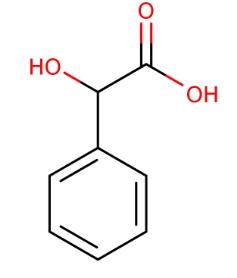
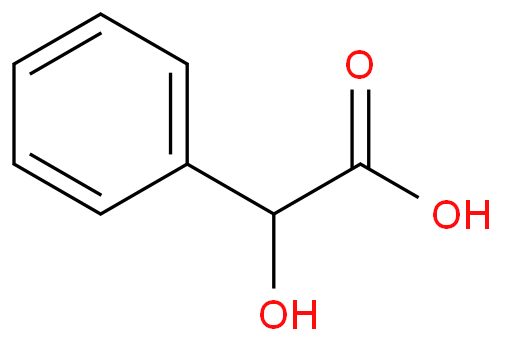
DL-Mandelic acid has a relatively simple molecular structure with a formula of C8H8O3, consisting of eight carbon atoms, eight hydrogen atoms, and three oxygen atoms. Its key functionalities include a carboxyl group (COOH) responsible for its acidic nature, an adjacent hydroxyl group (OH) categorizing it as an α-hydroxy, and an aromatic benzene ring contributing to its lipophilicity.
DL-Mandelic acid, also known as (±)-α-hydroxyphenylacetic acid, is a chiral molecule with CAS number 90-64-2. Some key properties include:
- Appearance: White crystalline powder.
- DL-Mandelic Acid Molecular weight: 152.15g/mol.
- DL-Mandelic Acid Melting point Range: 119-121°C (lit.).
- DL-Mandelic Acid Density: 1.30.
- DL-Mandelic Acid Odor: Faint.
- DL-Mandelic Acid pH: 2.3 (10g/L, H2O).
- DL-Mandelic Acid Solubility: Soluble in water (139 g/L).
- DL-Mandelic Acid Decomposition: Exposed to light.
It's worth noting that the listed melting points and specific rotation values are for the racemic mixture. The properties of DL-Mandelic acid may vary slightly for individual R and S enantiomers. For example, the melting point for the R form is 133°C, with a specific rotation of [α]D = -159.73° (in ethanol), while the S form has a melting point of 133.8°C, with a specific rotation of [α]D = +156.57° (in water).
Concerns like hyperpigmentation, wrinkles, dullness, and acne drive many skincare enthusiasts to seek effective solutions. DL-Mandelic acid, categorized as an alpha hydroxy acid (AHA), is one of the beneficial ingredients found in over-the-counter (OTC) skincare products. While research on this AHA is limited, it's considered gentle on the skin and may help address acne, skin texture, pigmentation, and aging.
DL-Mandelic acid serves as a multifunctional ingredient in skincare, known for its exfoliating properties. It works by breaking down the bonds between dead skin cells on the skin's outermost layer. This gentle yet effective exfoliation offers a range of benefits.
DL-Mandelic acid can reduce pigmentation and uneven skin tone. By removing superficial cells containing pigmentation, it can help brighten the complexion, promoting a more even appearance. Factors like sebum, bacteria, dead skin cells, and inflammation contribute to acne. Using skincare products containing DL-Mandelic acid may help regulate sebum production, unclog pores, and reduce inflammation, thus minimizing acne breakouts.
According to a 2013 study, chemical peels containing DL-Mandelic acid may help stimulate collagen production, which tends to decrease with age. This can help soften the appearance of wrinkles and fine lines, resulting in a more vibrant, youthful look.
While DL-Mandelic acid is considered gentle for sensitive skin, it's advisable to consult a dermatologist before starting any new facial treatment. A dermatologist can offer guidance tailored to your individual needs, advising on how to incorporate DL-Mandelic acid appropriately into your skincare regimen and which products to use. There's always a risk of side effects with any skincare product. Some individuals may use DL-Mandelic acid without issues, but if you experience any type of irritation, discontinue using this AHA, including:
- Redness
- Swelling
- Itching
If you experience skin irritation after using DL-Mandelic acid for several days or weeks, it may be due to overuse. Reduce the frequency of using products containing DL-Mandelic acid each day to see if your skin improves.
In conclusion, DL-Mandelic acid, as a significant organic compound, possesses various unique chemical properties and biological activities, widely applied across different fields. Through in-depth research and exploration, we can better understand and harness the properties of DL-Mandelic acid, advancing its applications and developments in pharmaceuticals, agriculture, and chemical industries, bringing more benefits to human health and production life.
[1] https://www.scbt.com/p/dl-mandelic-acid-90-64-2
[2] https://www.healthline.com/health/mandelic-acid
[3] https://pubchem.ncbi.nlm.nih.gov/compound/1292
 |
|
 |
 |
|
 EN
EN
 Agricultural News
 Food News
 Industrial News
 Cosmetic News
 Pharmaceutical News
 Science News

 13YRS
13YRS


