-
We detected your language preference as English. Would you like to switch to the English version for a better experience?
Switch to English
Stay here


Hexamethylenetetramine, also known as methenamine, is a versatile compound with a wide range of applications.

Hexamethylenetetramine, or methenamine, appears as a tasteless white crystalline powder or colorless shiny crystals. It sublimes in a vacuum at about 505 °F and undergoes some degree of decomposition. Its solution is a strong base (pH 8.4 for a 0.2 molar aqueous solution). Hexamethylenetetramine is a polycyclic cage compound where nitrogen atoms substitute carbon atoms at positions 1, 3, 5, and 7 of the adamantane structure. It exhibits antimicrobial properties and is categorized as a polycyclic cage compound, polyazamacrocycle, and tetramine.
What is hexamethylenetetramine used for? Its primary applications include the production of solid (powder) or liquid phenolic resins and phenolic resin molding compounds, where it serves as a hardening component. These products are used as adhesives, for example in brake and clutch linings, abrasives, non-woven fabrics, molded parts in molding processes, and fire-resistant materials.
Hexamethylenetetramine, as methenamine hippurate or methenamine mandelate, is used for treating urinary tract infections. In acidic environments, it is believed to exert its antimicrobial effects by converting to formaldehyde. A systematic review on its use for this purpose in adult women found insufficient evidence of benefit, necessitating further research. A study in the UK indicated that for women with recurrent urinary tract infections, hexamethylenetetramine is as effective in preventing these infections as daily low-dose antibiotics. As methenamine acts as a preservative, it helps mitigate antibiotic resistance issues.
Due to formaldehyde's astringent properties, methenamine is used as an over-the-counter antiperspirant, specifically to reduce sweat in prosthetic limb sockets.
Methenamine silver staining is used in histological staining, including:
- Grocott's methenamine silver stain, widely used for screening fungal organisms.
- Jones stain, a methenamine silver-perchloric acid-H&E stain, stains basement membranes and is useful for observing "spike" basement membranes associated with membranous glomerulonephritis.
Hexamethylenetetramine is used with 1,3,5-trioxane in hexamethylenetetramine fuel tablets used by campers, hobbyists, military, and relief organizations for heating camping food or military rations. It burns smokelessly with a high energy density of up to 30.0 megajoules per kilogram (MJ/kg), does not liquefy upon burning, leaves no residue, although its smoke is toxic.
Standardized 0.149g hexamethylenetetramine tablets are used by fire labs as a clean and reproducible ignition source to test the flammability of carpets and rugs.
Hexamethylenetetramine or methenamine is also used as a food additive as a preservative (INS number 239). It is approved for this purpose in the EU with an E number E239, but has not yet been approved in the USA, Russia, Australia, or New Zealand.
Hexamethylenetetramine is a widely used organic synthetic reagent. It is used in the Duff reaction (acylation of aromatic hydrocarbons), Sommelet reaction (conversion of benzyl halides to aldehydes), and Delepine reaction (synthesis of amines from alkyl halides).
Hexamethylenetetramine is a basic component in the production of RDX, hence used in manufacturing C-4 and octogen (a byproduct of RDX), hexamethylenetetramine dinitrate, hexamethylenetetramine dicyanurate, and HMTD.
Hexamethylenetetramine is also used in pyrotechnics to lower burning temperatures and reduce the color intensity of various fireworks. Due to its ashless combustion, it is used indoors with magnesium salts and lithium salts for indoor fireworks.
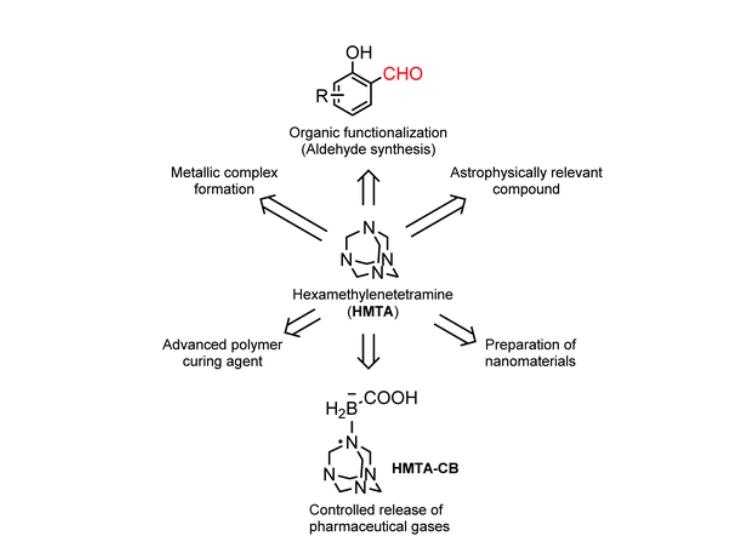
Hexamethylenetetramine (HMTA) is a heterocyclic organic compound with a symmetric tetrahedral cage structure composed of nitrogen atoms at its "corners" and methylene "edges". It is also known as hexamine and is renowned for its diverse roles in organic chemistry. It plays a crucial role in acylation (Duff reaction), conversion of benzyl halides to aldehydes (Sommelet reaction), and amine synthesis (Delépine reaction).
HMTA is a valuable reagent that converts 2-(4-hydroxyphenyl)-4-methylthiazole-5-carboxylic acid ethyl ester into 2-(3-formyl-4-hydroxyphenyl)-4-methylthiazole-5-carboxylic acid ethyl ester, an important step in the synthesis of febuxostat (a uric acid lowering drug). In addition to these applications, hexamethylenetetramine is also well known for synthesizing explosives such as RDX (cyclonite). Moreover, it finds extensive use in polymer chemistry.
(A) Miyazaki et al. reported the synthesis of 3,4-dihydroisoquinoline using HMTA, achieving a yield >90%.

(B) Bioactive motifs such as quinazoline are synthesized by treating benzoate with HMTA.

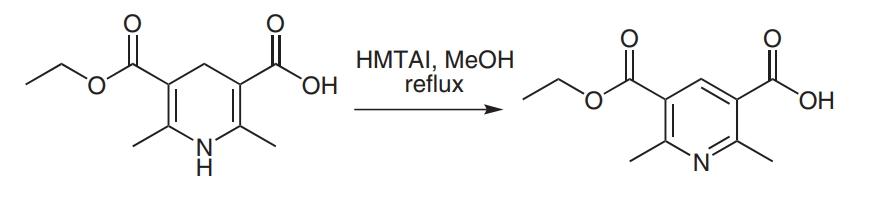
(C) Effective aromatication of 1,4-dihydropyridine is achieved using HMTA iodide.
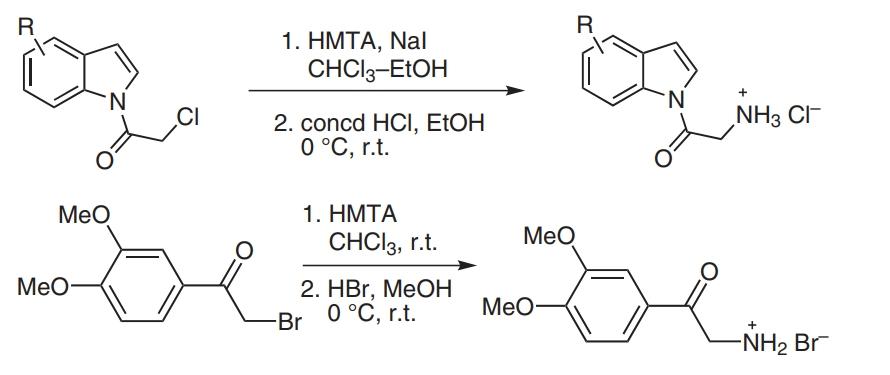
(D) Chloro substituents in α-chloroketones are replaced with ammonium groups via reaction with HMTA. Similarly, Zhang et al. reported the amination of 2-bromo-1-(3,4-dimethoxyphenyl)ethanone using HMTA.
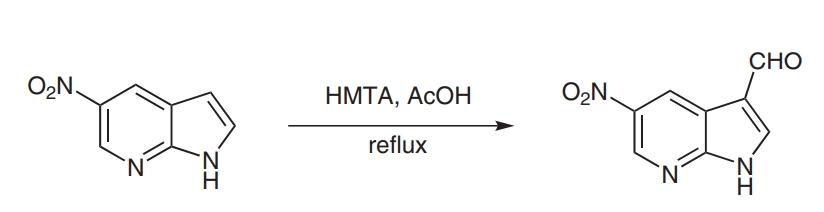
(E) HMTA finds broad applications in the monoformylation and diformylation of aromatic compounds. For instance, 5-nitro-7-nitroindole is reported to use the Duff reaction (HMTA/acetic acid) for formylation.
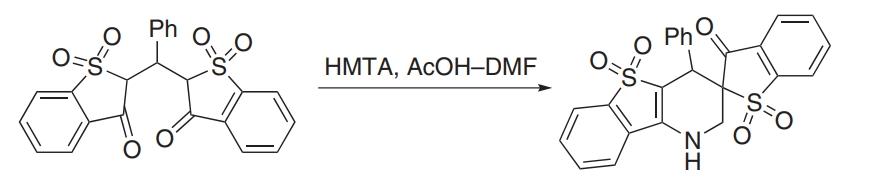
(F) Cekavicus et al. utilized HMTA in acidic media to generate heterocyclic spiro systems via internal Mannich reaction.
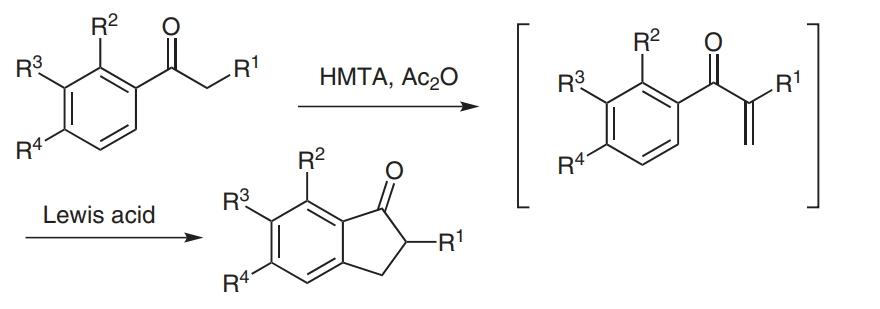
(G) HMTA has proven to be an excellent and inexpensive catalyst for aryl alkyl ketone Mannich reactions, followed by Nazarov cyclization to yield 2-alkylquinolinium.
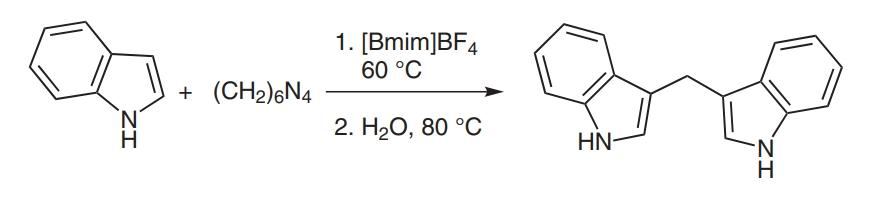
(H) 3,3'-Indolylmethane derivatives have been prepared in one pot from indole and HMTA. HMTA acts as a methylene donor.
Hexamethylenetetramine acts as a cross-linking agent in the preparation of electrical wood.
Electrical wood itself is a resin formed by the reaction of phenol and formaldehyde. This initial reaction product is called phenolic resin, which has limited utility due to its tendency to soften upon heating. The role of HMTA is as follows:
(1) When phenolic resin is reheated in the presence of HMTA, HMTA molecules decompose and link individual phenolic resin molecules together.
(2) This cross-linking process forms permanent chemical bonds between chains, fundamentally altering the material's properties.
(3) The resulting electrical wood becomes non-melting and insoluble, meaning it does not easily melt or degrade - these characteristics make electrical wood a valuable early plastic.
The chemical industry is the primary beneficiary of hexamethylenetetramine. It is a key hardening component in the production of phenolic resins, which are widely used as adhesives in various products. These products include brake pads, abrasives, and fire-resistant materials.
Exposure to hexamethylenetetramine can cause irritation. Prolonged exposure can lead to dermatitis and respiratory allergies. Although rare, some studies suggest there may be a low-level genetic risk. It is noteworthy that occupational exposure at high temperatures can release harmful gases such as ammonia and formaldehyde.
Hexamethylenetetramine, as a multifunctional compound, plays important roles in various fields such as medicine and chemical engineering. Its wide range of applications reflects its value and potential across different industries. With ongoing advancements in science and technology, the hexamethylenetetramine uses areas are expected to continue expanding, making greater contributions to the development and progress of various fields.
[1]https://byjus.com/
[2]https://en.wikipedia.org/wiki/
[3]https://baike.baidu.com/
[4]Singh, Baljinder (2011). Hexamethylenetetramine. Synlett, 2011(19), 2903–2904. doi:10.1055/s-0031-1289890
[5]https://www.sciencedirect.com/topics/chemistry/hexamethylenetetramine
[6]https://pubchem.ncbi.nlm.nih.gov/compound/4101
 |
|
 |
 EN
EN
 Agricultural News
 Food News
 Industrial News
 Cosmetic News
 Pharmaceutical News
 Science News
