-
We detected your language preference as English. Would you like to switch to the English version for a better experience?
Switch to English
Stay here


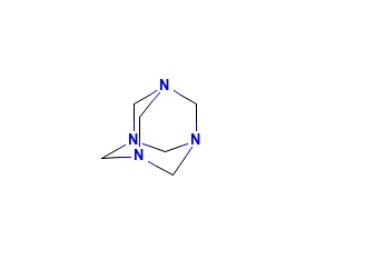
Is hexamethylenetetramine toxic? Hexamethylenetetramine (HMTA), also known as urotropine, is a crucial chemical product used as a curing agent for phenolic resins, a catalyst for amino plastics, and a promoter for rubber vulcanization. Additionally, it serves various industrial purposes such as a shrink-proof agent in textile production, a preservative in food processing, a diuretic in medicine, and as an absorber of phosgene in gas masks. The structure of hexamethylenetetramine is as follows:
The industrial manufacturing methods of HMTA include liquid-phase and gas-phase processes, with the latter being more commonly used. The gas-phase method involves ammonia and formaldehyde gases entering a reaction vessel, where they undergo condensation reactions to produce hexamethylenetetramine. The resulting mother liquor undergoes concentration, crystallization, and separation to obtain the final product, which is then dried with airflow and packaged. The purified mother liquor is recycled back to the reaction vessel.
HMTA exhibits moderate acute oral toxicity and causes mild irritation to the skin and eyes. At high concentrations, HMTA may act as a strong sensitizer. Chronic toxicity studies have observed weight loss or reduced weight gain at moderate dosage levels through oral ingestion and inhalation. Growth rate reduction has been observed at high dosage levels in chronic oral toxicity studies, while reproductive and developmental studies have not shown effects at high dosage levels. HMTA is non-carcinogenic based on research findings, although there are conflicting results from genetic toxicity studies.
According to existing toxicity data, HMTA is nearly non-toxic to aquatic species but moderately toxic to terrestrial species. It is expected to rapidly leach from soil into groundwater and undergo non-biological degradation under certain conditions, as well as biological degradation in the environment.
Exposure to hexamethylenetetramine may result in immediate or short-term health effects such as skin and eye irritation. Inhalation can irritate the nose, throat, and lungs, causing coughing, wheezing, and/or shortness of breath. It may also induce nausea, vomiting, diarrhea, and abdominal pain.
Following exposure, chronic (long-term) health effects may persist for several months or years:
There is no evidence suggesting hexamethylenetetramine causes cancer in animals, based on current test results obtained from published studies.
Reproductive hazard testing may impair fetal development.
It may cause skin allergies. In cases of allergy, minimal exposure can cause itching and rash.
It may induce asthma-like allergies. Contact may trigger asthma attacks with symptoms such as shortness of breath, wheezing, coughing, and/or chest tightness.
(1) Work in well-ventilated areas: Ensure adequate airflow to avoid inhalation of dust or fumes. Consider using a fume hood when working in enclosed spaces.
(2) Minimize dust formation: Handle hexamethylenetetramine carefully to minimize its spread as dust. Dampening materials slightly can help reduce dust formation.
(3) Avoid skin and eye contact: Wear appropriate personal protective equipment to prevent skin and eye irritation. Wash hands thoroughly with soap and water after handling.
(4) Keep away from heat and ignition sources: Hexamethylenetetramine is flammable. Avoid working near open flames, sparks, or hot surfaces.
(5) Be prepared for emergencies: Know the location of safety showers and eye wash stations in your work area. Have a spill or accident response plan in place.
Do not eat, drink, or smoke around hexamethylenetetramine to avoid accidental ingestion or inhalation.
(1) Safety glasses or goggles: Wear goggles to protect eyes from splashes or dust.
(2) Chemical-resistant gloves: Wear gloves made of materials impermeable to hexamethylenetetramine, such as nitrile rubber or butyl rubber.
(3) Respiratory protection: Use a respirator with a particle filter (P100 or equivalent) if dust levels are high to prevent inhalation.
(4) Lab coats or other protective clothing: Wear clothing that covers arms and legs to minimize skin exposure.
(1) Store in a cool, dry, well-ventilated area: Keep containers tightly closed when not in use.
(2) Store away from incompatible materials: Do not store hexamethylenetetramine near strong acids, oxidizers, or other flammable materials.
(3) Properly label containers: Ensure containers are clearly labeled with the substance name and any hazard warnings.
(4) Handle waste properly: Do not pour hexamethylenetetramine down drains or into trash bins. Follow local chemical waste disposal regulations.
Remember: Improper handling of hexamethylenetetramine can pose health hazards. Always follow these safety guidelines to minimize exposure risks. If you are unsure about any aspect of using hexamethylenetetramine, consult a safety professional or refer to the Safety Data Sheet (SDS) for more detailed information.
While hexamethylenetetramine has some medicinal uses, it is not suitable for everyday use without consulting a healthcare professional. In fact, certain forms may irritate the skin, eyes, and respiratory system.
The use and sale of hexamethylenetetramine are restricted. Due to potential health risks and its use in certain industrial processes, it is generally not suitable for household use.
Although hexamethylenetetramine may be safe in some applications, there are potential risks in other scenarios. Therefore, caution must be exercised in its use, adhering strictly to safety protocols and taking appropriate protective measures to minimize potential risks. Furthermore, ongoing monitoring and research are crucial for further understanding its safety and potential risks.
[1] https://www.epa.gov/sites/default/files/
[2] https://pubchem.ncbi.nlm.nih.gov/compound/
[3] https://nj.gov/health/eoh/rtkweb/
[4] https://pubmed.ncbi.nlm.nih.gov/38482798/
[5] Hutubi County Ruiyuan Tonghua Chemical Co., Ltd. A reaction vessel for the production of urotropine. 2024-03-19.
[6] https://www.fishersci.com/
|
 |
 |
 EN
EN
 Agricultural News
 Food News
 Industrial News
 Cosmetic News
 Pharmaceutical News
 Science News
