-
We detected your language preference as English. Would you like to switch to the English version for a better experience?
Switch to English
Stay here


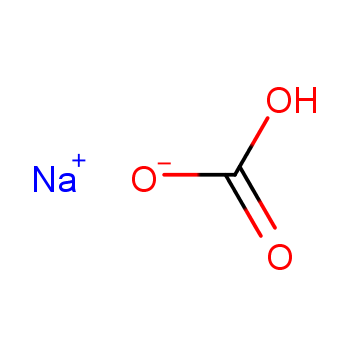
Sodium bicarbonate, commonly known as baking soda, is a white, odorless, crystalline solid. Naturally occurring as the mineral nahcolite, its chemical formula, NaHCO3, inspired the name nahcolite by replacing the "3" with the ending "lite." The primary source of nahcolite globally is the Piceance Creek Basin in western Colorado, a part of the expansive Green River formation. Extraction of sodium bicarbonate involves solution mining, where hot water is pumped through injection wells to dissolve the nahcolite found 1,500 to 2,000 feet below the surface in Eocene beds of the basin. The resulting dissolved sodium bicarbonate is then treated at the surface to recover NaHCO3 from the solution. Alternatively, sodium bicarbonate can be produced from trona deposits, a source of sodium carbonates.
In the United States, a significant portion of sodium bicarbonate is synthesized through the reaction of sodium carbonate solution (Na2CO3) with carbon dioxide: Na2CO3(aq) + H2O(l) + CO2(g) → 2NaHCO3(aq). The Solvay process is another method involving ammonia, carbon dioxide, and salt to produce sodium bicarbonate.
Prior to the 1840s, sodium carbonate was imported into the United States until the establishment of a baking soda factory by physician Austin Church (1799–1879) and his brother-in-law John Dwight (1819–1903) in New York. Initially known as John Dwight & Co. since 1846, the Arm & Hammer brand name was later coined by Church's son, James A. Church. The Arm & Hammer logo, symbolizing products from their spice mill, was initially designed by Church and brought into the baking soda business in 1867. Descendants of Church and Dwight continue to market baking soda under the Arm & Hammer brand, which is presently utilized by the Church and Dwight Company for various products they manufacture.
In 2004, the global production of sodium bicarbonate reached approximately 1.6 million tons, with more than 80% originating from the United States, Western Europe, and Japan. The primary application of sodium bicarbonate lies within the food industry, where the United States alone consumes around one-third of the production for various food-related purposes. Sodium bicarbonate, often in the form of baking soda and baking powder, is widely recognized as a prevalent leavening agent. In baking, when alkaline baking soda reacts with an acidic ingredient, it generates carbon dioxide, as represented by the chemical equation: NaHCO3(s) + H+ → Na+(aq) + H2O(l) + CO2(g). Baking powders, containing baking soda as a key component, leverage this reaction along with acids to release carbon dioxide, either rapidly as a single-action powder or progressively as a double-action powder. Beyond culinary applications, baking soda finds extensive use in households for cleaning, deodorizing, acting as an antacid, serving as a fire suppressant, and featuring in personal care products like toothpaste.
Sodium bicarbonate exhibits versatility beyond the kitchen, functioning as a weak base in aqueous solutions with a pH of approximately 8. The bicarbonate ion (HCO3-) possesses amphoteric properties, allowing it to act as both an acid and a base. This characteristic imparts baking soda with buffering capacity, enabling it to neutralize acids and bases. Household applications include neutralizing food odors arising from acidic or basic compounds, effectively transforming them into odor-free salts. The weak base nature of sodium bicarbonate further enhances its ability to neutralize acid odors.
Constituting the second-largest application, approximately 25% of total production, sodium bicarbonate plays a vital role as an agricultural feed supplement. In cattle, it aids in maintaining rumen pH and improving fiber digestibility, while in poultry, it contributes to electrolyte balance, heat tolerance, and enhanced eggshell quality. In the chemical industry, sodium bicarbonate serves as a buffering agent, blowing agent, catalyst, and chemical feedstock. Its application extends to the leather tanning industry for pretreating and cleaning hides, as well as regulating pH during the tanning process. The process of heating sodium bicarbonate produces sodium carbonate, essential in soap and glassmaking. Pharmaceuticals incorporate sodium bicarbonate as an antacid, buffering agent, and source of carbon dioxide in effervescent tablets. Dry chemical BC fire extinguishers utilize sodium bicarbonate (or potassium bicarbonate). Additional uses span pulp and paper processing, water treatment, and oil well drilling.
Richard L. Myers (2009). The 100 Most Important Chemical Compounds: A Reference Guide. Greenwood Publishing Group. October 1, 2009. https://doi.org/10.1021/ed086p1182
 |
 |
 |
 |
 |
 |
 EN
EN
 Agricultural News
 Food News
 Industrial News
 Cosmetic News
 Pharmaceutical News
 Science News

 1YR
1YR

