-
We detected your language preference as English. Would you like to switch to the English version for a better experience?
Switch to English
Stay here


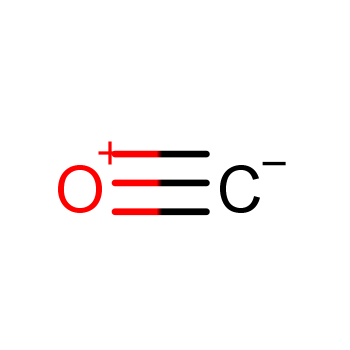
Carbon monoxide (CO) is a simple yet dangerous chemical compound composed of one carbon atom and one oxygen atom. This small molecule is known for its colorless, odorless, and tasteless properties, making it nearly undetectable by human senses. Despite its simplicity, carbon monoxide has significant applications as well as considerable hazards. One of the defining features of CO is its ability to form strong bonds with metals, which makes it valuable in industrial processes, such as metal refining and chemical synthesis. However, its high affinity for hemoglobin in the blood is also the reason it’s highly toxic. But what gives CO its unique behavior, and how does it impact both its usefulness and risks? Is co a polar molecule?
Bonding polarity refers to the unequal distribution of electron density in a chemical bond, leading to the formation of partial positive and negative charges. This occurs when two atoms with differing electronegativities, or tendencies to attract electrons, are bonded together. When one atom is significantly more electronegative than the other, it pulls the shared electrons closer, resulting in a polar bond with distinct positive and negative regions.
In CO, the carbon and oxygen atoms have different electronegativities, with oxygen being more electronegative. This causes a slight shift in electron density towards oxygen, giving the oxygen end a partial negative charge and the carbon end a partial positive charge. Although this uneven distribution creates a degree of polarity in CO, the triple bond between the carbon and oxygen results in a strong overall bond. But is co polar or nonpolar?
Is co polar or nonpolar? To determine whether carbon monoxide is polar or nonpolar, we can look at the molecular structure, dipole moment, and the electronegativity of the atoms involved.
Molecular Structure: Carbon monoxide has a linear molecular geometry, with a triple bond between carbon and oxygen. The oxygen atom, being more electronegative, pulls electron density towards itself. However, the small size and linear shape of the molecule mean that this polarity is not as pronounced as in larger polar molecules.

Dipole Moment: A molecule’s dipole moment indicates the extent of its charge separation. In CO, the difference in electronegativity between oxygen and carbon leads to a small dipole moment. This gives the molecule some polar characteristics, but its linear structure means it behaves similarly to nonpolar gases in many conditions.

Electronegativity: The electronegativity difference between oxygen (3.44) and carbon (2.55) causes electron density to shift towards oxygen. However, since the bond is a triple bond, CO’s overall polarity is limited compared to other polar molecules.

| Element Electronegativity | |
| O | 3.44 |
| C | 2.55 |
Due to its linear structure and limited dipole moment, carbon monoxide behaves similarly to nonpolar molecules in most environments, though it retains some polarity due to the oxygen-carbon electronegativity difference.
| Carbon Monoxide (CAS 630-08-0) | |
| Molecular formula | CO |
| Molecular shape | Linear |
| Relative molecular mass | 28.01 g/mol |
| Solubility | Slightly soluble in water |
| Melting point | -205 °C |
| Boiling point | -191.5 °C |
| Compound | Polarity | Applications |
| CO2 | Nonpolar | Beverage carbonation, fire extinguishers |
| NO | Polar | Biomedical applications, signaling molecule |
| HCN | Polar | Chemical synthesis, fumigant |
After exploring the polarity chemistry of CO, have you gained a deeper understanding of whether it is "polar or nonpolar"? While CO as a molecule is polar, this does not necessarily mean that all of its bonds are polar bonds. If you're interested in similar compounds or related supply chain resources, Guidechem offers a comprehensive list of global Carbon monoxide suppliers, where you can find the right procurement plan to meet your research and production needs.
 |
|
 |
 |
 |
 |
 EN
EN
 Agricultural News
 Food News
 Industrial News
 Cosmetic News
 Pharmaceutical News
 Science News