-
We detected your language preference as English. Would you like to switch to the English version for a better experience?
Switch to English
Stay here


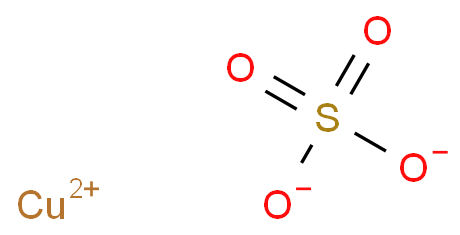
Copper sulfate (CuSO₄) is an inorganic compound that plays an important role in various chemical processes and industrial applications. It is composed of copper ions (Cu²⁺) and sulfate ions (SO₄²⁻). Copper sulfate is known for its vibrant blue color in its pentahydrate form (CuSO₄·5H₂O), often used in agriculture, industry, and chemical synthesis. The polarity of copper sulfate stems from its ionic nature, with copper ions carrying a positive charge and sulfate ions carrying a negative charge, leading to an overall polar structure. This polarity influences how copper sulfate interacts with other substances, including its solubility in water and its applications in various fields.
Polarity refers to the distribution of electrical charge over the atoms in a molecule or compound. In polar compounds, there is an uneven sharing of electrons, leading to the formation of positive and negative poles within the molecule. This is typically the result of differences in electronegativity, which is the tendency of atoms to attract electrons.
Is copper sulfate polar or nonpolar? When atoms in a molecule have different electronegativities, the electrons in the bond are not shared equally. This unequal sharing causes the more electronegative atom to develop a partial negative charge, while the less electronegative atom acquires a partial positive charge. This creates a dipole moment, where the molecule has distinct positive and negative regions. For ionic compounds like copper sulfate, the ions themselves carry full positive and negative charges, making the compound inherently polar.
Polar molecules exhibit behaviors such as higher solubility in water, distinct boiling and melting points, and interactions that affect chemical reactions. So, how does this relate to copper sulfate (CuSO₄)?
Is copper sulfate polar or nonpolar? To determine whether copper sulfate (CuSO₄) is polar, we can examine it from three key perspectives: molecular structure, dipole moment, and ionic nature.
Molecular Structure: Copper sulfate consists of copper ions (Cu²⁺) and sulfate ions (SO₄²⁻) connected by ionic bonds. The sulfate ion itself is tetrahedral shape, with a symmetrical distribution of charge. However, since copper sulfate is an ionic compound, the electrostatic forces between the positively charged copper ions and the negatively charged sulfate ions result in a polar structure. The oppositely charged ions lead to the compound having a net dipole moment, indicating its polarity.

Dipole Moment: Copper sulfate, as an ionic compound, does not have a dipole moment in the traditional sense of a molecular dipole. However, the separation of positive and negative charges within the compound creates an overall dipole. This separation is a hallmark of polar compounds, as the positive copper ion and the negative sulfate ion create an ionic bond that gives copper sulfate its polar character.
Ionic Nature: The ionic bonds between Cu²⁺ and SO₄²⁻ ions further confirm the polarity of copper sulfate. Since the ions are charged and the forces between them are strong, copper sulfate dissolves readily in polar solvents like water, which also helps establish its polar nature. The movement of ions in solution is another indication of the compound's polarity.
| Element Electronegativity | |
| Cu | 1.90 |
| S | 2.58 |
| O | 3.44 |

The electronegativity values of copper (1.90), sulfur (2.58), and oxygen (3.44) show the difference in the tendency of these elements to attract electrons. This difference contributes to the polarity of copper sulfate, where the copper ions carry a positive charge and the sulfate ions carry a negative charge.
Therefore, copper sulfate (CuSO₄) is a polar compound due to its ionic nature, the separation of charges between the Cu²⁺ and SO₄²⁻ ions, and the resulting dipole moment.
| Copper Sulfate (CuSO₄) | |
| Molecular formula | CuSO₄ |
| Molecular shape | Tetrahedral (SO₄²⁻) |
| Relative molecular mass | 159.61 g/mol |
| Color | Blue (Pentahydrate form) |
| Solubility | Soluble in water |
After exploring the polarity chemistry of CuSO4, have you gained a deeper understanding of whether it is "polar or nonpolar"? While CuSO4 as a molecule is polar, this does not necessarily mean that all of its bonds are polar bonds. If you're interested in similar compounds or related supply chain resources, Guidechem offers a comprehensive list of global Copper sulfate suppliers, where you can find the right procurement plan to meet your research and production needs.
|
 |
 |
 |
 |
 EN
EN
 Agricultural News
 Food News
 Industrial News
 Cosmetic News
 Pharmaceutical News
 Science News

 1YR
1YR


