
What is HNO2?
Nitrous acid, with the chemical formula HNO2, is a weak and unstable acid that typically exists in aqueous solution. It is usually found as a pale blue solution and can act both as an oxidizing and reducing agent. This compound is not commonly isolated in pure form due to its instability, and it decomposes into nitrogen oxides and water over time. Nitrous acid is often generated in situ by the reaction of sodium nitrite with a mineral acid. An important aspect of molecules like HNO2 is their polarity, which affects their chemical behavior and interactions. So, is HNO2 polar or nonpolar?
What is polarity?
Polarity describes the uneven distribution of electrons in a molecule or compound. In chemistry, the polarity of a molecule refers to the uneven distribution of positive and negative charges, resulting in the molecule having positive and negative poles. This uneven distribution is typically due to differences in electronegativity between atoms.
Electronegativity is a measure of an atom's ability to attract electrons. The polarity or non-polarity of a bond between two atoms is determined by the electronegativity of the constituent elements. When there is a significant difference in electronegativity between two atoms, with an electronegativity difference ranging from 0.5 to 2, one atom will attract the shared electron pair more strongly, causing the electron pair in the covalent bond to be skewed toward one atom, giving it a partial negative charge, while the other atom carries a partial positive charge. In this case, the molecule exhibits polarity.
Polar molecules display unique behaviors in chemical reactions and physical properties such as solubility, melting point, boiling point, etc. These properties make polar molecules important in many chemical and biological processes. What about HNO2? Is HNO2 polar or nonpolar?
Polarity of HNO2
Is HNO2 polar or nonpolar? Nitrous acid is an interesting compound due to its intermediate nature between nitric acid and nitrous oxide. It has a bent molecular structure, contributing to its polar nature.
(1) Dipole Moment
Oxygen is highly electronegative, causing the nitrogen atom in nitrous acid to carry a slight positive charge. The differences in electronegativity between nitrogen and oxygen result in polar bonds. The bent structure of the molecule ensures that the dipole moments do not cancel out, leading to an overall dipole moment.
(2) Electronegativity
| Element Electronegativity |
| N |
3.04 |
| O |
3.44 |
The difference in electronegativity (3.44 - 3.04 = 0.40) is enough to create polar bonds within the molecule.
Although nitrogen and oxygen have different electronegativities, the structure of nitrous acid leads to an unequal distribution of charge.
The EN value of the nitrogen-oxygen bonds contributes to the overall polarity of the molecule.

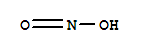
Molecule Structure of HNO2

Electron Cloud Model of HNO2
Therefore,
nitrous acid, HNO2, is a polar molecule.
Application of HNO2 Polarity
Nitrous acid is commonly used in organic synthesis, particularly in diazotization reactions where it reacts with amines to form diazonium salts, which are valuable intermediates in the synthesis of azo dyes and other compounds.
Its polarity makes it reactive in these contexts. Additionally, nitrous acid is involved in the nitrogen cycle, contributing to processes in both natural and industrial environments. Despite its usefulness, care must be taken due to its instability and potential to release toxic nitrogen oxides.
Highlight of Nitrous Acid
| Nitrous Acid Cas 7782-77-6 |
| Molecular formula |
HNO2 |
| Molecular shape |
Bent |
| Relative molecular mass |
47.013 g/mol |
| Solubility |
Soluble in water |
| Melting point |
Decomposes |
| Boiling point |
Decomposes |



 EN
EN
 Agricultural News
 Food News
 Industrial News
 Cosmetic News
 Pharmaceutical News
 Science News

 1YR
1YR


