-
We detected your language preference as English. Would you like to switch to the English version for a better experience?
Switch to English
Stay here


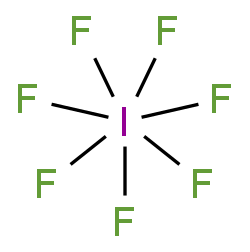
Iodine Heptafluoride (IF7) is a complex inorganic compound that exhibits unique chemical and physical properties. With a molecular structure consisting of one iodine atom bonded to seven fluorine atoms, IF7 displays notable characteristics that make it distinct from simpler compounds. One of the most significant features of IF7 is its molecular geometry and polarity, which influence its behavior and applications. Understanding these properties is essential for comprehending the behavior and uses of IF7. But what exactly is polarity? How does this fundamental concept influence the behavior and applications of chemical compounds like IF7?
Polarity describes the uneven distribution of electrons within a molecule or compound, leading to the formation of positive and negative poles. In the context of chemistry, polarity arises when there is an unequal sharing of electrons between atoms, typically due to differences in electronegativity—the ability of an atom to attract electrons.
When atoms in a bond have significantly different electronegativities, with a difference typically ranging from 0.5 to 2, the shared electrons tend to be pulled closer to the more electronegative atom. This shift in electron density results in one part of the molecule carrying a partial negative charge and the other a partial positive charge, thereby giving the molecule its polar character.
Polar molecules, such as water, exhibit distinctive chemical and physical behaviors, including higher solubility in water, elevated boiling and melting points, and unique interactions in biological systems. These characteristics make polarity a crucial factor in many chemical and biological processes. But what about iodine heptafluoride (IF7)? Is if7 polar or nonpolar?


Despite the highly electronegative fluorine atoms and polar C-F bonds, the symmetrical molecular geometry of IF₇ leads to the cancellation of dipole moments, making it a nonpolar molecule.
| Iodine Heptafluoride Cas 16921-96-3 | |
| Molecular formula | IF7 |
| Molecular shape | Pentagonal bipyramidal |
| Relative molecular mass | 276.87 g/mol |
| Solubility | Nonpolar, insoluble in water, soluble in certain organic solvents |
| Melting point | 4.5 °C |
| Boiling point | 4.8 °C |
| Compound | Polarity | Applications |
| Chlorine Trifluoride (ClF3) | Polar due to the presence of a highly electronegative chlorine atom and three fluorine atoms; nonpolar due to symmetrical arrangement. | Used in rocket propellants and as a fluorinating agent. |
| Bromine Pentafluoride (BrF5) | Polar due to the presence of a bromine atom and five fluorine atoms; nonpolar due to symmetrical arrangement. | Used in specialized chemical processes and as a fluorinating agent. |
 |
|
 |
|
|
 EN
EN
 Agricultural News
 Food News
 Industrial News
 Cosmetic News
 Pharmaceutical News
 Science News

 1YR
1YR


