-
We detected your language preference as English. Would you like to switch to the English version for a better experience?
Switch to English
Stay here


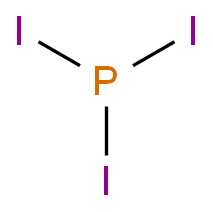
Phosphorus Triiodide (PI3) is a compound with the chemical formula PI3. As a complex molecule composed of one phosphorus atom and three iodine atoms, phosphorus triiodide exhibits a unique set of physical and chemical properties. One of the most significant characteristics of phosphorus triiodide is its molecular structure and reactivity. This compound is primarily known for its applications in chemical research and synthesis. However, understanding its polarity is essential for grasping its behavior and potential uses. Let's delve into the concept of polarity and how it applies to phosphorus triiodide.
Polarity describes the uneven distribution of electrons within a molecule or compound, leading to the formation of positive and negative poles. In the context of chemistry, polarity arises when there is an unequal sharing of electrons between atoms, typically due to differences in electronegativity—the ability of an atom to attract electrons.
When atoms in a bond have significantly different electronegativities, with a difference typically ranging from 0.5 to 2, the shared electrons tend to be pulled closer to the more electronegative atom. This shift in electron density results in one part of the molecule carrying a partial negative charge and the other a partial positive charge, thereby giving the molecule its polar character.
Polar molecules, such as water, exhibit distinctive chemical and physical behaviors, including higher solubility in water, elevated boiling and melting points, and unique interactions in biological systems. These characteristics make polarity a crucial factor in many chemical and biological processes. But what about phosphorus triiodide (PI3)? Is pi3 polar or nonpolar?

In PI₃, the iodine atoms are more electronegative than phosphorus. The P-I bonds are polar, with the electron density being pulled toward the iodine atoms, leading to partial negative charges on the iodine atoms and a partial positive charge on the phosphorus atom. Due to the trigonal pyramidal geometry, the dipoles do not cancel out, resulting in a net dipole moment, which makes PI₃ polar.

| Element Electronegativity | |
| I | 2.66 |
| P | 2.19 |

Phosphorus triiodide (PI₃) is polar due to its trigonal pyramidal geometry, the electronegativity difference between phosphorus and iodine, and the resulting net dipole moment.
| Phosphorus Triiodide Cas 13455-01-1 | |
| Molecular formula | PI3 |
| Molecular shape | tetrahedron |
| Relative molecular mass | 411.687 g/mol |
| Solubility | Soluble in organic solvents, insoluble in water |
| Melting point | 61.2 °C |
| Boiling point | 200 ℃ |
| Compound | Polarity | Applications |
| Phosphorus Pentachloride (PCl5) | Nonpolar due to symmetrical molecular geometry despite high electronegativity differences. | Used in chemical synthesis and research. |
| Phosphorus Trichloride (PCl3) | Polar due to the trigonal pyramidal molecular geometry and electronegativity differences. | Used as a reagent in organic synthesis and in the production of other phosphorus compounds. |
|
 |
 |
|
|
 EN
EN
 Agricultural News
 Food News
 Industrial News
 Cosmetic News
 Pharmaceutical News
 Science News


