-
We detected your language preference as English. Would you like to switch to the English version for a better experience?
Switch to English
Stay here


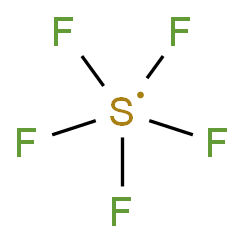
Sulfur Pentafluoride (SF5), with the chemical formula SF5, is a compound that belongs to the group of fluorinated sulfur compounds. Known for its unique properties and uses, SF5 is an odorless, colorless gas at standard conditions. Despite being a relatively obscure compound in everyday life, it holds significance in various scientific fields and applications.
Polarity in chemistry refers to the uneven distribution of electrical charge within a molecule or compound. It occurs when there is an unequal sharing of electrons between atoms, usually due to differences in electronegativity. When atoms within a molecule have significantly different electronegativities, the electrons tend to be drawn towards the more electronegative atom, resulting in a partial negative charge on that atom and a partial positive charge on the less electronegative atom(s).
To understand the polarity of sulfur pentafluoride, let's consider its structure and the factors contributing to its polarity:
Molecular Structure: SF5 consists of one sulfur atom bonded to five fluorine atoms. Due to the high electronegativity of fluorine (about 3.98 on the Pauling scale), the sulfur-fluorine bonds exhibit a strong dipole, with a partial negative charge on each fluorine atom and a partial positive charge on the sulfur atom.
Electronegativity: Sulfur has an electronegativity of about 2.58, while fluorine's electronegativity is approximately 4.0. This significant difference in electronegativity between sulfur and fluorine leads to an uneven distribution of electrons in the SF5 molecule, making it polar.
Dipole Moment: The presence of five dipoles in SF5, each with a negative end pointing towards the fluorine atom and a positive end towards the sulfur atom, results in an overall dipole moment. This dipole moment confirms that sulfur pentafluoride is indeed a polar molecule.
In conclusion, sulfur pentafluoride (SF5) is a polar molecule due to the high electronegativity of fluorine relative to sulfur, which leads to an uneven electron distribution and the formation of individual bond dipoles. These factors combine to create an overall dipole moment in the molecule.
Sulfur pentafluoride finds application in several specialized areas:
Semiconductor Industry: SF5 is used in the etching process for semiconductor materials, specifically silicon and germanium, aiding in the precise removal of material during the fabrication of microchips and integrated circuits.
Gas-Phase Synthesis: It is utilized in the synthesis of various organic compounds through gas-phase reactions, where its reactivity makes it a valuable tool for chemists and industrial manufacturers.
Analytical Chemistry: SF5 is employed in analytical techniques for the detection and quantification of trace elements, particularly sulfur, in environmental and industrial samples.
Military Applications: Due to its toxicity and the potential to cause severe lung damage upon inhalation, SF5 is considered as a chemical warfare agent in some contexts. Research and Development: SF5 is also used in research environments for its unique chemical properties, contributing to advancements in materials science, catalysis, and other scientific disciplines.
In summary, sulfur pentafluoride (SF5) is a polar molecule with diverse applications across industries, including semiconductor manufacturing, analytical chemistry, and military defense, showcasing its importance in modern science and technology.
|
 EN
EN
 Agricultural News
 Food News
 Industrial News
 Cosmetic News
 Pharmaceutical News
 Science News