-
We detected your language preference as English. Would you like to switch to the English version for a better experience?
Switch to English
Stay here


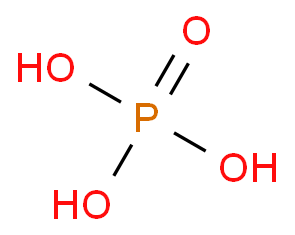
Welcome to the intriguing world of molecular structures! Today, we'll explore the po4 3 lewis structure, a compound with unique properties and applications. Understanding Lewis structures is key to unveiling how atoms bond in Phosphoric acid and provides insights into its molecular geometry, hybridization, and polarity.
Lewis structures, devised by Gilbert N. Lewis, visually represent electron arrangements in molecules. By depicting valence electrons as dots and bonds as lines, Lewis structures predict a molecule's shape and properties based on the octet rule. This rule states that atoms tend to achieve stability by having eight electrons in their outer shell. Lewis structures adhere to this rule, offering a clear picture of chemical bonding.
Phosphoric acid (H3PO4) is a colorless, odorless liquid composed of one phosphorus atom bonded to four oxygen atoms and one hydrogen atom. It is commonly used in fertilizers, food additives, and rust removal due to its acidic properties and ability to donate multiple protons.
Step 5: Check for Formal Charges: Formal charges may be necessary to ensure the stability of the Lewis structure.

The Lewis structure suggests that Phosphoric acid adopts a tetrahedral geometry around the central phosphorus atom. The three oxygen atoms and one hydrogen atom are positioned symmetrically around the phosphorus atom, forming four bond pairs. This geometry minimizes electron-electron repulsion, resulting in a stable configuration.

In H3PO4, the phosphorus atom undergoes sp3 hybridization. One s orbital and three p orbitals combine to form four sp3 hybrid orbitals. These orbitals then overlap with the p orbitals of oxygen and hydrogen atoms, forming four strong σ bonds. This hybridization ensures the stability and symmetry of the Phosphoric acid molecule.
Phosphoric acid (H3PO4) is a polar molecule. The electronegativity difference between phosphorus (2.19), oxygen (3.44), and hydrogen (2.20) results in polar covalent bonds within the molecule. Additionally, the asymmetrical arrangement of atoms around the central phosphorus atom leads to an overall dipole moment, making Phosphoric acid a polar molecule.
Note: While VSEPR theory provides a good starting point for predicting molecular geometries and bond angles, real molecules can sometimes deviate from the ideal angles due to factors like lone pair repulsion, bond polarity, and molecular interactions.
| Phosphoric acid Cas 7664-38-2 | |
| Molecular formula | H3PO4 |
| Molecular shape | Tetrahedral |
| Polarity | Polar |
| Hybridization | sp3 hybridization |
| Bond Angle | 114.1 degrees |
| Bond length | 160 pm (P-O), 110 pm (P-H) |
 |
 |
 |
 |
 |
 |
 EN
EN
 Agricultural News
 Food News
 Industrial News
 Cosmetic News
 Pharmaceutical News
 Science News

 1YR
1YR


