-
We detected your language preference as English. Would you like to switch to the English version for a better experience?
Switch to English
Stay here


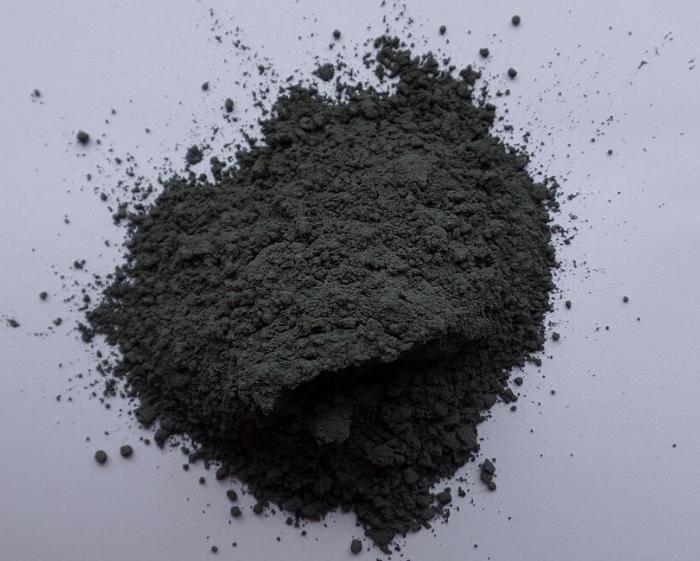
What is the name of ni2o3? Nickel(III) oxide, also known as nickelic oxide, is an inorganic compound with the chemical formula Ni2O3 and CAS number 1314-06-3. It has a molecular weight of 165.42 and is a gray-black powder with high chemical stability, being insoluble in water. It dissolves in sulfuric and nitric acids, releasing oxygen, and produces chlorine when dissolved in hot hydrochloric acid. It is used in the coloration of ceramics, glass, and enamel, and is also utilized in the production of nickel powder and in magnetic material research. As of October 27, 2017, nickel compounds are listed as Group 1 carcinogens by the International Agency for Research on Cancer (IARC).
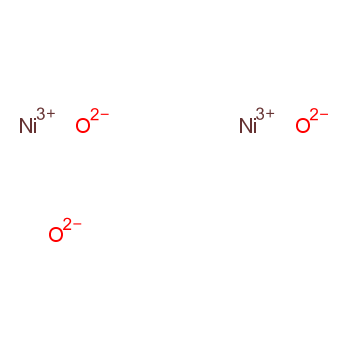
The chemical formula of Nickel(III) oxide is Ni2O3. It may have a lattice structure and is considered a complex transition metal oxide. Theoretical calculations suggest it might adopt a distorted perovskite structure, with nickel ions (Ni3+) surrounded by oxygen ions (O2-). However, due to the non-integer ratio of nickel to oxygen and potential structural distortions, determining the precise crystal structure of Nickel(III) oxide is challenging. Advanced characterization methods such as X-ray diffraction and electron microscopy are expected to reveal its true structural features, providing a basis for understanding its properties.
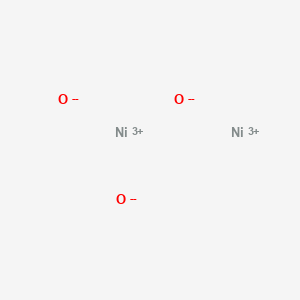
Nickel(III) oxide is insoluble in water, with negligible solubility in H2O. It is slightly soluble in cold acids and dissolves in hot sulfuric or nitric acids with oxygen release, and in hot hydrochloric acid with chlorine release. Nickel(III) oxide is typically used in various applications due to its thermal stability and insolubility. Its insolubility is a key characteristic that adds value in applications such as:
Jianhua Hu and colleagues reported a method for preparing analytical grade Nickel(III) oxide as follows:
Nickel(III) oxide is a significant compound with extensive applications in catalysts, electronic materials, and battery manufacturing. Its unique properties make it valuable in both industrial and research settings. Learning more about Nickel(III) oxide will help you leverage its advantages effectively. Explore potential applications of this product and find reliable Nickel(III) oxide suppliers through platforms like Guidechem to meet your procurement needs.
[1]https://pubchem.ncbi.nlm.nih.gov/compound/10313272
[2]https://baike.baidu.com/item/%E4%B8%89%E6%B0%A7%E5%8C%96%E4%BA%8C%E9%95%8D
[3]https://zh.wikipedia.org/wiki/%E4%B8%89%E6%B0%A7%E5%8C%96%E4%BA%8C%E9%95%8D
[4]Lian Minglei, Wu Wenfang, Miao Yingju, et al. Vacuum microwave induced decomposition of nickel trioxide[J]. Powder Metallurgy Technology, 2015, 33(04): 281-284. DOI: 10.19591/j.cnki.cn11-1974/tf.2015.04.010.
[5]Tianjin Institute of Chemical Reagents. A method for preparing analytically pure nickel trioxide. 2011-04-27.
 |
 |
|
 |
 |
 |
 EN
EN
 Agricultural News
 Food News
 Industrial News
 Cosmetic News
 Pharmaceutical News
 Science News

 4YRS
4YRS

