-
We detected your language preference as English. Would you like to switch to the English version for a better experience?
Switch to English
Stay here


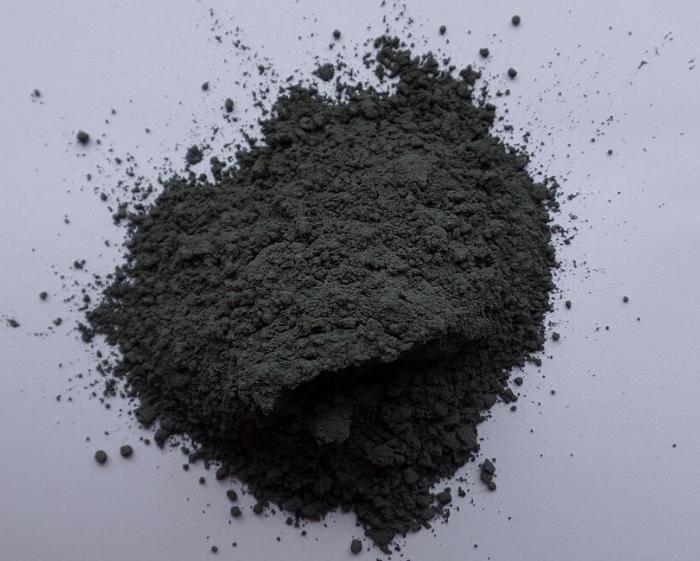
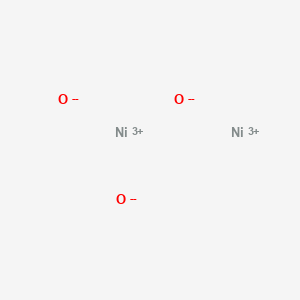
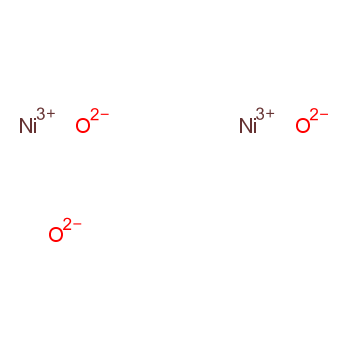
The molecular formula of Nickel(III) oxide is Ni2O3. Its molecular weight is 165.39 g/mol. Nickel(III) oxide is a gray-black, odorless, and lustrous solid that is brittle and can be crushed into a fine powder. It is insoluble in water but dissolves in ammonia solution. It dissolves in hot hydrochloric acid, releasing chlorine gas, and in sulfuric and nitric acids, releasing oxygen. At 600°C, it decomposes into nickel oxide and oxygen. Due to its unique crystal structure and photoresponse range, Nickel(III) oxide is widely used in photocatalysis and electrocatalysis, often as a co-catalyst with other catalysts. For example, Nickel(III) oxide (Ni2O3) nanoparticles exhibit excellent electrical, optical, and magnetic properties, making them a promising material with broad applications.

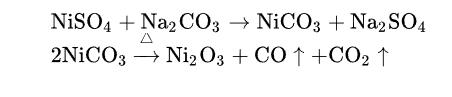
Sulfuric acid nickel solution is reacted with sodium carbonate solution to produce nickel carbonate. After filtration, concentration, cooling crystallization, centrifugation, and drying, the dry nickel carbonate solid is obtained. This is then calcined and ground to produce Nickel(III) oxide.
Nickel III oxide decomposition equation: 2Ni2O3(s) → 4Ni(s) + 3O2(g)
Nickel iii oxide balanced equation: 2Ni2O3 = 4Ni + 3O2
The balanced chemical equation is fundamental to chemical calculations and analysis. Let's balance this reaction equation step-by-step.
Final Balanced Equation: 2Ni2O3 = 4Ni + 3O2
With the development of economic construction and the steel industry, the demand for nickel has been increasing. There are three conventional methods for nickel smelting:
Reduction of nickel oxide with hydrogen to obtain metallic nickel;Calcining the ore to obtain oxide, then reducing it with water gas or carbon to produce nickel. All these conventional methods require large amounts of valuable hydrogen and water gas.
Studies have shown that Nickel(III) oxide can be rapidly heated to over 1600°C in a microwave field within just 4–5 minutes, resulting in the decomposition reaction to produce spherical nickel particles. The advantage of operating under vacuum conditions is the timely removal of oxygen, which shifts the decomposition equilibrium of Nickel(III) oxide to the right, preventing the high-temperature oxidation of metallic nickel and increasing the content of metallic nickel in the post-reaction mixture.
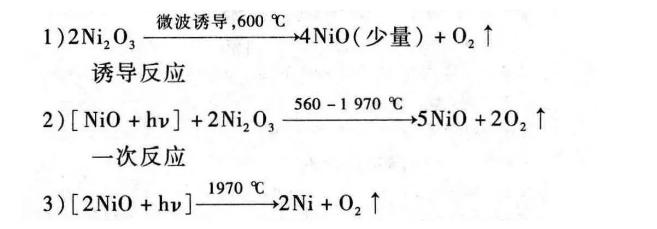
Research by Lian Minglei and others on the decomposition of Nickel(III) oxide powder under vacuum using microwave irradiation explored the heating process and reaction mechanism. They identified a "critical power point" that determines whether Nickel(III) oxide will heat up, and proposed a reaction mechanism comprising five steps: microwave induction, primary reaction, secondary reaction, particle formation, etc. The critical points for the primary and secondary reactions are 600°C and, 1970°C, respectively. They found that the heating rate is high in the mid-stage, low in the early stage, and cooling in the later stage. The maximum content of metallic nickel obtained from the decomposition of 10.0 g Nickel(III) oxide in an 800 W microwave field under vacuum and in air atmosphere is 65.9% and 14.6%, respectively. The reaction equation for microwave transmission is shown below:
[1]https://zh.wikipedia.org/wiki/%E4%B8%89%E6%B0%A7%E5%8C%96%E4%BA%8C%E9%95%8D.
[2]https://baike.baidu.com/item/%E4%B8%89%E6%B0%A7%E5%8C%96%E4%BA%8C%E9%95%8D.
[3]Lian Minglei, Wu Wenfang, Miao Yingju, et al. Vacuum microwave induced decomposition of nickel trioxide[J]. Powder Metallurgy Technology, 2015, 33(04): 281-284. DOI: 10.19591/j.cnki.cn11-1974/tf.2015.04.010.
[4]Nottingham University Excellence Lighthouse Program (Ningbo) Innovation Institute, Nottingham University, Ningbo. A method for preparing nickel trioxide-doped carbon nanotube catalyst: CN202310366172. X[P]. 2023-08-18.
[5] Ningbo Jiusheng Innovative Pharmaceutical Technology Co., Ltd. A method for preparing nickel trioxide nanoparticles based on centrifugal microfluidics technology: CN202310939251.5[P]. 2023-12-19.
[6]https://www.nature.com/articles/2151268a0.
 |
|
 |
 |
 |
 |
 EN
EN
 Agricultural News
 Food News
 Industrial News
 Cosmetic News
 Pharmaceutical News
 Science News

 4YRS
4YRS

