-
We detected your language preference as English. Would you like to switch to the English version for a better experience?
Switch to English
Stay here


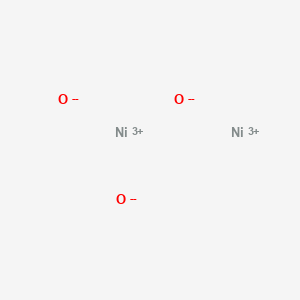
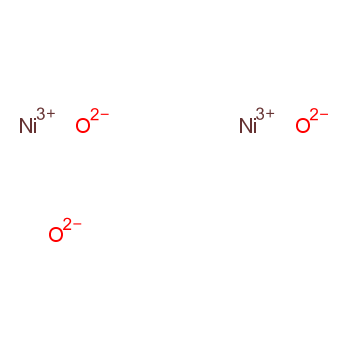
Nickel(III) oxide is an inorganic compound with the molecular formula Ni2O3. It is not well characterized and is sometimes referred to as black nickel oxide. Some mention traces of Ni2O3 on the surface of the nickel.
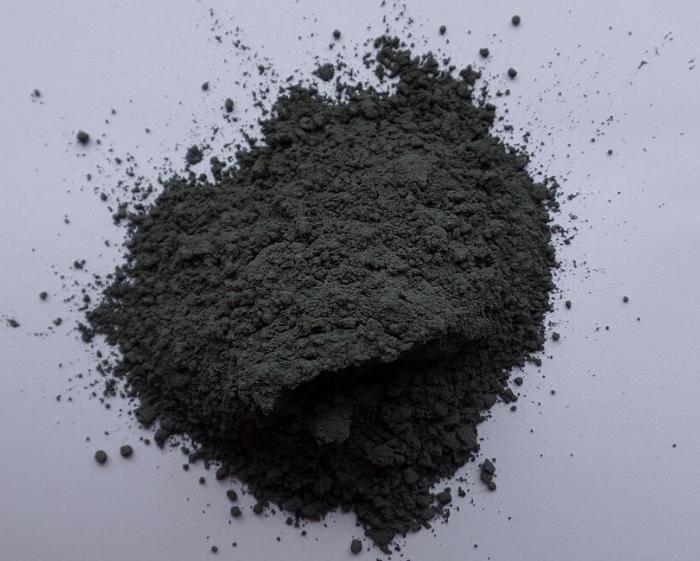
Since the early 1930s, theoretical research on nickel oxide has confirmed its instability at standard temperatures. In 2015, the pure phase of this material was synthesized and stabilized as a nanostructure through the reaction of nickel nitrate(II) with sodium hypochlorite, characterized using powder X-ray diffraction and electron microscopy. Nickel(III) oxide is mainly used as a coloring pigment for ceramics, glass, and enamels, and can also be used in the production of nickel powder and in magnetic material research.
Nickel(III) oxide can be used as a material for electronic components and batteries. For example, its strong oxidizing properties are used to produce nickel-cadmium alkaline batteries and high-energy batteries for artificial satellites and spacecraft. Specific application examples include:
The use of ultrasound frequency to synthesize electrode materials promotes the correct nucleation and growth of electrode materials on the substrate. A.V. Thakur and colleagues prepared Ni2O3:Fe1.7Ni1.43O4 electrodes (N100) using a novel ultrasonic chemical bath deposition (UCBD) method. The formation of the material was confirmed by XRD, and further verified by EDX analysis. The contact angle of 15° confirmed hydrophilicity. FESEM showed interconnected nanoparticles of various sizes. The average grain size and surface roughness were 90 nm and 100 nm, respectively, confirming the formation of monolayers. The prepared symmetric supercapacitors exhibited a maximum specific capacitance of 202.00 Fg-1, retaining nearly 83% of capacitance even after 2000 cycles.
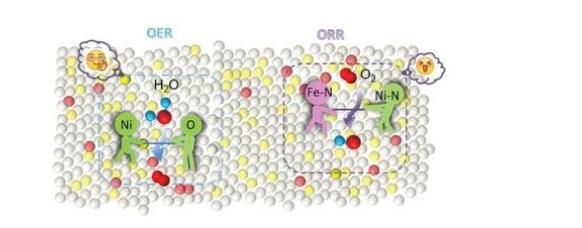
The development of multi-component bifunctional electrocatalysts is critical for the commercialization of high-performance zinc-air batteries. Minghui Wan and colleagues prepared nickel-iron oxides supported on carbon foam, with bamboo-shaped carbon nanotubes dispersed within, as bifunctional electrocatalysts for such batteries. During the high-temperature synthesis process, the carbon sheet edges constituting the carbon foam structure curl to form short carbon nanotubes. The composite material of carbon nanotubes and network carbon gives the newly prepared material a high specific surface area and high electrical conductivity. The loaded NiFe2O4 phase improves oxygen reduction reaction (ORR) activity by fixing more N atoms, while the high-valent nickel oxide (Ni2O3) promotes O-O bond formation, facilitating the oxygen evolution reaction (OER). The optimized material exhibited excellent bifunctional electrocatalytic activity for both ORR and OER, achieving a high power density of 150 mW cm-2 and long discharge stability in assembled zinc-air battery cells.
Nickel(III) oxide can catalyze the degradation of sodium hypochlorite in aqueous solution, with the following reaction: Ni2O3+NaClO→2NiO2+NaCl, 2NiO2+NaClO→Ni2O3+NaCl+2[O]. In this way, it can prevent the photodecomposition of sodium hypochlorite from producing HCl gas, which is harmful to the environment, thus making it suitable for the treatment of hypochlorite-containing wastewater, with significant demand in industries such as papermaking and electroplating. Additionally, it can improve the efficiency of sodium hypochlorite's oxidizing performance. The oxygen radicals produced by the decomposition of hypochlorite catalyzed by Ni2O3, along with the nickel dioxide generated in the process, possess strong oxidizing properties, making them suitable for oxidation reactions in wastewater treatment, capable of degrading COD.
Research has shown that Ni2O3 exhibits catalytic activity in various organic reactions, including oxidation and condensation reactions. Its unique surface characteristics and adjustable oxidation state provide potential advantages for achieving high selectivity and efficient organic conversions.
Dielectric ceramics are widely valued for enabling high voltage gradients and miniaturization in pulse power systems. Ye Huang and colleagues prepared x wt% Ni2O3-doped Al2O3-SiO2-TiO2-based dielectric ceramics using a conventional solid-state reaction. The study found that with Ni2O3 doping, the Al2O3-SiO2-TiO2-based dielectric ceramics became denser, with a more uniform phase distribution. For the x=2.0 component, the dielectric breakdown strength increased to 82.1 kV/mm, more than double the dielectric breakdown strength of the undoped material. Doping Ni2O3 is a feasible way to improve the dielectric breakdown strength and optimize the dielectric properties of Al2O3-SiO2-TiO2-based dielectric ceramics.
SnO2 pressure-sensitive ceramics, with their nonlinear characteristics, are one of the most promising new materials for high-voltage, high-current varistors. However, SnO2 varistors still have issues with high leakage current and low nonlinear coefficients. To address these issues, Shaohua Fan and colleagues studied the effects of different Ni2O3 contents on the electrical properties and microstructure of the SnO2·MnO2·ZnO·Ta2O5 system. The study found that the sample had the best electrical properties (voltage gradient of 563 V/mm, leakage current of 8.87 μA/cm2, and nonlinear coefficient of 38.5) when 0.2 mol% Ni2O3 was added. This research is of reference significance for exploring high nonlinearity and low leakage current SnO2 varistors.
Ni2O3 nanoparticles have the ability to effectively adsorb various pollutants from water, including dyes, heavy metals, and organic substances. This property gives them significant potential applications in water treatment technologies. Sayan Dey and colleagues used Ni(NO3)2·6H2O, NaOH, and sodium hypochlorite as precursor materials to obtain Ni2O3 nanoparticles of various sizes (25.8 to 49.7 nm) through a simple oxidation process at different temperatures (0°, 25°, 50°, and 70°C). They found that it was possible to remove toxic Cr(VI) from aqueous solutions (20 g L-1).
Nickel(III) oxide is irritating and corrosive, and contact with skin, eyes, and respiratory tract should be avoided. Exposure to nickel oxide may trigger allergic skin reactions, and inhalation may increase the risk of cancer. Prolonged or repeated contact can damage internal organs. According to the 2012 OSHA Hazard Communication Standard, the substance is also recognized as hazardous.
During handling, closed operations and local exhaust ventilation measures should be taken. Operators must undergo special training and strictly follow the operating procedures. It is recommended to wear dust masks (full face masks), one-piece protective suits, and rubber gloves to prevent dust generation and avoid contact with acidic substances. Handle with care to prevent damage to packaging and containers. Emergency spill response equipment should be provided. Note that empty containers may still contain harmful substances.
Store in a cool, ventilated warehouse, away from fire sources and heat. It should be stored separately from acids and edible chemicals, and mixed storage is prohibited. The storage area should be equipped with suitable materials to contain leaks.
Remove contaminated clothing and rinse with plenty of running water. Seek medical attention.
Lift the eyelids and rinse with running water or saline. Seek medical attention.
Move the person to fresh air. If breathing is difficult, administer oxygen. Seek medical attention.
Drink plenty of warm water and induce vomiting. Seek medical attention.
[1] Ningbo Jiusheng Innovation Pharmaceutical Technology Co., Ltd. A load-load nano nickel dioxide catalyst and its preparation method: CN202211151677.6 [P]. 2023-03-21.
[2] Tianjin Institute of Chemistry Reagent. A preparation method of analyzing pure trice nickel dioxide: CN200910070649.x [P]. 2011-04-27.
[3]https://baike.baidu.com/item/%E4%B8%89%E6%B0%A7%E5%8C%96%E4%BA%8C%E9%95%8D
[4]https://en.wikipedia.org/wiki/Nickel(III)_oxide
[5]Dey S, Bhattacharjee S, Chaudhuri M G, et al. Synthesis of pure nickel (III) oxide nanoparticles at room temperature for Cr (VI) ion removal[J]. RSC Advances, 2015, 5(67): 54717-54726.
[6]Huang Y, Chen Y, Li X, et al. Enhanced dielectric breakdown strength in Ni2O3 modified Al2O3-SiO2-TiO2 based dielectric ceramics[J]. Journal of the European Ceramic Society, 2018, 38(11): 3861-3866.
[7]Fan S, Liang W, Xie Q, et al. Electrical characteristics of SnO2 voltage-sensitive ceramics doped with Ni2O3[J]. Materials Science in Semiconductor Processing, 2021, 121: 105418.
[8]Thakur A V, Manjunath N K, Sarwade P B, et al. Symmetric supercapacitor comprising Ni2O3: Fe1. 7Ni1. 43O4 electrodes prepared by ultrasound chemical bath deposition route[J]. Materials Letters, 2023, 351: 134999.
[9]Wang M, Ji S, Wang H, et al. Foamed Carbon‐Supported Nickel‐Iron Oxides Interspersed with Bamboo‐Like Carbon Nanotubes for High‐Performance Rechargeable Zinc‐Air Batteries[J]. Small, 2022, 18(45): 2204474.
|
 |
 |
 |
 |
|
 EN
EN
 Agricultural News
 Food News
 Industrial News
 Cosmetic News
 Pharmaceutical News
 Science News

 4YRS
4YRS

