-
We detected your language preference as English. Would you like to switch to the English version for a better experience?
Switch to English
Stay here


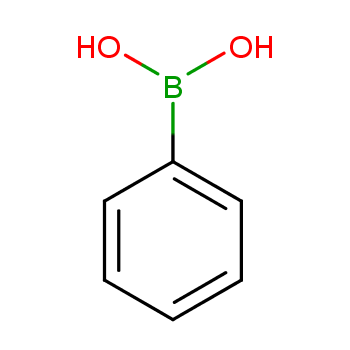
Phenylboronic acid (PBA) is widely used in various fields, such as pharmaceuticals, where it plays a crucial role as an intermediate in the synthesis of sugars and nucleosides. However, its use also brings potential hazards, which require a high level of safety awareness. Phenylboronic acid, with a melting point of 216-219°C and low solubility, is easily soluble in ether and methanol. Long-term exposure to phenylboronic acid may lead to infertility, emphasizing the importance of understanding and implementing preventive measures. This article will elaborate on the potential hazards associated with phenylboronic acid, the importance of safety precautions, and provide detailed safety operation guidelines to ensure safe handling and minimize any risks.
Phenylboronic acid is a unique molecule capable of selectively recognizing cis-diol-containing compounds such as nucleosides, catechols, sugars, and glycoproteins through reversible covalent reactions. Boron affinity reactions depend on environmental pH. Under high pH conditions, PBA forms covalent complexes with cis-diol-containing compounds, which dissociate into the original PBA and cis-diol-containing compounds as the pH decreases. This pH-controllable capture/release property of PBA provides great feasibility for developing pH-responsive materials, showing promising applications in separation, sensing, imaging, diagnostics, and drug delivery. Phenylboronic acid is also involved in metal-catalyzed carbon-carbon coupling reactions and commonly used as a catalyst in chemical synthesis. Its volatility allows it to be used as an antimicrobial agent, resisting pathogens affecting meat, plants, or plant parts, and can be used for meat and plant preservation. Phenylboronic acid can dissolve in water, alcohols, and ethers, making it suitable for various organic syntheses.

Phenylboronic acid, a white powder, is widely used in the food, cosmetic, and medical industries. However, like other chemicals, phenylboronic acid may pose hazards to human health. Its chemical properties determine the potential hazards it may pose to the human body. Is phenylboronic acid soluble in water? Phenylboronic acid has a melting point of 216-219°C, is soluble in ether and methanol, but insoluble in water and benzene. This means that phenylboronic acid can quickly dissolve in a solution and come into contact with human tissues, entering the body. The irritating and sensitizing effects of phenylboronic acid on human tissues, as well as its toxicity, make it potentially harmful to humans. Specific hazards of phenylboronic acid include:
Phenylboronic acid is a hazardous chemical, exposure to which may have serious health effects, including skin irritation, respiratory irritation, eye irritation, etc. According to the Globally Harmonized System of Classification and Labelling of Chemicals (GHS) for phenylboronic acid, its safety grade is 22-24/25, indicating it is a hazardous substance.
In case of skin contact, phenylboronic acid should be immediately rinsed off with soap and plenty of water, and contaminated clothing should be promptly replaced. If it comes into contact with the eyes, they should be rinsed immediately with water to prevent further damage. If a large amount of phenylboronic acid vapor is inhaled accidentally, move to a well-ventilated area promptly. When handling phenylboronic acid, appropriate personal protective equipment (PPE) should be worn, including gloves, goggles, masks, etc. Follow safety operating procedures and storage conditions, prevent dust generation, and avoid inhalation of vapors, mists, or gases.
When handling and storing phenylboronic acid, the following guidelines should be followed:
In research and practice in fields such as chemical engineering, pharmaceuticals, and organic synthesis, the use of phenylboronic acid and its derivatives is widespread. However, due to its unique properties, such as high melting point and low solubility, it may pose potential environmental impacts, requiring strict handling and regulation.
Phenylboronic acid and its derivatives may cause pollution during production, storage, and use. For example, the waste gases and wastewater generated during its synthesis process may pollute the environment. These substances may also have adverse effects on organisms, including aquatic organisms and soil ecosystems.
To prevent environmental pollution, appropriate phenylboronic acid waste treatment methods must be adopted. This can be done through incineration, chemical precipitation, and chemical conversion. Measures must also be taken during the treatment process, such as controlling the emission of exhaust gases, wastewater, and solid waste, to ensure compliance with emission standards. In addition to waste treatment methods, regulatory authorities should strengthen the management and control of phenylboronic acid and its derivatives, including strict environmental monitoring, environmental impact assessments, waste treatment permits, and environmental damage compensation systems.
Regulatory compliance and safety resources are crucial in the safe handling of phenylboronic acid. Regulatory agencies and guidelines are dedicated to establishing a sound safety system and require relevant practitioners to follow a series of regulations and procedures to ensure operational compliance.
To meet these requirements, manufacturers need to provide comprehensive safety resources. These resources include relevant information from manufacturers and Material Safety Data Sheets (MSDS). They not only provide detailed safety information about the product but also help understand how to safely handle and store such chemical products. Additionally, companies and practitioners need to understand the importance of safety regulations and updates, as regulations and guidelines are continuously updated, helping us to more effectively comply with these regulations and maintain the ability to handle safety.
Phenylboronic acid is a hazardous chemical that may have serious health effects upon exposure, including skin irritation, respiratory irritation, and eye irritation. Although phenylboronic acid has antioxidant properties, excessive long-term consumption may cause gastrointestinal discomfort, liver and kidney damage, and even infertility. When using hazardous chemicals such as phenylboronic acid, it is essential to strictly adhere to key safety precautions and guidelines. Additionally, it is important to carefully read chemical safety data sheets to understand the hazards and protective measures of chemicals and to minimize leaks and emissions. For unknown or high-risk chemicals, safety assessments and consultations should be conducted before use, and additional training or information retrieval should be undertaken as needed to take appropriate safety measures.
[1] Wang, D. Synthesis of functionalized polymers of phenylboronic acid and their enrichment and separation of cis-diol-containing compounds. Nanchang University, 2021. DOI: 10.27232/d.cnki.gnchu.2021.002854.
[2] Guo, L. Synthesis study of pentafluorophenylboronic acid compounds. Guizhou University, 2018.
[3] Material Safety Data Sheet - Phenylboronic acid (CAS No. 98-80-6).
[4] Material Safety Data Sheet - Fisher Scientific.
 |
 |
|
 |
 |
 |
 EN
EN
 Agricultural News
 Food News
 Industrial News
 Cosmetic News
 Pharmaceutical News
 Science News

 6YRS
6YRS

