-
We detected your language preference as English. Would you like to switch to the English version for a better experience?
Switch to English
Stay here


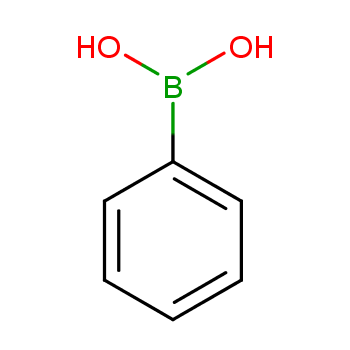
Phenylboronic acid is an important chemical intermediate widely used in various fields such as pharmaceuticals, pesticides, and materials. It is highly active, non-toxic, and environmentally friendly, with relative stability in air and long-term storage. In aqueous solutions, boric acid exists in charged and uncharged forms, forming five- or six-membered boronic acid esters through reversible interactions with cis-1,2- and 1,3-diols. It also has applications in the recognition and testing of polysaccharides, such as starch and cellulose, which play essential roles in biological organisms. Additionally, phenylboronic acid can be used in drug delivery systems and in modulating certain biological activities, making it a hot topic for research.
Based on the widespread application of phenylboronic acid, its synthesis has become a crucial topic in modern organic chemistry. This article explores various methods for phenylboronic acid synthesis, providing valuable insights for readers.
Traditional methods for phenylboronic acid synthesis mainly involve two reactions: aryl halide borylation and borate hydrolysis.
Aryl halide borylation involves the reaction of aryl halides with boronic acid esters (or phenylmagnesium bromide with boronic acid esters) in ether, followed by treatment with sulfuric acid and then potassium hydroxide solution to obtain phenylboronic acid. This reaction, catalyzed by palladium, is mild and effective for boronation, exhibiting high functional group tolerance. The reaction mechanism involves the reaction of phenylmagnesium bromide with boron methylate to generate phenylboronic acid.
Borate hydrolysis involves the reaction of borate esters with water under alkaline conditions (e.g., sodium hydroxide or potassium hydroxide) to yield phenylboronic acid. The reaction mechanism involves the hydrolysis of borate esters to form phenylborate, followed by acidic conditions to yield phenylboronic acid.
Both methods have their advantages and disadvantages. Aryl halide borylation exhibits high functional group tolerance but requires relatively harsh reaction conditions. Borate hydrolysis, on the other hand, has milder reaction conditions but lower functional group tolerance. The yield and quality of phenylboronic acid synthesized by these two methods may vary.

In traditional phenylboronic acid synthesis, reactions often involve multi-step chemical processes and high temperatures and pressures, leading to low reaction efficiency, poor product quality, and the generation of toxic by-products. Recently, significant progress has been made in the field of phenylboronic acid synthesis. One widely used method involves the reaction of phenylboronic acid with organic compounds (such as 4-(2-carboxyethyl)phenylboronic acid) to form new phenylboronic acid compounds. Scientists have also explored other synthesis strategies, such as using Grignard reagents or n-butyllithium to synthesize phenylboronic acid. Below are detailed explanations of the Suzuki-Miyaura coupling and borylation reactions in phenylboronic acid synthesis:
The Suzuki-Miyaura coupling reaction is an important organic synthesis reaction commonly used for the synthesis of aromatic compounds, including phenylboronic acid. In this reaction, carboxylic acids and amine compounds are effectively synthesized into phenylboronic acid through the Suzuki-Miyaura coupling.
In the Suzuki-Miyaura coupling reaction for phenylboronic acid synthesis, aromatic acyl fluorides and nickel catalyst are typically used. The specific process involves the reaction of aromatic acyl fluorides and amine compounds' aromatic moieties as leaving groups and electrophilic groups, respectively, to form phenylboronic acid under the catalysis of nickel. In practical applications, optimizing strategies and key factors affecting the success of the reaction can be adjusted to obtain higher yields. Factors such as choosing appropriate catalysts, optimizing reaction conditions, and designing reaction equipment can improve the yield of the Suzuki-Miyaura coupling reaction.
The Suzuki-Miyaura coupling reaction has many advantages in phenylboronic acid synthesis: it has a high reaction rate and short reaction time, significantly reducing the synthesis time of phenylboronic acid and improving production efficiency. Additionally, the Suzuki-Miyaura coupling reaction exhibits high selectivity and low by-product formation, thus increasing the purity and quality of phenylboronic acid.
The borylation reaction is an important organic synthesis reaction used to introduce boron atoms into organic molecules. Depending on the position of boron atom addition, borylation reactions can be classified into C-H borylation and C-C borylation. C-H borylation involves adding boron atoms to carbon-hydrogen bonds in organic molecules, while C-C borylation involves adding boron atoms to carbon-carbon bonds in organic molecules.
The synthesis of phenylboronic acid typically utilizes C-H borylation reactions. First, phenylmagnesium bromide reacts with boron methylate to generate intermediate B-phenylmethyl magnesium bromide, which then reacts with hydrogen bromide to form B-phenyl hydrogen bromide. Finally, reaction with methanol yields phenylboronic acid. The C-H borylation reaction is a key step in phenylboronic acid synthesis, determining the yield and production of phenylboronic acid.
The practicality of borylation reactions in phenylboronic acid synthesis is very high. Through C-H borylation reactions, boron atoms can be introduced into the side chains of the phenyl ring, achieving chemical modification and functionalization of the phenyl ring. Additionally, borylation reactions can be used to introduce other functional groups into the phenyl ring, such as cyano and methoxy groups, to synthesize phenylboronic acid derivatives with special properties. Many successful applications of borylation reactions in phenylboronic acid synthesis have been reported. For example, researchers used borylation reactions to synthesize 2-cyano-6-methoxyphenylboronic acid neopentyl glycol ester, which exhibits strong anti-cancer activity and has important applications in the field of medicine. Borylation reactions are widely used in organic synthesis, such as in the design and synthesis of drug molecules.
In recent years, the synthesis of phenylboronic acid has attracted significant attention because of its wide applications in pharmaceuticals, pesticides, plastics, and chemicals. On one hand, scientists have employed innovative synthesis techniques such as transition metal-catalyzed methods and flow chemistry to reduce the generation of by-products, achieve milder reaction conditions, and improve synthesis efficiency. For example, Liangfeng Health Products Co., Ltd. used continuous flow technology to synthesize (4-(cyclohexoxy))boronic acid, effectively addressing the problem of by-product formation faced by traditional batch reactions. Furthermore, the application of emerging technologies such as transition metal-catalyzed methods and flow chemistry makes phenylboronic acid synthesis more selective and efficient, aligning with the principles of green chemistry.
On the other hand, significant research progress has been made in the synthesis and application of phenylboronic acid-containing compounds in recent years. Important research has been conducted in areas such as coupling reactions, synthesis methods, and application fields. In these studies, scientists continuously explore new methods and strategies, including modifying fluorine-containing high molecular materials with phenylboronic acid, preparing nano-aggregates through self-assembly for efficient delivery of plasmid DNA and siRNA in cells. Additionally, scientists have discovered that phenylboronic acid can achieve lysosomal escape and anti-tumor properties through specific interactions with sialic acid residues overexpressed in tumor cells. These new research trends and findings bring new opportunities and challenges for phenylboronic acid synthesis and application, guiding future research directions for phenylboronic acid.
Phenylboronic acid is a commonly used fluorescent probe widely applied in biology, medicine, and chemistry, especially in the synthesis of pharmaceutical intermediates and sugars. This article reviewed key points in phenylboronic acid synthesis technology, enabling readers to understand the importance of various synthesis methods for efficient phenylboronic acid production.
Phenylboronic acid synthesis typically requires the use of Grignard reagents, boronic acid esters, and ether as raw materials. It is essential to fully understand the principles and details of various synthesis methods to ensure efficient phenylboronic acid production. Whether you are involved in research or synthesis work, mastering these techniques is crucial for the effective production of phenylboronic acid. In future research and synthesis projects, we should bravely explore and apply these discussed synthesis strategies to make greater contributions to the output of scientific research.
[1] Wang, H. Synthesis of phenylboronic acid and amino compounds[D]. Hebei Normal University, 2020. DOI:10.27110/d.cnki.ghsfu.2020.000232.
[2] Guo, L. Synthesis study of pentafluorophenylboronic acid compounds[D]. Guizhou University, 2018.
[3] Wu, X., & Wu, Y. Preparation of substituted phenylboronic acid [J]. Chinese Journal of Pharmaceutical Industry, 2008, (03): 168-169.
 |
|
 |
 EN
EN
 Agricultural News
 Food News
 Industrial News
 Cosmetic News
 Pharmaceutical News
 Science News

 1YR
1YR


