-
We detected your language preference as English. Would you like to switch to the English version for a better experience?
Switch to English
Stay here


Pigment Red 254 is a member of the DPP pigment series, also known as diketopyrrolopyrrole pigments. This series, particularly Pigment Red 254, is known for its superior performance. It features high coloring strength and vivid color, with excellent flow characteristics in application media. It also boasts high lightfastness, weather resistance, and thermal stability, making it comparable to high-performance pigments such as quinacridone and anthraquinone pigments. Due to its outstanding properties, Pigment Red 254 is widely used in inks, coatings, and plastics, making it an essential product for national economic development.
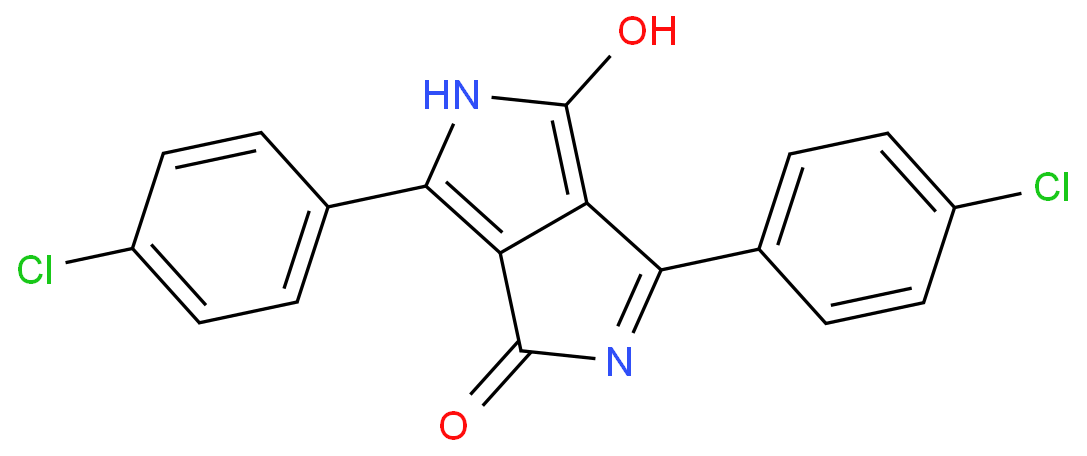
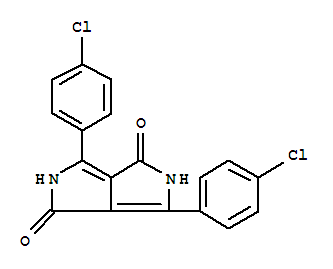
Pigment Red 254 [pigment red 254 chemical formula: C18H10Cl2N2O2; Chemical Name: Bis(4-chlorophenyl)-1,4-dione diketopyrrolopyrrole, 3,6-bis(4-chlorophenyl)-2,5-dihydropyrrolo[3,4-c]pyrrole-1,4-dione] has the molecular structure shown below. The intermolecular interactions in Pigment Red 254 include hydrogen bonds, van der Waals forces, and π-π interactions, forming a three-dimensional network structure. In its complete structure, it appears red, while mechanical grinding of similar structures results in a yellow-green color. During injection molding, the pigment is subjected to shear forces, and excessive shear can disrupt its molecular spatial structure, leading to color changes and affecting the appearance quality of molded parts.
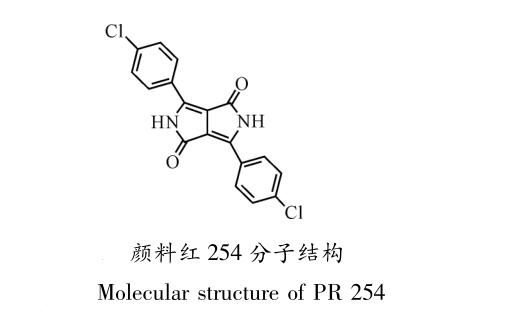
Pigment Red 254 Structure
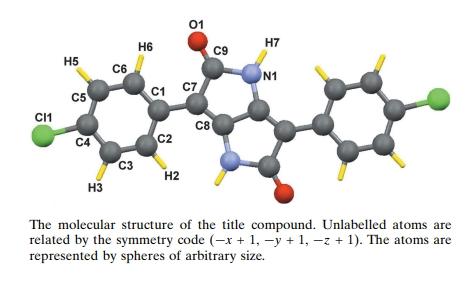
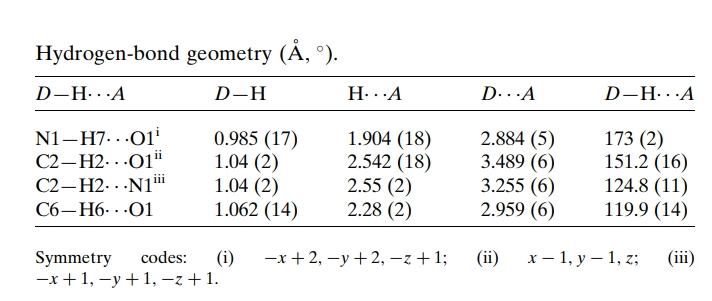
The molecule of the compound (see figure below) is located at the inversion center. The dihedral angle between the benzene ring (C1–C6) and the pyrrole ring (N1/C7–C9/C8) is 11.1 (2). In the crystal, the molecules are connected by N—HO hydrogen bonds and form a one-dimensional chain along the [110] direction, including the R22(8) ring. The dihedral angle between some parts of the molecule (C1/C2/C3/C4/C5/C6) and the pyrrole ring [C7/C9/N1/C8/C8( x + 1, y + 1, z + 1)] is 11.1 (2). There are intramolecular C—HO hydrogen bonds (see table below).
Research on the environmental impact of Pigment Red 254 is ongoing. It is generally considered to have low acute toxicity. Thomas Hofmann and colleagues conducted studies on inhalation and particulate characteristics to compare five DPP-based pigments (coarse and fine Pigment Red 254, coarse and fine chlorinated DPP isomers, and a mixed chlorinated DPP isomer) against coarse and fine inorganic Pigment Red 101. Wistar rats were exposed to the materials' atmospheres for 6 hours daily over 5 days. The target concentration was 30 mg/m3 (high dose), chosen according to occupational exposure limits for inhalable dust. Toxicity was assessed using bronchoalveolar lavage fluid (BALF) and microscopic examination of the respiratory tract. Mixed chlorinated DPP isomers and coarse chlorinated DPP isomers caused slight changes in BALF, including a minor increase in polymorphonuclear neutrophils, with coarse chlorinated DPP causing elevated MCP-1 and osteopontin levels. Mixed chlorinated DPP isomers, Pigment Red 254, and chlorinated DPP isomers led to mild macrophage pigment deposition and slight hyperplasia in bronchioles and alveolar ducts without signs of inflammation. All pigments were well-tolerated, causing minimal or no impact on BALF and only slight effects on the lungs as observed under a microscope. There was no evidence of systemic inflammation based on acute-phase protein levels in the blood. Researchers are exploring the potential long-term environmental impacts and behavior in the environment.
As with all chemicals, appropriate safety measures must be followed when handling Pigment Red 254. Although acute inhalation toxicity studies indicate relatively high tolerance, it is crucial to minimize exposure through effective engineering controls and personal protective equipment during production, processing, and use.
Pigment Red 254, with its excellent color brightness and superior lightfastness, performs exceptionally well in coatings, plastics, and printing inks, making it a significant choice for industrial applications. For more detailed information about this pigment and to find suitable suppliers, it is recommended to visit Guidechem to explore procurement options and ensure the acquisition of high-quality Pigment Red 254 products.
 |
|
 |
 |
 |
 EN
EN
 Agricultural News
 Food News
 Industrial News
 Cosmetic News
 Pharmaceutical News
 Science News

 4YRS
4YRS

