-
We detected your language preference as English. Would you like to switch to the English version for a better experience?
Switch to English
Stay here


CaCl₂, or calcium chloride, is an inorganic compound that consists of one calcium atom and two chlorine atoms. This white, crystalline solid is widely used in various applications, including de-icing, dust control, and as a desiccant. A key characteristic of CaCl₂ is its ionic nature, which contributes to its solubility in water. This property allows it to interact effectively with other substances, making it valuable in chemical processes. Furthermore, the polarity of calcium chloride influences its behavior in solutions and its ability to conduct electricity when dissolved. But what exactly does it mean for CaCl₂ to be polar or nonpolar? How does this fundamental property affect its applications in different fields?
Polarity refers to the distribution of electrical charge around atoms, molecules, or chemical groups. It arises when there is an uneven sharing of electrons between atoms, typically due to differences in electronegativity—the tendency of an atom to attract electrons. In polar molecules, the differences in electronegativity create regions of partial positive and negative charges, leading to a dipole moment.
When atoms in a bond exhibit significant differences in electronegativity, the electrons are pulled closer to the more electronegative atom. This creates a dipole, where one end of the molecule becomes partially negative and the other partially positive. Polar molecules often interact strongly with water and other polar substances, impacting their solubility and reactivity. In contrast, nonpolar molecules exhibit uniform charge distribution and do not interact favorably with polar solvents. So, where does calcium chloride (CaCl₂) fit in this framework? Is cacl2 polar or nonpolar?
Is cacl2 polar or nonpolar? To determine whether calcium chloride (CaCl₂) is polar or nonpolar, we can examine it from three key perspectives: molecular geometry, dipole moment, and electronegativity.
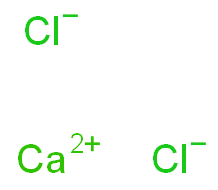
Molecular Geometry: Calcium chloride is composed of calcium ions (Ca²⁺) and chloride ions (Cl⁻). The ionic structure leads to a symmetrical arrangement of these ions, resulting in a uniform charge distribution. This symmetry indicates that the overall compound does not exhibit polar characteristics, as there is no net dipole moment.

Dipole Moment: The dipole moment of a molecule is a measure of the separation of positive and negative charges. In CaCl₂, while the ionic bonds are polar, the symmetrical arrangement of the ions leads to the cancellation of individual dipole moments, resulting in an overall nonpolar compound. Thus, despite the presence of polar bonds, the net dipole moment is zero.
Electronegativity: Electronegativity differences are crucial for determining polarity. In CaCl₂, calcium (1.00 on the Pauling scale) has a significantly lower electronegativity compared to chlorine (3.16). This large difference results in ionic bonding rather than covalent bonding. However, the symmetrical arrangement of ions results in a balanced charge distribution, affirming the nonpolar nature of the compound.

| Element Electronegativity | |
| Ca | 1.00 |
| Cl | 3.16 |
The significant difference in electronegativity (3.16–1.00 = 2.16) between calcium and chlorine atoms confirms the ionic nature of CaCl₂. However, due to its symmetrical structure, the overall polarity of the compound remains nonpolar.
Therefore, calcium chloride (CaCl₂) is classified as a nonpolar compound. Its molecular geometry, dipole moment, and differences in electronegativity contribute to this characterization, impacting its solubility and interactions in various applications.
| CaCl₂ Cas 10043-52-4 | |
| Molecular formula | CaCl₂ |
| Molecular shape | Ionic |
| Relative molecular mass | 110.98 g/mol |
| Solubility | Soluble in water |
| Melting point | 772 °C |
| Boiling point | 1935 °C |
| Compound | Polarity | Applications |
| Acetone (C₃H₆O) | Polar due to the carbonyl group (C=O); less polar than ethanol due to lack of hydrogen bonding. | Solvent in pharmaceuticals, cosmetics, and cleaning products. |
| Ethylene Glycol (C₂H₆O₂) | Highly polar due to two hydroxyl (-OH) groups, enabling extensive hydrogen bonding. | Used as antifreeze and in polyester fiber production. |
After exploring the polarity chemistry of CaCl₂, have you gained a deeper understanding of whether it is "polar or nonpolar"? While CaCl₂ as a molecule is nonpolar, this does not necessarily mean that all of its bonds are nonpolar bonds. If you're interested in similar compounds or related supply chain resources, Guidechem offers a comprehensive list of global calcium chloride suppliers, where you can find the right procurement plan to meet your research and production needs.
 |
 |
 |
 |
 |
 |
 EN
EN
 Agricultural News
 Food News
 Industrial News
 Cosmetic News
 Pharmaceutical News
 Science News

 1YR
1YR

