
What is PF5?
PHOSPHORUS PENTAFLUORIDE (PF5) is a compound with the chemical formula PF5. It exists as a colorless gas under standard conditions, but it can also be obtained as a white crystalline solid. This compound is highly reactive and is known for its ability to hydrolyze rapidly in the presence of moisture, forming phosphoric acid and hydrofluoric acid. PHOSPHORUS PENTAFLUORIDE is widely used as a fluorinating agent in organic synthesis and as a catalyst in various chemical reactions.
What is Polarity?
Polarity describes the uneven distribution of electrons in a molecule or compound. In chemistry, the polarity of a molecule refers to the uneven distribution of positive and negative charges, resulting in the molecule having positive and negative poles. This uneven distribution is typically due to differences in electronegativity between atoms.
Electronegativity is a measure of an atom's ability to attract electrons. The polarity or non-polarity of a bond between two atoms is determined by the electronegativity of the constituent elements. When there is a significant difference in electronegativity between two atoms, with an electronegativity difference ranging from 0.5 to 2, one atom will attract the shared electron pair more strongly, causing the electron pair in the covalent bond to be skewed toward one atom, giving it a partial negative charge, while the other atom carries a partial positive charge. In this case, the molecule exhibits polarity.
Polar molecules display unique behaviors in chemical reactions and physical properties such as solubility, melting point, boiling point, etc. These properties make polar molecules important in many chemical and biological processes.
Polarity of PF5
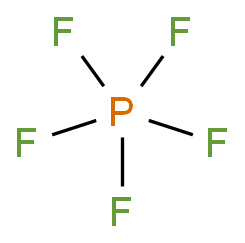
PHOSPHORUS PENTAFLUORIDE (PF5) is a polar molecule due to the presence of fluorine atoms with high electronegativity. The central phosphorus atom is bonded to five fluorine atoms, resulting in a trigonal bipyramidal molecular geometry. The fluorine atoms exert a stronger pull on the shared electron pairs, causing the molecule to have an uneven distribution of charge, with partial negative charges on the fluorine atoms and a partial positive charge on the phosphorus atom. Why is PF5 polar?
(1) Dipole Moment
In PHOSPHORUS PENTAFLUORIDE (PF5), the dipole moment arises due to the difference in electronegativity between phosphorus and fluorine atoms. The dipole moments of the five PF bonds do not cancel each other out completely, resulting in a net dipole moment for the molecule. This contributes to its overall polarity.
(2) Electronegativity
The electronegativity of fluorine (3.98) is significantly higher than that of phosphorus (2.19), leading to polar covalent bonds between phosphorus and fluorine atoms. The unequal sharing of electrons in these bonds results in the polarity of the PF5 molecule.
Therefore,
PF5 is a polar molecule.
Applications of PF5 Polarity
PHOSPHORUS PENTAFLUORIDE (PF5) is primarily used as a fluorinating agent in organic synthesis. It is commonly employed to introduce fluorine atoms into organic molecules, which can significantly alter their chemical properties. Additionally, PF5 serves as a catalyst in various chemical reactions, particularly those involving fluorination or other transformations where a strong electron-withdrawing group is needed. Its ability to selectively fluorinate organic compounds makes it a valuable tool in synthetic chemistry.
Highlight of PHOSPHORUS PENTAFLUORIDE
| PHOSPHORUS PENTAFLUORIDE Cas 7647-19-0 |
| Molecular formula |
PF5 |
| Molecular shape |
Trigonal bipyramidal |
| Relative molecular mass |
125.97 g/mol |
| Solubility |
Reacts rapidly with water, soluble in organic solvents |
| Melting point |
-93.8 °C (decomposes) |
| Boiling point |
97.4 °C |



 EN
EN
 Agricultural News
 Food News
 Industrial News
 Cosmetic News
 Pharmaceutical News
 Science News


