-
We detected your language preference as English. Would you like to switch to the English version for a better experience?
Switch to English
Stay here


Sodium alginate is a natural linear polysaccharide composed of alternating β-D-mannuronic acid and α-L-guluronic acid units. It has many unique properties that make it widely used in the food, pharmaceutical, and cosmetic industries. This article explores various uses of sodium alginate. By understanding its uses, we can better comprehend its role in food and pharmaceutical production, providing more ideas and possibilities for development and innovation in related fields.
Sodium alginate is extracted from brown seaweed and finds many important applications in the food, pharmaceutical, and cosmetic industries. What is sodium alginate used for? It serves as a crucial ingredient for manufacturers to create high-quality products with specific textures. Sodium alginate is commonly used as a thickener and/or binder in many applications, especially in soft gels.
Sodium alginate is widely applied in the food and biomedical fields due to its good biocompatibility, low toxicity, relatively low cost, and gentle gelation. In the food industry, it serves as a thickener, gelling agent, emulsifier, stabilizer, and texture modifier. Nowadays, sodium alginate is added to various foods such as ice cream, jelly, acidic dairy drinks, condiments, instant noodles, and beer. In pharmaceutical applications, it is added as a carrier to tablets to accelerate their disintegration for faster release of active ingredients. In cosmetics, it functions as a thickener and moisturizer, helping to retain the color of lipsticks on the lips. Sodium alginate hydrogels hold promise as drug delivery systems and biomedical implants because their structure resembles large molecular components in the body and can often be delivered minimally invasively.
Commercial-grade sodium alginate can be divided into food-grade and non-food-grade. Applications in food ingredients include:
- Gummies and jelly candies
- Ice cream
- Pastries and baked goods
- Meat analogues
- Plant-based meats
- Recombined foods like onion rings, noodles, and french fries
Some important applications of sodium alginate in food include:
Wound dressings are typically synthesized from synthetic polymers and biopolymers. When used as wound dressings, sodium alginate is usually combined with calcium chloride to form pads or ropes. The Ca2+ in the dressing interacts with Na in wound exudate, causing the dressing fibers to swell and partially convert into a gel, moistening the wound bed and accelerating the healing process. The development process of alginate wound dressings includes: (i) coating sodium alginate and calcium alginate mixture with ethanol to prevent gelation upon contact with water; (ii) adding deionized water or distilled water to obtain alginate solution; (iii) immersing, followed by drying woven or non-woven materials with alginate solution; (iv) mechanically softening the dressings to obtain soft and flexible materials.
In addition to its ability to form dressings, sodium alginate can also absorb various natural substances, which, when released with calcium ions, can activate prothrombin and improve hemostatic effects.
A good wound care product must meet a range of quality criteria: (a) antimicrobial (antiviral, antibacterial, or antifungal), (b) breathable, (c) non-toxic and non-allergenic, (d) hemostatic, (e) biocompatible, (f) capable of performing and displaying mechanical resistance, (g) easy to incorporate drugs. For example, sodium alginate dressings not only absorb liquids from the textile structure fibers but also absorb a large amount of liquid into the fiber structure. Sodium alginate dressings have antibacterial and hemostatic properties, promoting wound healing. Considering that infections can lead to delayed healing, these features are useful. They are also widely used in the management of high exuding wounds such as surgical wounds, leg ulcers, and pressure sores.
Sodium alginate, a natural substance extracted from brown algae, has various uses in the pharmaceutical industry, including as a tablet binder and disintegrant.
In some cases, sodium alginate can also be used to mask the bitter taste of drugs. It is generally considered safe for consumption.
Cosmetic companies use sodium alginate to help cosmetics retain moisture. Shampoo companies also use it as a foam stabilizer and thickener. Skincare products use it as an emulsion stabilizer. And toothpaste companies use it as a binder. Due to its ability to absorb moisture, many facial cosmetics, such as masks, use it as a film former. Sodium alginate also helps moisturize, soothe, and soften the skin. Specific uses of sodium alginate in cosmetics include:
Sodium alginate plays a crucial role in various skincare products due to its beneficial properties:
For decades, alginate-based medications have been used in Europe to treat gastroesophageal reflux disease (GERD). Sodium alginate has been shown to effectively relieve reflux symptoms, also known as gastroesophageal reflux disease (GERD).
Sodium alginate is a key ingredient in Gaviscon, a medication used to relieve heartburn and indigestion. Its mode of action differs from typical antacids. Below are the workings of sodium alginate in Gaviscon:
By establishing a physical barrier, sodium alginate helps alleviate the chest burning associated with heartburn and indigestion.
Some additional benefits of sodium alginate in Gaviscon include:
If you occasionally suffer from heartburn or indigestion, Gaviscon may be the right medication. However, it's best to consult your doctor before taking any new medication.
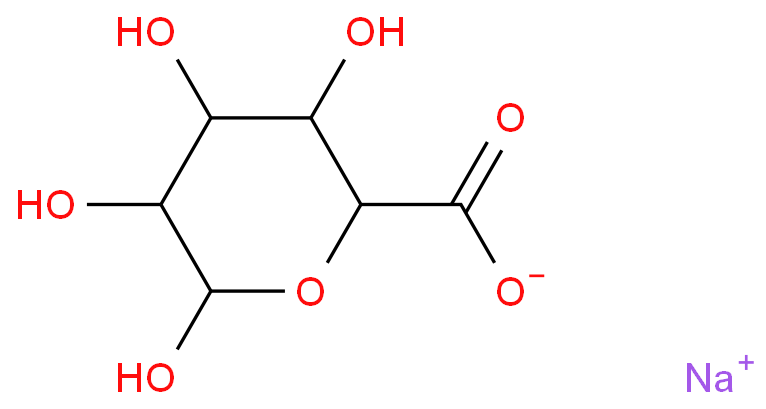
Sodium alginate is a polysaccharide composed of β-D-mannuronic acid (M) and α-L-guluronic acid (G) units, forming MG block and alternating sequences (MG block). This structural organization depends on the source of alginate. For example, the leaves of kelp contain a large amount of mannuronic acid, while the stipe and outer layer contain a large amount of guluronic acid. Similarly, compared to old tissues rich in guluronic acid, the sporophylls of Ascophyllum nodosum contain a larger amount of mannuronic acid. Sodium alginate is easy to obtain, environmentally friendly, and relatively low in production cost. Together with other advantages such as biocompatibility, biodegradability, and non-toxicity, these factors have led to the development of various food and biomedical applications based on sodium alginate, as shown in the figure below. Sodium alginate is the most common salt of alginic acid.
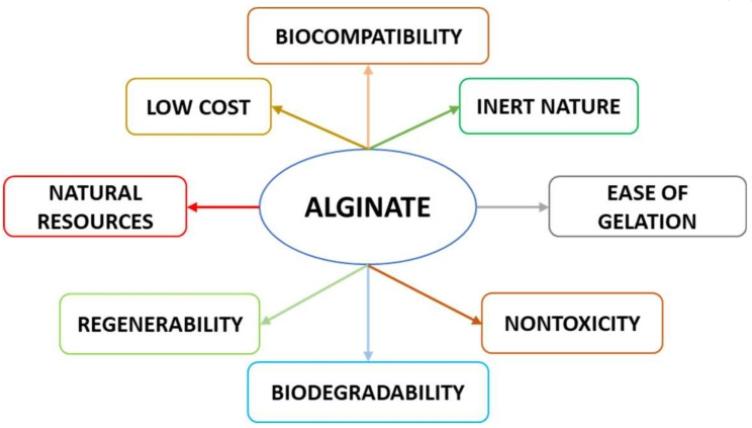
Sodium alginate is a natural, renewable, biodegradable, multifunctional material with unique properties that make it widely used in the food, pharmaceutical, cosmetic, textile, and other industries. Its excellent performance makes it an ideal raw material for many industrial products. Research and development of sodium alginate are ongoing, and its potential application areas are yet to be fully explored. With the continuous advancement of science and technology, sodium alginate will play a greater role, bringing more benefits to human life.
[1]https://www.elveflow.com/microfluidic-reviews/droplet-digital-microfluidics/sodium-alginate-and-applications-a-review/
[2]https://www.ncbi.nlm.nih.gov/pmc/articles/PMC3223967/
[3]https://www.tilleydistribution.com/what-is-sodium-alginate/
[4]https://www.ncbi.nlm.nih.gov/pmc/articles/PMC7589871/
[5]https://mckinleyresources.com/product/sodium-alginate/
[6]https://bulletin.entnet.org/clinical-patient-care/article/22879164/are-alginates-all-that
 |
|
 |
 |
 |
 |
 EN
EN
 Agricultural News
 Food News
 Industrial News
 Cosmetic News
 Pharmaceutical News
 Science News

 1YR
1YR

