-
We detected your language preference as English. Would you like to switch to the English version for a better experience?
Switch to English
Stay here


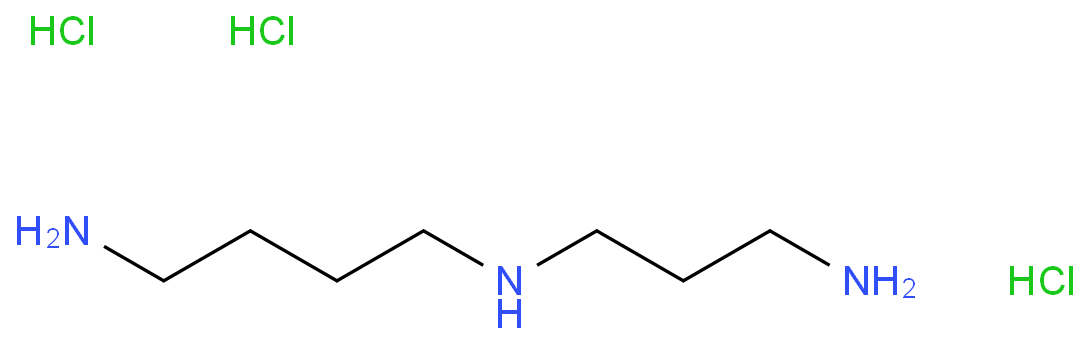
Spermidine trihydrochloride has become the preferred industrial form of spermidine due to its superior crystalline stability, ease of handling, and consistent purity. This article compares spermidine free base and spermidine trihydrochloride from a physical chemistry, sourcing, formulation, and process-development perspective, helping researchers and procurement teams select the most appropriate material for laboratory, cosmetic, and industrial applications.

Salt-form engineering remains one of the most effective strategies for improving the stability, storage, and manufacturability of amine-containing active ingredients. The contrast between Spermidine Free Base (CAS 124-20-9) and Spermidine Trihydrochloride (CAS 334-50-9) represents a textbook example of how protonation fundamentally alters physical properties.
Spermidine free base (molecular formula C7H19N3) possesses three highly reactive amine groups and exhibits a low melting range of approximately 22–25°C. Under normal laboratory conditions, the free base may exist as a semi-solid or highly hygroscopic liquid. Exposure to atmospheric moisture and carbon dioxide promotes carbamate formation, while oxygen exposure accelerates oxidative degradation.
In contrast, Spermidine Trihydrochloride (C7H22Cl3N3) forms a highly crystalline white powder with a reported melting point of approximately 257–259°C. The crystalline salt demonstrates substantially improved thermal stability, reduced hygroscopicity, and superior resistance to atmospheric degradation.
For industrial packaging, long-distance transportation, and contract manufacturing, Spermidine Trihydrochloride is overwhelmingly preferred because it minimizes weight variability, moisture uptake, and active-content loss during storage.
One of the most common laboratory mistakes involves calculating biological dosing directly from the mass of Spermidine Trihydrochloride without accounting for its hydrochloride counterions.
The molecular weight of Spermidine Free Base is 145.25 g/mol, whereas Spermidine Trihydrochloride has a molecular weight of 254.63 g/mol. Approximately 43% of the total molecular mass originates from the three hydrochloride molecules.
The conversion factor is therefore:
254.63 ÷ 145.25 = 1.753
This means that every gram of pure spermidine free base corresponds to approximately 1.753 g of Spermidine Trihydrochloride.
Researchers studying autophagy markers such as LC3-II/LC3-I ratios, Beclin-1 expression, or mitochondrial quality-control pathways should verify whether literature concentrations are reported as free-base equivalents or salt-form concentrations before experimental replication.
Although wheat germ is widely promoted as a natural source of spermidine, concentrated wheat germ extracts typically contain only approximately 0.1–5% spermidine depending on extraction technology and raw-material variability.
The remaining matrix may contain gluten proteins, fatty acids, phospholipids, carbohydrates, pigments, and trace phytochemicals. While acceptable for nutritional products, these components can significantly complicate analytical and cell-based experiments.
In cell culture systems, matrix-derived impurities may influence oxidative stress pathways, cytokine signaling, metabolic activity, and autophagy-associated biomarkers. Such background interference can increase assay variability and reduce reproducibility.
Researchers developing sensitive cell-based assays should prioritize chemically defined spermidine sources whenever quantitative reproducibility is required.
Modern synthetic routes enable production of Spermidine Trihydrochloride with HPLC purity levels of ≥98.0–99.0%, while maintaining tight control of heavy metals, residual solvents, and inorganic contaminants.
For procurement teams, supplier qualification should include review of:
Expert Commentary: As biotech procurement becomes increasingly compliance-driven in 2026, supplier documentation often carries equal importance to purity specifications. Organizations planning pilot-to-commercial transitions should prioritize suppliers capable of providing traceable batch records, analytical packages, and long-term manufacturing capacity rather than focusing exclusively on price.
Solution Chemistry & Reconstitution Protocols: Optimizing Spermidine Trihydrochloride Solvent Dynamics
Selecting the correct solvent system is critical for maintaining chemical integrity and ensuring reproducible dosing.
Because Spermidine Trihydrochloride is a strong-acid salt of a polyamine, aqueous solutions are naturally acidic. A 1% aqueous solution typically exhibits a pH range of approximately 3.0–5.0.
For biological applications, researchers should prepare stock solutions using buffered systems such as 0.1 M HEPES or concentrated PBS and, when necessary, carefully adjust pH to 7.2–7.4 using sodium hydroxide.
To minimize degradation:
These practices significantly reduce oxidation, microbial contamination, and polyamine degradation during long-term storage.
Q1: Why is Spermidine Trihydrochloride preferred over the free base in industry?
Its crystalline structure, high melting point, lower hygroscopicity, and superior storage stability make it significantly easier to transport, package, and formulate at scale.
Q2: How do I convert Spermidine Trihydrochloride into free-base equivalents?
Multiply the desired free-base amount by 1.753. This factor accounts for the molecular-weight difference between Spermidine (145.25 g/mol) and Spermidine Trihydrochloride (254.63 g/mol).
Q3: Can wheat germ extract replace synthetic Spermidine Trihydrochloride?
For nutritional applications it may be acceptable, but for analytical, cell-culture, or formulation studies requiring precise dosing and minimal matrix interference, synthetic Spermidine Trihydrochloride is generally preferred.
[1] Eisenberg, T. et al. "Induction of Autophagy by Spermidine Promotes Longevity." Nature Cell Biology, 2009, 11(11):1305–1314.
[2] Madeo, F., Eisenberg, T., Pietrocola, F., Kroemer, G. "Spermidine in Health and Disease." Science, 2018, 359(6374): eaan2788.
[3] PubChem Compound Database. Spermidine (CID 1102), National Center for Biotechnology Information.
[4] Sigma-Aldrich Product Specification: Spermidine Trihydrochloride (CAS 334-50-9), ≥98% TLC.
[5] CAS Registry Number 334-50-9. Spermidine Trihydrochloride Chemical Substance Record.
[6] ICH Q3C(R8): Impurities: Guideline for Residual Solvents.
[7] ISO 9001:2015 Quality Management Systems — Requirements.
Looking for high-purity Spermidine Trihydrochloride with comprehensive analytical documentation, batch consistency, and scalable supply capabilities? Guidechem helps researchers, formulators, and procurement teams identify qualified global suppliers for research, cosmetic, and industrial applications.
Whether you require COA-supported laboratory material, cosmetic-grade ingredients, or bulk quantities for scale-up programs, our supplier network provides access to verified manufacturers and exporters worldwide.
 |
 |
|
 |
 |
|
 EN
EN
 Agricultural News
 Food News
 Industrial News
 Cosmetic News
 Pharmaceutical News
 Science News

 1YR
1YR


Expert Commentary: In commercial formulation projects, many process failures originate not from chemistry but from physical instability. A low-melting polyamine such as spermidine free base can introduce weighing inaccuracies, moisture-induced potency drift, and storage complications. For scale-up programs exceeding kilogram quantities, crystalline Spermidine Trihydrochloride is generally the more robust and audit-friendly option.