-
We detected your language preference as English. Would you like to switch to the English version for a better experience?
Switch to English
Stay here


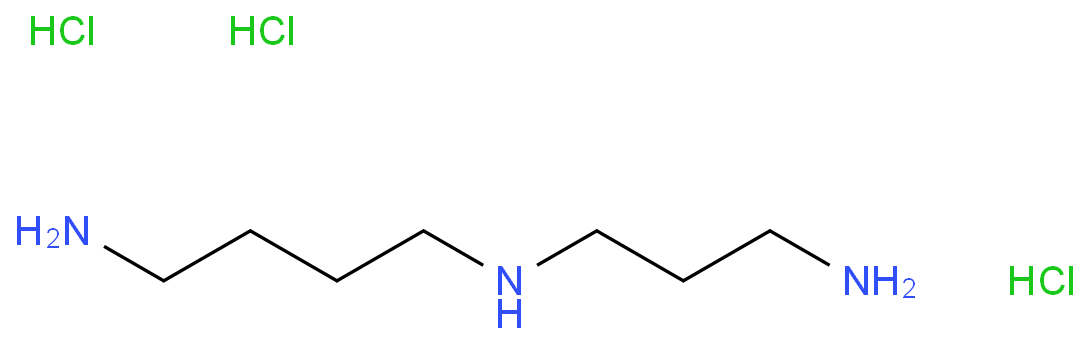
Spermidine trihydrochloride (CAS 334-50-9) has become a strategic raw material in longevity research, cell culture applications, and nutraceutical development. This guide examines wholesale pricing benchmarks, moisture-sensitive packaging standards, cold-chain inventory management, and supplier selection criteria to help procurement teams reduce risk while optimizing total landed costs.

In the specialty chemicals sector, the apparent unit price of Spermidine Trihydrochloride rarely reflects its true manufacturing economics. Fixed production costs—including reactor preparation, synthesis validation, analytical testing, HPLC purity verification, residual solvent screening, and batch release documentation—are largely independent of order size. Consequently, gram-scale orders absorb disproportionately higher compliance and quality-control costs than industrial-scale purchases.
For procurement managers, the transition from laboratory procurement to commercial purchasing can reduce the effective FOB cost per kilogram by 30–65%, depending on supplier scale and packaging specifications. Typical industry pricing follows a tiered structure:
Logistics further amplify volume-related savings. Full Container Load (FCL) shipments distribute port handling, customs brokerage, and documentation costs across larger quantities than Less-than-Container Load (LCL) shipments. For multinational buyers, these hidden logistics expenses frequently account for 8–20% of total landed cost.
Global supply of Spermidine Trihydrochloride is concentrated in China, India, and selected European fine chemical manufacturers. Price fluctuations are primarily influenced by polyamine precursor availability, energy costs, solvent recovery efficiency, and environmental compliance requirements.
Purity specification remains the largest pricing determinant. Commercial nutraceutical-grade material generally targets ≥98% purity, while advanced cell biology and pharmaceutical R&D applications increasingly require ≥99% purity with tighter impurity control.
According to supplier specifications, Spermidine Trihydrochloride appears as a white crystalline powder with molecular weight 254.63, melting point 257–259°C, and pH range 3.0–6.0 (1 M aqueous solution at 25°C). These analytical characteristics are frequently used for incoming QC verification.
Although Spermidine Trihydrochloride exhibits significantly improved stability compared with spermidine free base, the material remains highly moisture-sensitive. Exposure to humid environments can trigger moisture uptake, particle agglomeration, flowability loss, and eventual quality deterioration.
Based on pharmaceutical packaging engineering principles, an industrial-grade protection system should include:
Such a multilayer packaging architecture minimizes water vapor transmission and protects product integrity throughout long-distance international transportation.
Storage recommendations vary among manufacturers depending on intended application. Commercial references indicate storage conditions ranging from room temperature to refrigerated environments; however, research-grade suppliers frequently recommend refrigerated or frozen storage for long-term stability management.
For industrial inventory management, the following temperature matrix is widely adopted:
Research suppliers report powder stability of up to three years when maintained at -20°C under controlled conditions. Solution preparations require substantially stricter management and should be aliquoted to avoid repeated freeze-thaw cycles.
Cold Chain Inventory Management: How Should Spermidine Trihydrochloride Supply Be Stored for Extended Shelf Life?
When maintained under dry, sealed, and frozen storage conditions, Spermidine Trihydrochloride inventories can typically achieve shelf-life expectations of 24–36 months. However, practical stability depends heavily on exposure frequency, packaging integrity, and warehouse environmental control systems.
Supply chain managers should implement a quantitative replenishment framework:
ROP = (Daily Usage × Lead Time) + Safety Stock
Where:
FIFO inventory rotation, frozen aliquoting, and exposure-time tracking are highly recommended. Once a container is opened, cumulative atmospheric exposure should be documented to reduce moisture-induced degradation risk.
Recent supply chain disruptions have highlighted the value of inventory visibility and regional fulfillment capabilities. Suppliers operating overseas warehouses and regional distribution hubs can substantially reduce delivery risk compared with manufacturers shipping exclusively from a single production site.
When evaluating suppliers, procurement teams should verify:
For CAS 334-50-9 sourcing projects, digital supplier verification tools, inventory databases, and manufacturer qualification records significantly accelerate procurement due diligence while reducing supplier risk exposure.
Expert Commentary: The most competitive suppliers in 2026 are not necessarily those offering the lowest quotation. Market leaders increasingly differentiate through inventory transparency, overseas warehousing, validated cold-chain capabilities, and rapid batch-release documentation. In many cases, a 5–10% higher purchase price is offset by lower stockout risk and improved production continuity.
FAQs
Q1: What purity level should industrial buyers choose?
For most nutraceutical and formulation applications, ≥98% purity is sufficient. Cell culture, pharmaceutical research, and analytical laboratories generally prefer ≥99% material with tighter impurity specifications.
Q2: Does Spermidine Trihydrochloride require cold-chain transportation?
While short-duration transport may tolerate ambient conditions depending on packaging design, refrigerated logistics and temperature monitoring provide superior protection against thermal and humidity-related degradation risks.
Q3: What are the most important packaging requirements?
Vacuum-sealed LDPE liners, desiccants, aluminum foil moisture barriers, and reinforced fiber drums collectively provide the best protection against hygroscopic degradation during storage and transportation.
References
[1] Madeo F., Eisenberg T., Pietrocola F., Kroemer G. Spermidine in Health and Disease. Science, 2018, 359(6374): eaan2788.
[2] Eisenberg T. et al. Cardioprotection and lifespan extension by the natural polyamine spermidine. Nature Medicine, 2016, 22(12): 1428–1438.
[3] ChemicalBook Database. Spermidine Trihydrochloride (CAS 334-50-9): Physical Properties, Storage Conditions, and Safety Information.
[4] ISO 9001:2015 Quality Management Systems — Requirements.
[5] ICH Q1A(R2). Stability Testing of New Drug Substances and Products.
Looking for stable, high-purity Spermidine Trihydrochloride with complete documentation, traceable manufacturing records, and global fulfillment support? Partner with qualified suppliers capable of delivering consistent quality and reliable inventory availability.
|
 |
 |
 |
 |
|
 EN
EN
 Agricultural News
 Food News
 Industrial News
 Cosmetic News
 Pharmaceutical News
 Science News

 1YR
1YR


Expert Commentary: After more than a decade of auditing specialty chemical supply chains, one recurring issue is that buyers focus heavily on assay value while underestimating packaging performance. For moisture-sensitive polyamines, inadequate barrier packaging can destroy months of stability regardless of whether the initial purity was 98% or 99%. Procurement contracts should specify moisture barrier requirements, desiccant loading standards, and environmental monitoring documentation—not just purity certificates.