-
We detected your language preference as English. Would you like to switch to the English version for a better experience?
Switch to English
Stay here


Gonadorelin acetate is a significant medication widely used in the medical field, particularly in reproductive medicine and endocrinology. Its mechanism of action is akin to the gonadotropin-releasing hormone (GnRH) in the human body, playing a pivotal role in regulating gonadotropin levels and thus exerting important effects in treating certain reproductive system disorders and modulating reproductive functions.
What is gonadorelin acetate? Gonadorelin acetate is the synthetic version of gonadotropin-releasing hormone (GnRH). It serves as an effective gonadotropin-releasing hormone antagonist, used to control ovarian stimulation, prevent premature expulsion of immature follicles, and aid in conception. Due to its susceptibility to enzymatic degradation in the gastrointestinal tract, gonadorelin acetate cannot be administered orally and is typically used as an injectable formulation of gonadorelin, absorbed via subcutaneous or intramuscular injection to rapidly exert its effects. Gonadorelin is a GnRH agonist. Gonadorelin acetate demonstrates efficacy in conditions such as ovarian cancer, prostate cancer, uterine fibroids, and endometriosis, while also offering preventive and ameliorative effects for benign prostatic hyperplasia and ovarian hyperstimulation syndrome.
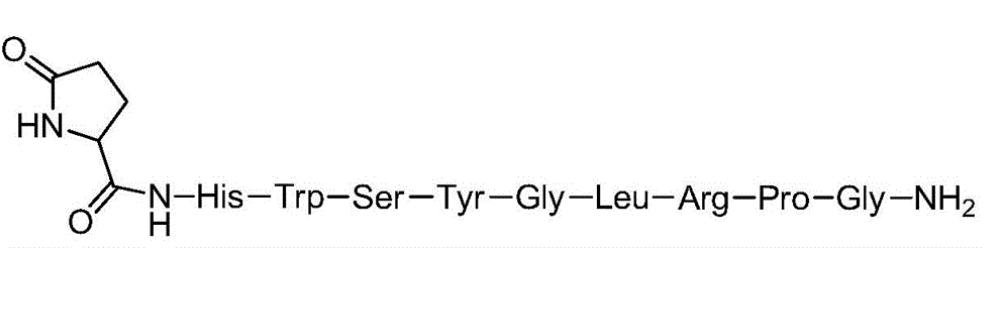
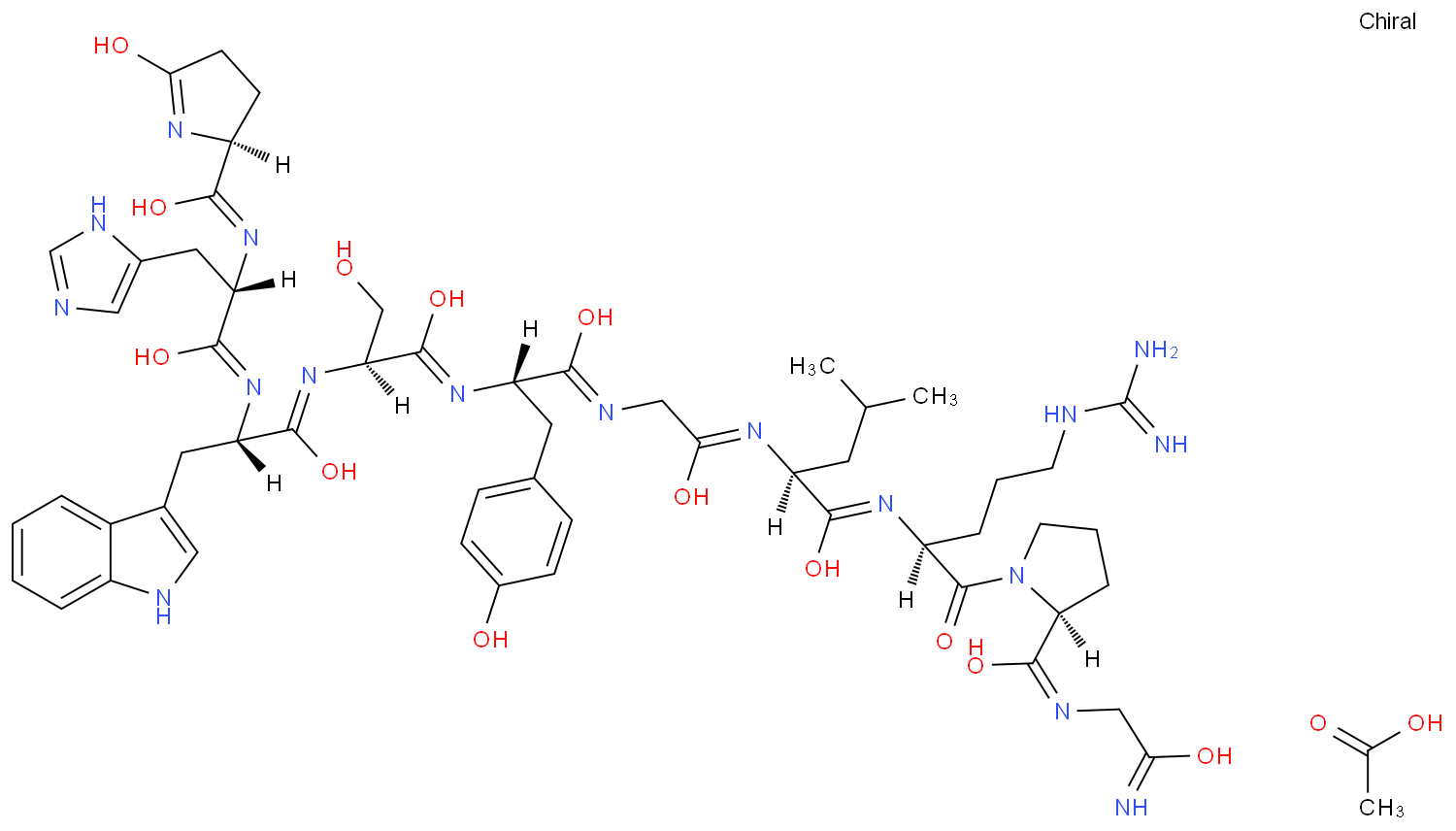
Gonadorelin acetate possesses the same amino acid sequence as natural GnRH (pGlu-His-Trp-Ser-Tyr-Gly-Leu-Arg-Pro-Gly-NH2). Its structure features crucial N-terminal pyroglutamate (pGlu) residue and C-terminal acetate group (CH3COO-), essential for biological activity. The acetate group enhances stability and promotes sustained drug release post-injection.
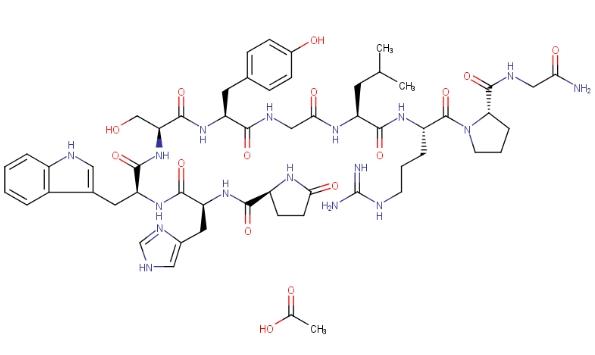
Gonadorelin acetate is a synthetic analogue of gonadotropin-releasing hormone (GnRH), chemically corresponding to the endogenous hypothalamic releasing factor in bovines. Post-intramuscular administration, it exerts effects akin to naturally occurring hormones: stimulating the secretion of specific pituitary anterior lobe gonadotropins LH and FSH. By enhancing normal hypothalamic-pituitary function, it improves overall fertility rates, thereby restoring normal follicular growth and maturation.
(1) Ovarian Follicular Cysts (Veterinary Medicine)
(2) Applications in Reproductive Medicine
(3) Diagnosis of Hypothalamic-Pituitary-Gonadal Axis Function
(4) Cryptorchidism
(5) Ovulation Synchronization (Veterinary Medicine)
Sun Liangyu reported a method for the specific microwave synthesis of Gonadorelin acetate, which includes the following steps: (1) Using Fmoc-D-Ala-Wang-Resin as the starting resin carrier, sequentially reacting with activated protected amino acid solutions to obtain Gonadorelin precursor peptide I-amino resin;
(2) Removing the D-Nal protective group from Gonadorelin precursor peptide I-amino resin, and performing N-terminal acetylation reaction to obtain Gonadorelin intermediate peptide II-amino resin;
(3) Performing cleavage reaction on Gonadorelin intermediate peptide II-amino resin, followed by precipitation to obtain crude peptide III;
(4) Dissolving and filtering crude Gonadorelin III, purifying using reverse-phase high-performance liquid chromatography, collecting the target sample, and freeze-drying to obtain Gonadorelin peptide.
Gonadorelin acetate is used to treat ovarian follicular cysts in cows. Ovarian cysts are anovulatory follicles with incomplete luteinization, leading to nymphomania or irregular estrus. Historically, cystic ovaries have responded to exogenous luteinizing hormone (LH) such as human chorionic gonadotropin. Gonadorelin acetate stimulates the release of endogenous LH, inducing ovulation and luteinization. The recommended intravenous or intramuscular injection dose of Gonadorelin acetate is 100 micrograms (1 mL) per cow.
Gonadorelin acetate is suitable for estrous cycle synchronization with sodium cloprostenol for fixed-time artificial insemination (FTAI) in lactating dairy cows and beef cattle. The recommended intramuscular dose of Gonadorelin acetate is 100 micrograms (1 mL) per cow for reproductive synchronization programs similar to the following:
Administer the first injection of Gonadorelin acetate solution (1 mL) at time 0. Six to eight days after the first injection of Gonadorelin acetate, administer 500 mcg of sodium cloprostenol (as sodium cloprostenol) by intramuscular injection. Thirty to seventy-two hours after the injection of sodium cloprostenol, administer the second injection of Gonadorelin acetate solution (1 mL). Perform FTAI 0-24 hours after the second injection of Gonadorelin acetate, or inseminate cows detected in estrus using standard grazing practices.
Gonadorelin acetate is typically administered by injection. The dosage will vary depending on the species of animal being treated and the specific condition being treated. Gonadorelin acetate is generally well tolerated by animals but may cause some side effects, such as temporary swelling at the injection site. It is important to note that Gonadorelin acetate is a prescription medication and should only be used under veterinary supervision.
Gonadorelin acetate is a diagnostic agent used to assess pituitary function. It is also used in the treatment of primary hypothalamic amenorrhea, gonadotropin deficiency hypogonadism (e.g., Kallmann syndrome), delayed puberty, cryptorchidism, and infertility. Unlike other GnRH analogs, it is not used to suppress gonadal hormone production.
Available forms include: Gonadorelin is a portable infusion pump for pulsatile subcutaneous administration. The usual dosage is 5 to 20 μg of Gonadorelin per pulse every 90 to 120 minutes. It is also available as a solution for intravenous or subcutaneous injection, as well as a nasal spray.
Gonadorelin acetate, as an important medication, plays a crucial role in the field of medicine, especially in reproductive medicine and endocrinology. Understanding its mechanism of action and indications can help patients better understand the treatment process and communicate more effectively with their doctors. Before using Gonadorelin acetate or any other medication, be sure to consult a doctor or healthcare professional to ensure a safe and effective treatment plan and strictly follow their advice and guidance.
[1] Liu Lei. Study on the Pharmacokinetics and Clinical Trials of Gonadorelin in Cows[D]. Northwest A&F University, 2010.
[2] Shanghai Pharmaceutical Co., Ltd. Preparation method of Gonadorelin acetate. 2021-11-26.
[3] Hefei Guopeptide Biotechnology Co., Ltd. Specific microwave synthesis method for preparing Gonadorelin acetate. 2017-02-22.
[4] https://en.wikipedia.org/wiki/Gonadorelin
[5] https://www.bachem.com/all-generic-apis/gonadorelin-acetate/
[6] https://dailymed.nlm.nih.gov/dailymed/drugInfo.cfm?setid=9bc44a48-ff45-468a-a60d-c490a667d91d
 |
|
 EN
EN
 Agricultural News
 Food News
 Industrial News
 Cosmetic News
 Pharmaceutical News
 Science News


 1YR
1YR


