-
We detected your language preference as English. Would you like to switch to the English version for a better experience?
Switch to English
Stay here


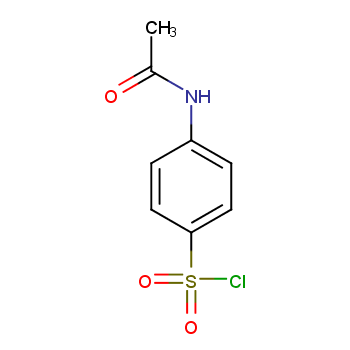
N-Acetylsulfanilyl chloride is an important intermediate in the dye and pharmaceutical manufacturing industries and is also widely used in coatings, plastics, pesticides, and other fields.
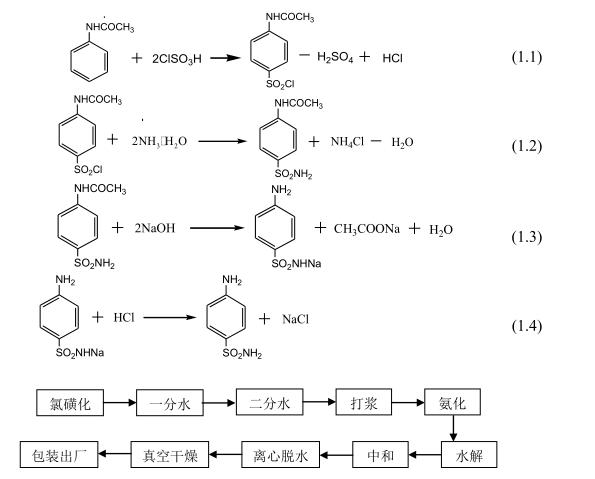
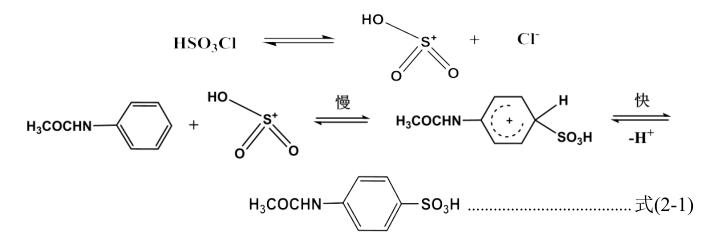
The industrial production of N-Acetylsulfanilyl chloride mainly includes two processes: direct chlorosulfonation with chlorosulfonic acid and the chlorination of p-acetylaminobenzenesulfonic acid. The direct chlorosulfonation method involves sulfonation and chlorination reactions with chlorosulfonic acid and acetanilide to produce N-Acetylsulfanilyl chloride. The chlorination of p-acetylaminobenzenesulfonic acid involves using chlorosulfonic acid or sulfur trioxide for sulfonation, followed by chlorination with reagents like thionyl chloride, phosphorus pentachloride, oxalyl chloride, or phosphorus oxychloride to obtain N-Acetylsulfanilyl chloride.
N-Acetylsulfanilyl chloride is an intermediate in various sulfa drugs, such as sulfathiazole, sulfisoxazole, sulfamethoxazole, sulfapyridine, and sulfadimethoxine. N-Acetylsulfanilyl chloride is a key intermediate for several sulfa drugs, as listed below:

N-Acetylsulfanilyl chloride is a crucial intermediate in the dye industry. Joonseok Koh and colleagues synthesized a series of alkali-clearable azo disperse dyes containing fluorosulfonyl groups. Various 4-fluorosulfonyl anilines used as diazo components were prepared by coupling N-Acetylsulfanilyl chloride with the corresponding coupling components, resulting in 4-(N, N-diethylamino)-4'-fluorosulfonyl azobenzene dyes.
L-Hydroxyproline is a special amino acid found in hydrolyzed animal proteins. L-Hydroxyproline is derivatized with N-Acetylsulfanilyl chloride and 5-chlorovaleric acid to synthesize haptens HP1 and HP2. Subsequently, two immunogens are prepared from these haptens to produce antibodies. The results show that only HP1 can stimulate the animal immune system and produce specific antibodies against L-hydroxyproline (as the formation of HP1). The monoclonal antibodies obtained with HP1 and heterologous coated hapten HP2 were incorporated into a competitive indirect enzyme-linked immunosorbent assay (ELISA) to determine antibody specificity and sensitivity. The IC (50) and detection limit for HP1 were 0.16 μg/mL and 0.05 μg/mL, respectively. The antibody showed low cross-reactivity with the parent L-hydroxyproline and negligible cross-reactivity with D-hydroxyproline and other amino acids. Therefore, this monoclonal antibody is suitable for developing immunoassays to monitor hydrolyzed animal protein in solid leather waste with L-hydroxyproline as the target analyte in food.
N-Acetylsulfanilyl chloride has been studied for screening patients undergoing colonoscopy screening or monitoring.
Due to the widespread use of sulfonamide antibiotics (SAs), it has become a ubiquitous environmental pollutant, raising public concern. However, the comprehensive understanding of these pollutants in complex environmental systems has been hindered due to the unavailability and high cost of isotopically labeled SAs. N-Acetylsulfanilyl chloride can be used to synthesize internal standards for determining drugs and their metabolites in biological samples.
Xuan Wu and others synthesized [14C]- and [13C]-labeled sulfonamides (SMX, SMM, and SDZ) starting with commercially available [14C]- and [13C]-labeled aniline. The synthesis involved four steps (condensation of labeled N-Acetylsulfanilyl chloride and aminoheterocycles), yielding good (5.0–22.5% and 28.1–54.1% for [14C]- and [13C]-labeled SAs) and high-purity products (>98.0%). Milligram-scale synthesis of [14C]-labeled SAs can produce labeled SAs with high specific radioactivity. This method can be used to produce various [14C]- or [13C]-labeled SAs to study their environmental behavior, including the fate, transformation, and bioaccumulation of these antibiotics in soil and water systems.
N-Acetylsulfanilyl chloride is used as an organic building block in synthesizing various organic compounds. Nucleoside derivatives have played an essential role in treating multiple diseases. Considering the importance of nucleoside analogs, Asraful Alam and colleagues synthesized a series of nucleoside molecules, namely uridine derivatives. The uridine molecules were acylated directly with N-Acetylsulfanilyl chloride to obtain the corresponding 5'-ON-acylsulfonamide uridines with the ribose portion.
Synthesizing stable isotopes (e.g., 13C, 15N) plays a significant role in mass spectrometry and nuclear magnetic resonance (NMR) spectroscopy studies, primarily for quantifying and identifying pollutants and their metabolites in complex matrices. In these studies, N-Acetylsulfanilyl chloride plays a crucial role.
N-Acetylsulfanilyl chloride is classified as a skin-corrosive chemical that can cause severe skin burns and eye damage. It may also irritate the respiratory tract.
Wear protective gloves/protective clothing/eye protection/face protection.
[1]Wang L L, Liu J X, Liu J, et al. Synthesis of hapten and production of a monoclonal antibody against a derivative of L-hydroxyproline, a special amino acid in hydrolyzed animal protein[J]. Journal of Environmental Science and Health, Part B, 2013, 48(1): 9-15.
[2]https://go.drugbank.com/drugs/DB12337
[3]Wu X, Yao Y, Wang L, et al. Synthesis of typical sulfonamide antibiotics with [14C]-and [13C]-labeling on the phenyl ring for use in environmental studies[J]. Environmental Sciences Europe, 2022, 34(1): 23.
[4]Alam A, Hosen M A, Islam M, et al. Synthesis, Antibacterial and cytotoxicity assessment of modified uridine molecules[J]. Curr. Adv. Chem. Biochem, 2021, 6: 114-129.
[5]Koh J, Greaves A J, Kim J P. Synthesis and spectral properties of alkali-clearable azo disperse dyes containing a fluorosulfonyl group[J]. Dyes and pigments, 2003, 56(1): 69-81.
[6]Shijiazhuang Hehe Chemical Fertilizer Co., Ltd., Beijing University of Chemical Technology. A continuous preparation method, device and system for 4-acetamidobenzenesulfonyl chloride: CN202211309117.9[P]. 2023-10-27.
[7]Shandong Jinde New Materials Co., Ltd. A method for producing p-acetamidobenzenesulfonyl chloride by a two-stage dual-temperature zone method based on continuous flow reaction: CN201911248993.3[P]. 2021-03-12.
[8]https://www.guidechem.com/msds/121-60-8.html
 |
|
 |
 |
 |
 |
 EN
EN
 Agricultural News
 Food News
 Industrial News
 Cosmetic News
 Pharmaceutical News
 Science News

 1YR
1YR


