-
We detected your language preference as English. Would you like to switch to the English version for a better experience?
Switch to English
Stay here


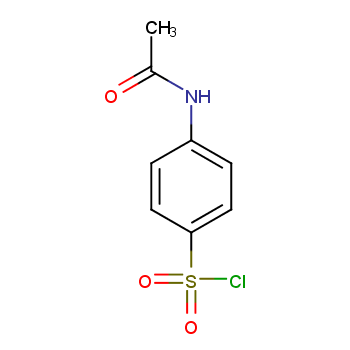
N-acetylsulfanilyl chloride (P-ASC) is defined with a melting point of 149°C (decomposing), a molecular weight of 233.67, and CSC number 121-60-8. Its molecular formula is C8H8ClNO2S.
P-ASC is soluble in benzene, ether, chloroform, and dichloroethane. It forms light brown needle-like crystals in benzene, prismatic crystals in benzene and chloroform, and white needle-like crystals in chloroform. The crystals are prone to oxidation, which darkens their color, and they decompose easily when exposed to air, so they should not be left in the open. It has a slightly bitter taste and a faint acetic acid odor. LD50 for rats orally is >3200mg/kg; for rats intraperitoneally is >25mg/kg; and for mice intraperitoneally is >50mg/kg.
N-acetylsulfanilyl chloride, also known as N-acetylsulfanilic acid or N-acetyl-p-aminobenzenesulfonic acid, is very soluble in ethanol, soluble in water, slightly soluble in glacial acetic acid, and insoluble in ether. Its sodium salt forms rhomboid crystals. N-acetylsulfanilyl chloride is typically obtained by the reaction of acetanilide with fuming sulfuric acid or sulfuric acid in acetic anhydride, and is mainly used for preparing sulfonamides drugs. The most common method of synthesizing sulfonamides involves the reaction of N-acetylsulfanilyl chloride with an appropriate amine.
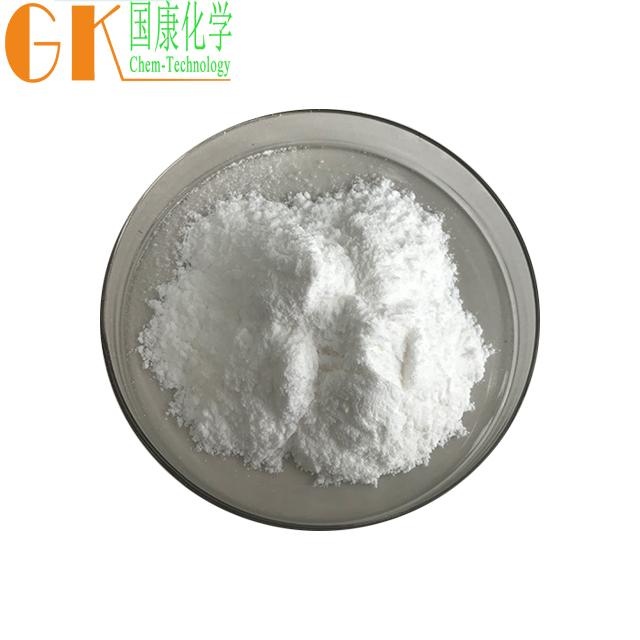
Sulfonamides, also known as sulfanilamide or p-aminobenzenesulfonamide, is commonly represented by SN. Sulfonamides (SN), or p-aminobenzenesulfonamide, has a melting point of 164.5-166.5°C. Its molecular formula is C6H8N2O2S, with a molecular weight of 172.22 and CAS number 63-74-1. It is a white crystalline powder that darkens upon oxidation when left in the air. It has no odor, a slightly bitter taste, and is somewhat irritating. The LD50 for dogs orally is 2000mg/kg. It is slightly soluble in cold water, methanol, ethanol, ether, and acetone, and readily soluble in boiling water, glycerol, and hydrochloric acid, but insoluble in benzene, chloroform, and petroleum ether. Sulfonamides has a weakly basic aromatic amine group and a weakly acidic sulfonamides group. The basic N group binds more effectively with hydroxyl groups compared to the acidic N group binding with hydrogen, making the aromatic amine group in aqueous solution exhibit basic properties. It is the simplest sulfonamides, and different sulfonamides drugs are created by substituting various groups on the amine.
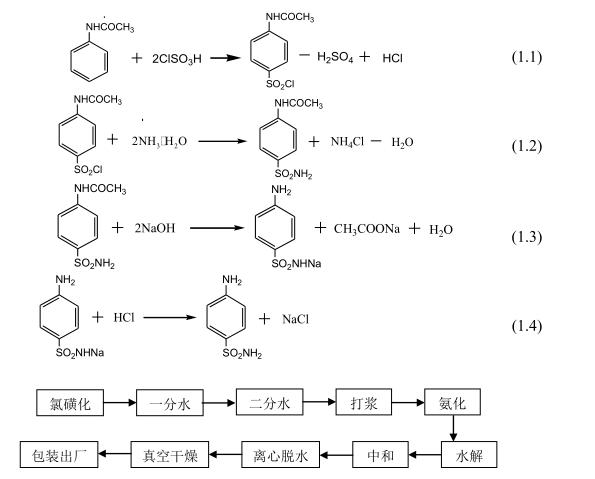
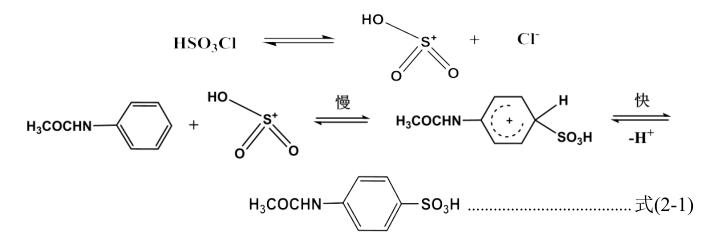
The chlorosulfonic acid method is the main approach for synthesizing sulfonamides. This method uses acetanilide as a starting material, reacting it with an excess of chlorosulfonic acid to produce the intermediate N-acetylsulfanilyl chloride (P-ASC). Subsequently, N-acetylsulfanilyl chloride undergoes ammonolysis and hydrolysis to yield sulfonamides.
Specifically, acetanilide (commonly known as antipyretic ice) reacts with excess chlorosulfonic acid to form a sulfonated liquid. This liquid is then treated with water at 18-24°C to decompose any unreacted chlorosulfonic acid, followed by further water addition and sulfuric acid dilution to crystallize N-acetylsulfanilyl chloride. After washing, filtering, and pulping, the product is sent for ammonolysis. In the ammonolysis reactor, an excess 30-35% ammonia solution is added at 45-60°C, stirring to produce N-acetylsulfanilyl amide. After ammonolysis, 42% excess sodium hydroxide is added, and hydrolysis is carried out at temperatures not below 105°C. Finally, the solution is neutralized with 30% hydrochloric acid to pH 5-6.5, cooled, and sulfonamides are crystallized. The product is then centrifuged, dehydrated, dried, packaged, and inspected before being used as an industrial sulfonamides' product. The main reactions are summarized in the following equations, with a simplified process flow diagram provided.
N-acetylsulfanilyl chloride is a crucial intermediate in the production of various sulfonamides drugs, including sulfathiazole, sulfamethoxazole, sulfamethazine, sulfapyridine, and sulfadimethoxine. These sulfonamides are known for their broad antimicrobial spectrum, good stability, cost-effectiveness, oral administration convenience, and rapid absorption. Additionally, they do not consume food resources during production, making them widely used in antibacterial and veterinary applications. Sulfonamides can effectively cross the blood-brain barrier, making them useful for treating brain infections and positioning them as an important drug class in medicine, second only to antibiotics. The research and development of sulfonamides drugs for antibacterial and anti-inflammatory applications have significant prospects. These drugs effectively inhibit various bacteria, including Gram-negative and Gram-positive strains. Sulfonamides exhibit notable inhibitory effects on common bacteria such as Salmonella, E. coli, and Streptococcus pneumoniae. They are also effective against bacteria like Streptococcus and Pyogenic rods. Additionally, sulfonamides show inhibitory effects on less common bacteria like Pneumococcus, Bacillus anthracis, Staphylococcus, Arizona bacteria, Shigella, and Pasteurella, as well as on some protozoa harmful to poultry.
[1]Yang Yang. Synthesis of P-ASC by HSO_3Cl/PCl_5 combined chlorosulfonation[D]. Chongqing University, 2010.
[2]https://www.ncbi.nlm.nih.gov/pmc/articles/PMC5333644/
[3]https://onlinelibrary.wiley.com/doi/abs/10.1002/0471238961.1921120606152505.a01
[4]http://www.organicchem.org/
[5]https://baike.baidu.com/item/%E5%AF%B9%E4%B9%99%E9%85%B0%E6%B0%A8%E5%9F%BA%E8%8B%AF%E7%A3%BA%E9%85%B0%E6%B0%AF
|
 |
 |
 |
 |
 |
 EN
EN
 Agricultural News
 Food News
 Industrial News
 Cosmetic News
 Pharmaceutical News
 Science News

 1YR
1YR


