-
We detected your language preference as English. Would you like to switch to the English version for a better experience?
Switch to English
Stay here


Phthalic anhydride is an important organic compound widely used in fields such as chemical engineering, pharmaceuticals, and materials science. Its unique structure and properties endow it with diverse applications and potential, garnering extensive attention and research from scientists and engineers. In this article, we will delve into what is phthalic anhydride, discussing its structural characteristics, physical properties, and applications in various fields. Through a comprehensive introduction to this compound, we aim to provide readers with a better understanding of phthalic anhydride and encourage further exploration of its significant role in scientific research and industrial production.
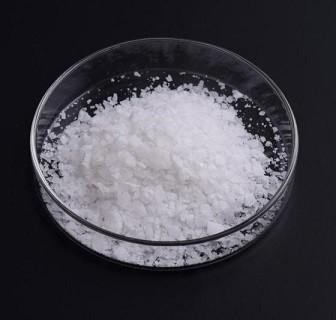
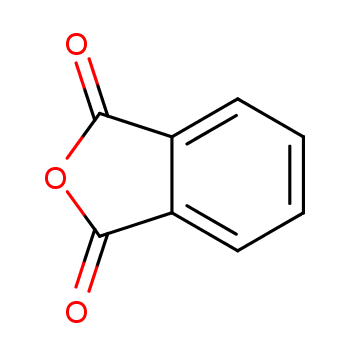
Phthalic anhydride (PA) is a low-molecular-weight compound with a chemical formula of C8H4O3 and a reported molecular weight of 148.1. Its chemical formula is C6H4(CO)2O, reflecting its structure composed of a central benzene ring (C6H4) and two carbonyl groups (CO) attached to opposite carbon atoms. It exists in the form of white granules and is an important industrial chemical for producing lubricants. Phthalic anhydride is widely used worldwide, with applications ranging from the plastics industry to the production of resins, agricultural fungicides, and amine synthesis.

Phthalic anhydride is a crucial industrial chemical used in the production of various materials such as plastics and resins. Here is a detailed description of its production process, focusing on key raw materials and industrial methods involved:
Phthalic anhydride is made from what? The primary method for synthesizing phthalic anhydride involves the oxidation of ortho-xylene, a specific type of aromatic hydrocarbon. Ortho-xylene is chosen for its high reaction efficiency compared to other alternatives.
The industrial production of phthalic anhydride involves a two-stage process:
(1) Oxidation: In the first stage, vaporized ortho-xylene reacts with air and enters a reactor containing a catalyst such as vanadium pentoxide (V2O5). Under controlled high temperature and pressure conditions, ortho-xylene undergoes partial oxidation with oxygen from the air, resulting in the formation of a compound called phthalic anhydride.
(2) Vapor-phase dehydration: The first-stage crude mixture is then subjected to vapor-phase dehydration. Phthalic anhydride salts are further processed at high temperature to remove water molecules, converting them into the final product, phthalic anhydride.
After these steps, the product undergoes purification to remove impurities and obtain commercial-grade phthalic anhydride.
(1) Manufacture of plastic materials and resins;
(2) Production of paints and coatings;
(3) Manufacture of petroleum lubricants and greases;
(4) Synthesis of dyes, pigments, and inks;
(5) Other basic organic and inorganic chemical manufacturing;
(6) Adhesive and sealant chemicals;
(7) Laboratory chemical substances;
(8) Industrial and commercial products, including automotive interiors, aerospace products, electronic products, lubricants, plastics and rubber products, hydraulic fracturing additives, water filtration applications, wood oil treatments, wire coatings, and insulation;
(9) In commercial and consumer products, including paints and coatings and adhesives.
Prolonged exposure to phthalic anhydride can result in acute reactions. This chemical, primarily used in the plastics industry, can irritate sensitive areas of the body such as the skin, respiratory tract, and eyes.
These damages are transient, with no observed permanent harm. Long-term or chronic effects of this substance include irritation of the respiratory tract, skin, and mucous membranes. Exposure to this substance can lead to other chronic conditions, including bronchitis, rhinitis, conjunctivitis, and nasal mucositis.
Based on animal studies, prolonged exposure to phthalic anhydride vapors can cause lung cell consolidation, irritation, and severe damage. Currently, there is no research on the effects of phthalic anhydride on human reproduction or cancer. Therefore, this substance has not been classified as carcinogenic.
What are the raw materials for phthalic anhydride? Phthalic anhydride is currently produced by oxidizing ortho-xylene and naphthalene in a vapor process, and it can also be made from phthalic acid. The primary method for producing phthalic acid is the oxidation of ortho-xylene (ortho-dimethylbenzene). Here is a breakdown of key steps:
(1) In this process, ortho-xylene reacts with oxygen (O2) to produce phthalic anhydride (C6H4O3).
(2) The reaction decomposes the two methyl groups (CH3) attached to the ortho-xylene ring and converts them into carboxyl groups (COOH).
Further removal of two carbon atoms as carbon dioxide (CO2) results in the formation of the cyclic anhydride structure of phthalic anhydride.
This oxidation does not occur spontaneously. It requires a catalyst to accelerate and enhance efficiency. Vanadium pentoxide (V2O5) is the most commonly used catalyst for this reaction. The reaction is carried out at high temperatures using compressed air as the oxygen source.
While ortho-xylene is the preferred raw material, older methods used naphthalene in the process. The reaction is not perfect, and ortho-xylene cannot be completely converted to phthalic anhydride. Some by-products, such as maleic anhydride and heavy organic compounds, are also formed in this process.
Through this introduction, we have gained a comprehensive understanding of phthalic anhydride. We discussed its preparation, physical properties, and its wide-ranging applications. It is hoped that this overview will deepen readers' understanding of phthalic anhydride, enabling them to flexibly utilize this compound in practice, thereby promoting development and innovation in related fields.
[1] https://www.vedantu.com/chemistry/phthalic-acid
[2] https://www.epa.gov/assessing-and-managing-chemicals-under-tsca/risk-evaluation-phthalic-anhydride
[3] https://mohebbaspar.com/en/advantages-of-phthalic-anhydride/
[4] https://www.sciencedirect.com/topics/chemistry/
[5] https://cameochemicals.noaa.gov/chemical/4254
[6] https://richardturton.faculty.wvu.edu/files/d/602b950e-59be-4b3a-bd8c-ca5235172ccf/phthal-a.pdf
 |
 |
|
 |
|
|
 EN
EN
 Agricultural News
 Food News
 Industrial News
 Cosmetic News
 Pharmaceutical News
 Science News

 4YRS
4YRS


