
I. Executive Summary
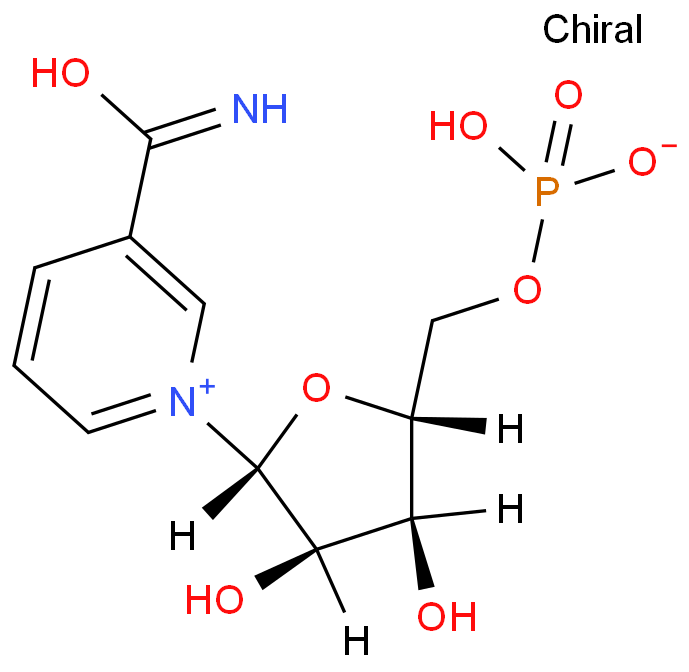
Nicotinamide mononucleotide (CAS 1094-61-7), abbreviated NMN and traded as the β-anomer, is the mononucleotide intermediate of the mammalian NAD+ salvage pathway. Its free-acid formula is C11H15N2O8P with a molecular weight near 334 Da, and it is supplied as the free acid or as a sodium salt. Chemically it is a zwitterionic, highly hydrophilic nucleotide comprising a nicotinamide base, a ribose and a 5′-phosphate, and that combination of lability and polarity defines every downstream decision from synthesis to shipping.
NMN is a research-stage compound with no approved therapeutic indication in any major market. Its commercial relevance rests on its position immediately upstream of NAD+, whose availability governs sirtuin, PARP and CD38-dependent processes, and on an active clinical and preclinical literature addressing metabolic, vascular and age-related endpoints. Material sold into that ecosystem is positioned strictly as research-use-only or as investigational GMP material, and a clear separation must be maintained between research supply, clinical-trial supply and any finished consumer product.
This paper adopts the perspective of a nucleotide Contract Development and Manufacturing Organization serving biotech and pharmaceutical partners, covering custom synthesis and route scouting, biocatalytic process development and scale-up, analytical method development and validation, RUO versus GMP campaign design, and technology transfer. It also addresses the volatile regulatory environment around NMN, in which chemical, food and drug frameworks intersect and permissible end use varies materially by jurisdiction.
II. Product Deep Dive: Molecular Mechanisms and Production Evolution
2.1 Physicochemical Properties and Mechanisms
NMN is the product of nicotinamide phosphoribosyltransferase acting on nicotinamide and phosphoribosyl pyrophosphate, and the substrate of nicotinamide mononucleotide adenylyltransferases that convert it to NAD+. It therefore sits at the rate-limiting junction of NAD+ biosynthesis, which is why manipulating NMN availability is a standard experimental lever in NAD+ biology. The phosphate confers water solubility and prevents passive membrane diffusion, so cellular disposition depends on transporters and extracellular conversion.
- NAD+ biology and downstream enzyme families: Raising NAD+ availability influences the sirtuin deacylases, poly-ADP-ribose polymerases and the CD38 and CD157 glycohydrolases, which couple redox state to chromatin regulation, DNA repair, mitochondrial function and inflammatory tone. Because these enzyme families have differing NAD+ affinities and compartmentalized pools, researchers require material of defined anomeric and chemical purity to avoid artefactual results.
- Stability determinants and degradation pathways: The nicotinamide ribosyl linkage is the weak point: NMN hydrolyses to nicotinamide and ribose-5-phosphate, with rate increasing at elevated temperature, extreme pH and high water activity. Oxidation and epimerization to the α-anomer are secondary concerns. Practical consequences are that pH during processing must be controlled near neutrality, water content must be specified tightly, and the material must be stored cold and dry with a defined retest interval rather than an open-ended shelf life.
2.2 Synthesis and Manufacturing Technologies
Commercial NMN is produced either chemically from nicotinamide riboside or enzymatically and fermentatively from nicotinamide. Chemical phosphorylation was the first route to scale and remains relevant for rapid campaigns, but enzymatic routes now dominate new capacity because they deliver the β-anomer selectively, avoid phosphorus oxychloride and reduce solvent burden. Route selection is therefore an exercise in controlling regioselectivity, anomeric purity and inorganic salt load.
- Chemical phosphorylation and its constraints: Classical Yoshikawa-type conditions phosphorylate nicotinamide riboside with phosphorus oxychloride in a trialkyl phosphate solvent, followed by hydrolysis and workup. The route is short and equipment-friendly but generates regioisomeric and bis-phosphorylated by-products, a heavy inorganic phosphate burden and acidic waste, complicating purification and inflating process mass intensity. Development therefore concentrates on quench control and ion-exchange removal of inorganic phosphate.
- Biocatalytic and fermentative manufacture: Enzymatic routes employ nicotinamide phosphoribosyltransferase with phosphoribosyl pyrophosphate, or nicotinamide riboside kinases with ATP, the latter paired with ATP-regeneration systems to make the cofactor catalytic rather than stoichiometric. Whole-cell formats use engineered strains that accumulate NMN from nicotinamide and a carbon source, after which downstream processing combines cell separation, deproteinization, ion-exchange capture, decolourization, nanofiltration and crystallization or lyophilization. Campaign design must balance titre, volumetric productivity and the enzyme or biomass cost that dominates unit economics.
2.3 Core Application Matrix
- Research-use-only reagent for NAD+ biology: Academic and industrial laboratories purchase NMN as a tool compound for cell and animal studies of NAD+ metabolism, mitochondrial function, DNA repair and senescence. This segment buys small quantities, demands documented identity with anomeric confirmation and low inorganic phosphate, and expects explicit research-use-only labelling with no implication of therapeutic benefit.
- Investigational GMP material for clinical programmes: Sponsors running clinical studies require material manufactured to cGMP with a supporting drug master file, validated analytical methods, impurity qualification against ICH thresholds, and control of microbial and endotoxin burden appropriate to the route of administration. Here the requirement is not merely purity but demonstrable process control, batch comparability and complete documentation traceability.
- Ingredient use where lawful by jurisdiction: In markets that permit it, NMN is formulated into foods, supplements or cosmetics, and in some jurisdictions it has been the object of cosmetic new-ingredient filings. Because permissibility differs sharply between regions and has been actively contested, participants must confirm current status for each destination before contracting rather than assuming that one market's position transfers.
III. Global Market Supply-Demand Landscape and Export Trends
3.1 Demand Drivers and Market Shifts
Demand is propelled by sustained interest in NAD+ biology and by the growth of the healthy-ageing research agenda. Clinical-stage sponsors consume GMP material in relatively small but highly documented quantities, while research consumption is broad and fragmented. Consumer-facing interest has been the most volatile component, since regulatory reinterpretation of permitted status in major markets can redirect demand almost overnight, so prudent suppliers plan capacity against research and clinical demand rather than retail-led forecasts.
3.2 Capacity Distribution and Export Flows
Capacity is concentrated where fermentative and nucleotide chemistry capabilities exist. Asia-Pacific, China in particular, hosts large-scale fermentative production oriented toward bulk and ingredient grades, while North America and Europe concentrate clinical-grade GMP capability, sponsor demand and the analytical infrastructure needed for regulatory filings. Export flows run from bulk origins in Asia-Pacific to clinical and research destinations in North America and Europe, with quality-driven re-export of GMP lots along the same corridors.
3.3 Market Bifurcation and Pricing Dynamics
The market divides cleanly into a documentation-driven tier and a price-driven tier. GMP material for clinical supply is priced on regulatory readiness, analytical depth and continuity, and is largely insensitive to commodity competition. Research and ingredient grades compete on price, purity and lead time, with volatility driven by substrate cost, particularly nicotinamide riboside and ATP, by energy cost for lyophilization and cold storage, and by the supply-demand imbalance that follows any change in the regulatory status of consumer-facing uses.
IV. In-depth Analysis of Global Compliance and Regulatory Barriers
NMN is chemically a nucleotide but commercially a boundary object between food, cosmetic and drug regimes. Its regulatory treatment has been contested and has changed in recent years, and the responsible commercial posture is to verify current status jurisdiction by jurisdiction before committing to an end use, rather than relying on precedent from another market.
4.1 European Market: REACH, CLP, and Sector-Specific Directives
- Chemical registration and classification obligations: Manufacturers and importers placing NMN on the European market above one tonne per year require a REACH registration with a technical dossier, exposure scenarios and risk-management measures, while CLP classification, labelling and safety-data-sheet obligations apply irrespective of tonnage. Because published toxicological data for nucleotides are limited, registrants should plan for data generation rather than assume read-across acceptance.
- Novel-food and food-supplement constraints: Purified NMN is not an authorized novel food on the Union list, and food or food-supplement use in the European Union requires authorization under Regulation (EU) 2015/2283 following a safety assessment, so general food-supplement placement should be assumed unavailable absent authorization. Any health claim would additionally have to satisfy Regulation (EC) No 1924/2006, under which unauthorized claims are prohibited.
4.2 North American Market: TSCA, EPA, and FDA Regulations
- TSCA and environmental considerations: Commercial manufacture of a synthetic nucleotide for the United States requires confirmed TSCA inventory status, with premanufacture notification considered where a substance is not listed and research and development exemptions potentially covering evaluation quantities. Facility-level EPA obligations arise from solvent use, wastewater nutrient loading from nucleotide streams and emissions control, and exporters should expect scrutiny of waste treatment.
- FDA position and clinical-supply expectations: The FDA has taken the position that NMN is excluded from the dietary-supplement definition on the basis that it was authorized for investigation as a new drug, a position contested by industry and subject to ongoing legal and policy development; participants must confirm current status directly. Human investigation requires an investigational new drug application and cGMP material with impurity qualification aligned to ICH expectations, and claim language must never imply an approved indication.
4.3 The Critical Hurdle: Quality Control and Safety Limits
Compliance Warning: A purity figure alone does not establish that an NMN lot is fit for purpose. The controlling attributes are anomeric identity, inorganic phosphate and residual nicotinamide content, water content, and microbial and endotoxin burden for clinical use. Buyers should require nuclear magnetic resonance confirmation of the β-anomer, a specific chromatographic assay rather than a generic UV absorbance value, heavy-metal and residual-solvent panels, and stability data on the actual container-closure system. Material for research must remain labelled for research use only.
V. Green Trade Barriers and ESG in Manufacturing
The shift from phosphorus oxychloride chemistry to enzymatic and fermentative manufacture is simultaneously an economic and an ESG transition, and it is the most credible sustainability narrative available to this category. Buyers should nevertheless require quantified evidence, since fermentation carries its own energy, water and nutrient-load footprint that must be disclosed rather than ignored.
5.1 Carbon Footprint and Circular Economy
Emissions are dominated by Scope 3 inputs, chiefly nicotinamide, sugar feedstock, ATP or phosphoribosyl pyrophosphate and purification resins, with Scope 1 and 2 contributions from fermentation aeration, downstream processing, lyophilization and cold storage. Biocatalysis improves the profile by replacing chlorinated phosphorus chemistry and organic solvents with aqueous media, and further gains come from ATP regeneration and heat integration. Credible reporting means a quantified Scope 1, 2 and 3 inventory under ISO 14001 with measured wastewater phosphate load.
5.2 Sustainable Sourcing and Traceability
Traceability must cover fermentation inputs, because feedstock grade determines both impurity carry-over and the environmental profile of the campaign. Buyers should require documented origin and specification for nicotinamide and sugar, confirmation that no animal-derived components enter the fermentation, and demonstration that enzyme preparations are produced under controlled conditions. An ISO 9001 framework, change control covering strain and substrate changes and audits reaching enzyme vendors make these claims verifiable.
VI. Supply Chain Resilience and Export Logistics
NMN is a cold-chain, moisture-sensitive, hygroscopic solid whose commercial risk is degradation in transit rather than regulatory classification of the shipment itself. Resilience therefore depends on qualified second sources for key substrates, conservative inventory buffers against the long lead times of GMP campaigns, and packaging validated for the actual lane rather than for a generic profile.
6.1 Packaging Standards and Moisture/Contamination Control
- Moisture and oxygen barrier: Material is filled into amber glass or high-barrier laminate containers with desiccant, sealed under nitrogen headspace and double-pouched, with water content specified at release. Because hydrolysis is the primary degradation route, control of headspace humidity and closure integrity is more consequential than the nominal barrier specification of the primary container.
- Cold chain and lot integrity: Shipments move refrigerated or frozen according to the labelled storage condition, using validated insulated shippers with continuous temperature logging and predefined excursion handling. GMP lots additionally require tamper-evident sealing, full lot traceability and segregation from RUO material, since clinical supply must be unambiguously identifiable from the point of release to the point of administration.
6.2 Dangerous Goods Identification and Transit Protocols
NMN is generally not classified as a dangerous good for transport, but the determination should be evidenced by classification data rather than assumed, and where dry ice is used the applicable air and sea provisions apply. Consignments should travel with certificates of analysis, origin declarations and, for GMP supply, release documentation transmitted ahead of the goods to avoid customs holds that would break the cold chain. Incoterms should allocate temperature risk and customs responsibility to the party able to manage them, and lane qualification should be repeated seasonally.
VII. Enterprise Global Expansion Strategy Guide
NMN rewards organizations that combine biocatalytic process capability with regulatory discipline and that plan for regulatory change rather than betting on a single end market.
- Industrialize the biocatalytic route: Invest in enzyme engineering, ATP or phosphoribosyl-pyrophosphate regeneration and downstream intensification, and document the resulting reduction in solvent and chlorinated phosphorus use. Lower process mass intensity improves cost, safety and emissions together and becomes a differentiator in customer ESG scoring.
- Separate RUO and GMP operations rigorously: Run research and clinical campaigns under distinct documentation, change-control and release systems, with validated methods and a drug master file for the GMP track. Unambiguous segregation protects sponsors, prevents misdeclared use and is a prerequisite for repeat clinical business.
- Plan for jurisdictional divergence: Maintain a regulatory watch covering novel-food status, dietary-supplement interpretation and cosmetic ingredient listing, and qualify customers against the lawful use in their destination market. Diversifying across research, clinical and permitted ingredient demand reduces exposure to any single regulatory reclassification.
VIII. Conclusion
NMN is scientifically compelling and commercially demanding. Its value as a research tool and as an investigational substance is well established, while its chemistry imposes strict requirements on anomeric purity, phosphate control, water content and cold-chain integrity. Suppliers that master biocatalytic manufacture and the analytical characterization that proves it will define the quality standard for the category, because nucleotide purity is difficult to fake and easy to disprove with competent spectroscopy.
The regulatory environment will remain the dominant uncertainty into 2026. NMN has no approved therapeutic indication, and the lawful status of food, supplement and cosmetic uses differs by jurisdiction and continues to evolve; doping-control authorities have not prohibited NAD+ precursors, but athletes and sponsors should verify status independently before use. Organizations that keep a strict boundary between research supply and consumer products, invest in GMP readiness and report Scope 1 to Scope 3 emissions with evidence will be best placed to serve biotech and pharmaceutical partners through that uncertainty.
IX. Industry Resource Connection and Supplier Ecosystem
Powered by Guidechem
This white paper is exclusively compiled by the Guidechem Intelligence Team based on global customs data, regulatory databases, and industry research. Guidechem is a leading global B2B chemical platform, dedicated to connecting global buyers with verified, high-quality manufacturers.
Relying on Guidechem's extensive global database, we have mapped the core participants in the current global Nicotinamide mononucleotide supply chain, described as macro tiers rather than named enterprises:
- North America — clinical sponsors and research demand: A tier of biotech and pharmaceutical sponsors, contract manufacturers and reagent distributors driving demand for well-characterized material, distinguished by cGMP clinical-campaign capability and by procurement that verifies regulatory status before contracting.
- Europe — GMP nucleotides and novel-food caution: A tier of nucleotide CDMOs and specialized analytical laboratories with mature REACH and cGMP practice, operating under a conservative interpretation of novel-food requirements and supplying research and clinical programmes with fully documented lots.
- Asia-Pacific and China — fermentative scale: A tier of large-scale fermentative and enzymatic manufacturers with strong capabilities in strain development, downstream processing and lyophilization, supplying bulk and research grades and progressively investing in GMP and regulatory documentation.
Disclaimer: The content of this white paper is compiled based on public market data and regulatory information available as of 2026. Global chemical regulations are subject to dynamic adjustments. In actual export operations, enterprises must consult professional regulatory advisors or relevant competent authorities to obtain the latest compliance guidance.


 EN
 Agricultural News
 Food News
 Industrial News
 Cosmetic News
 Pharmaceutical News
 Science News


 2YRS

